Trumps 15 Point Iran Peace Plan: The United States has reportedly presented Tehran with a detailed 15-point framework aimed at ending the ongoing conflict, combining strict nuclear curbs with broader regional stabilisation measures. According to reports, the proposal was routed through Pakistan, which has positioned itself as a potential mediator. Although there has been no official confirmation, the contours of the plan point to a high-stakes diplomatic push running parallel to sustained military pressure in the region.
Ceasefire Window Proposed For Fresh Talks
According to The New York Times and Israel’s Channel 12, the framework proposes a one-month ceasefire to create space for direct negotiations between Washington and Tehran. During this period, both sides would engage using the 15-point document as the foundation for talks.
Among the central conditions is a complete halt to uranium enrichment within Iran, along with the transfer of enriched material outside the country. U.S. and Israeli officials argue that retaining such stockpiles could allow rapid conversion into nuclear weapons.
Strait Of Hormuz Access Central To Proposal
A key pillar of the plan focuses on ensuring uninterrupted access through the Strait of Hormuz, a critical global oil route that handles nearly one-fifth of the world’s shipments.
Iran’s partial restrictions on the passage have already driven up energy prices. Under the proposal, Tehran would guarantee open transit in exchange for sanctions relief and support for its civilian nuclear ambitions.
The framework also includes assistance for nuclear energy development at the Bushehr Nuclear Power Plant, a facility Iran recently claimed was targeted in Israeli strikes.
Missile Rollback and Economic Relief On Table
Beyond nuclear restrictions, the proposal reportedly calls for dismantling Iran’s missile capabilities and related military infrastructure. In return, the U.S. would allow a United Nations-monitored civilian nuclear programme, with fuel production facilities located outside Iran.
Economic relief is another major component, with provisions aimed at easing sanctions and helping stabilise Iran’s economy after prolonged conflict.
Israeli Concerns and Military Build-Up Continue
Reports suggest Israel was caught off guard by the ceasefire initiative, as its leadership has been urging Donald Trump to continue military operations.
At the same time, the U.S. is preparing to deploy more than 3,000 additional troops to the Middle East, adding to roughly 50,000 personnel already stationed across the region.
Plan Echoes Earlier Failed Negotiations
Diplomatic sources note that the current framework closely resembles a proposal advanced during nuclear talks in May 2025, which ultimately collapsed after Israeli strikes on Iranian facilities.
That earlier plan also demanded sweeping limits on Iran’s nuclear and missile programmes, removal of uranium stockpiles, and restrictions on the use of sanctions relief funds, while offering only partial easing of sanctions.
So far, neither the White House nor the State Department has commented publicly on the reported plan, leaving uncertainty over whether Tehran will engage or reject the proposal outright.
Will Tehran Agree?
Despite limited public details about Washington’s proposal, experts believe Iran is unlikely to accept it. A spokesperson for the IRGC’s Khatam al-Anbiya Central Headquarters cautioned the U.S. against framing developments as diplomatic gains, saying, “Do not call your defeat an agreement.”
Tehran’s Conditions
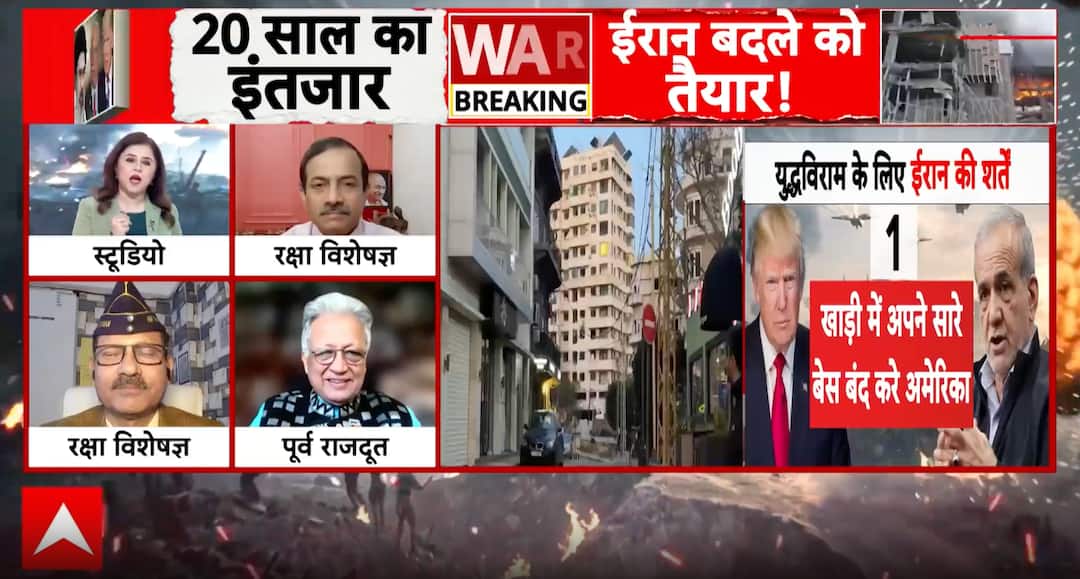
According to a report by The Wall Street Journal, Iran has laid out stringent preconditions for restarting talks with Washington, including a demand to shut down all U.S. military bases across the Gulf. Sources cited in the report say this reflects a more hardline stance by Tehran as regional tensions continue to rise.
The position is believed to be strongly shaped by the Islamic Revolutionary Guard Corps (IRGC), which has gained increased influence within Iran’s leadership in recent weeks. Alongside security-related demands, Iran is also said to be pushing for compensation over damages from U.S. and Israeli strikes — a proposal that American officials have rejected as impractical.
Donald Trump stated that the U.S. had received what he described as a “significant signal” regarding the Strait of Hormuz, a critical route for global oil shipments. As per Agence France-Presse (AFP), Iran later communicated via the International Maritime Organization that it would permit safe transit for “non-hostile vessels” through the strait.