
In his 1931 book The Epic of America, James Truslow Adams coined a term that went on to define the classic life the United States promised to the rest of the world. The “American Dream”, as Adams described it, was a vision of a society where life should be better, richer and fuller for everyone, offering opportunity based on ability and achievement rather than social class or birth.Inspired by this promise, Indians began migrating to America in the 19th century, with the numbers increasing significantly in the 20th century. America ticked all the boxes for them: life in the city, better income, improved opportunities and a slightly elevated social standing back home, where otherwise life could be spent working to the bone and still only managing to become a family man rather than a billionaire.Bhicaji Balsara, a Parsi businessman, became the first Indian to gain US citizenship through naturalisation in 1910. But the peak of proud Indian-American symbolism arrived much later, with Satya Nadella becoming Microsoft CEO in 2014 and Sundar Pichai becoming Google CEO in 2015. What began with Punjabi farmers moving to the American West Coast eventually evolved into families taking loans worth lakhs to send their children to the United States so they could chase the American Dream, no matter the cost.
The dark era for Indian-Americans
Fast forward to Barack Obama’s presidency from 2009 to 2017. Those years saw the maximum number of Indian-Americans appointed to senior positions in the administration for a community that was roughly three million strong at the time, leading some to jokingly describe Obama as the first “Indian-American president”.This was followed by Donald Trump’s rise to power between 2017 and 2021. Despite courting Indian-American voters, Trump garnered only about 16% of the Indian-American vote in 2016. A 2020 Asian American Voter Survey later found that roughly 28% of Indian-Americans supported him.Joe Biden’s presidency further strengthened Indian-American representation when he selected Kamala Harris as his running mate in 2020. Harris went on to serve as vice president from 2021 to 2025, becoming the first person of Indian-origin to hold the office.Trump’s re-election in 2025 marked what he described as the beginning of America’s “Golden Age”. Yet for many Indian-Americans, the political and cultural climate since then has felt far less golden.
The Indian-American burn out
What lies ahead for Indian-Americans?
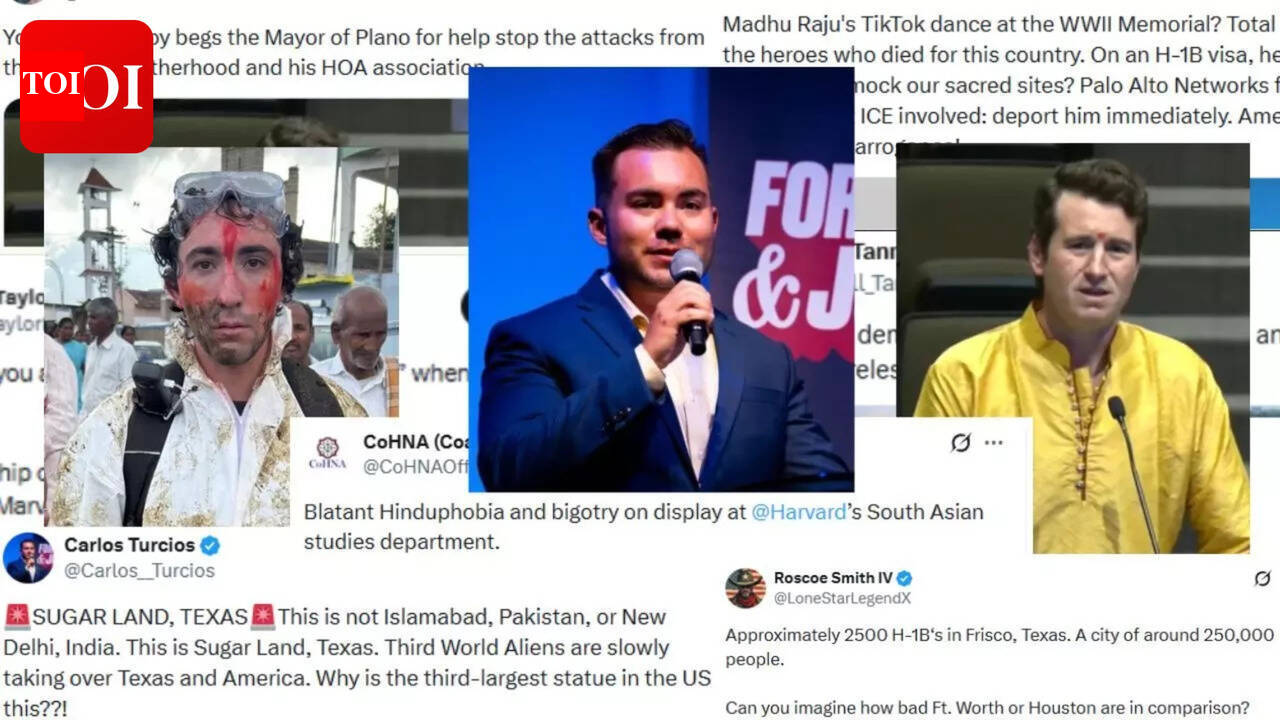
A study by the Network Contagion Research Institute (NCRI), claimed that in 2025, 24,000 posts on X were viewed by over 300 million times. Anti-Indian content on the platform tripled in the year alone. Anti-Indian hate and Hinduphobia have rendered Indians orphan of the second-best thing that differentiated them in a world ruled by capitalism and influencer by evangelism- their religion, with the first, of course, being their sheer audacity of being talented. For many observers, the trend raises difficult questions about assimilation and identity.Consider Indian-American golfer Akshay Bhatia, who secured a dramatic playoff victory at the Arnold Palmer Invitational in March 2026. Some online commentators noted how thoroughly he appeared assimilated into American culture, arguing that apart from his name, there were few obvious markers of Indian identity.“Another thing about akshay bhatia that you missed is – assimilating” said a post on X, like many other. In the Carnegie survey, while Indian-Americans were ready to fold themselves in on their culture, giving up tilak, bindis and whatnot, they still did not plan to leave the country and a majority recommended the US for employment. Indians as civilians of the country have had to barter for existence since time immemorial. With British colonisers, they became sepoys and babus, for the Mughals, the subedars and mansabdars, all to be able to live on theirr own land, in their society and culture while practising their religions. For generations, immigrant communities in America have navigated the delicate balance between assimilation and cultural preservation. Indian-Americans today face a similar dilemma: how to maintain a visible cultural identity in a political environment increasingly shaped by debates over immigration, nationalism and global competition.The American Dream promised opportunity without erasure. For many Indian-Americans, the coming years may determine whether that promise still holds. Go to Source