
 "Explained: How the UN ‘snapback mechanism’ could reimpose sanctions on Iran")

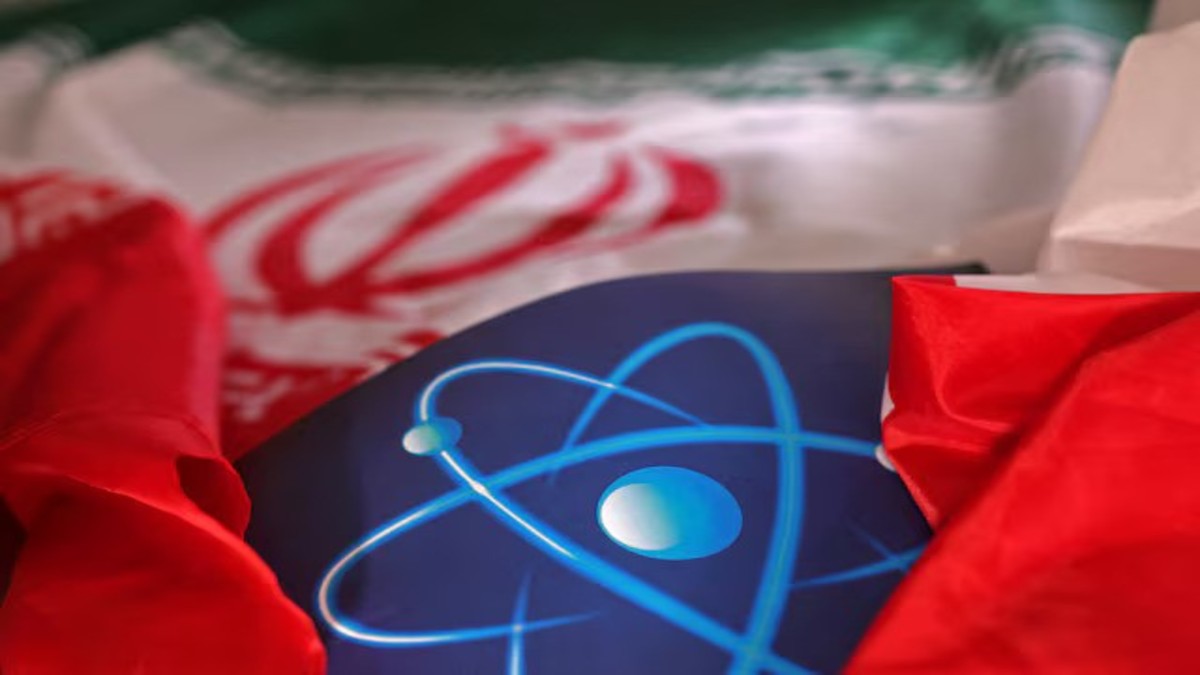
France, Britain and Germany have threatened to trigger the “snapback mechanism” that automatically reimposes all United Nations sanctions on Iran over its nuclear program, saying Iran has willfully departed from their 2015 nuclear deal that lifted them.
The European countries, known as the E3, offered Iran a delay of the snapback during talks in July in exchange for three conditions for Iran: resuming negotiations with the United States over its nuclear program, allowing UN nuclear inspectors access to its nuclear sites, and accounting for the over 400 kilograms of highly enriched uranium the UN watchdog says it has.
Tehran, which now enriches uranium at near weapons-grade levels, has rejected that proposal.
The US and Iran tried to reach a new nuclear deal earlier this year, but those talks have not resumed since the 12-day Israeli bombardment of Iran’s nuclear and military sites and the US bombardment on June 22.
How snapback works
Under the Joint Comprehensive Plan of Action reached between world powers and Iran in 2015, Iran agreed to limit uranium enrichment to levels necessary for civilian nuclear power in exchange for lifted economic sanctions. The International Atomic Energy Agency was tasked with monitoring Iran’s nuclear program.
The snapback mechanism’s purpose is to swiftly reimpose all pre-deal sanctions without being vetoed by UN Security Council members, including permanent members Russia and China.
The process begins when one or more nuclear deal participants notify the UN secretary general and the Security Council president about Iran’s “significant non-performance of commitments.”
That triggers a 30-day window during which a new resolution to continue sanctions relief must be adopted.
Since that’s unlikely, as the US, Britain and France would veto such a resolution, all UN sanctions automatically “snap back.” At this stage, no further vote is needed, and no Security Council member can block reimposition.
Editor’s Picks
The snapback mechanism expires in October
The Europeans agreed with the US earlier this year to set an end-of-August deadline for triggering the snapback mechanism if no agreement is reached with Iran.
The US itself cannot activate the snapback since US President Donald Trump withdrew the US from the nuclear deal in 2018.
Two factors drive the approaching deadline.
First, the power to automatically snap back sanctions expires on Oct. 18. After that, sanctions efforts could face vetoes from China and Russia, which have provided some support to Iran in the past.
Second, Europeans want to trigger the snapback mechanism under South Korea’s Security Council presidency in September, before Russia takes over in October. While Russia cannot veto the reimposition of sanctions under the mechanism, diplomats say Moscow could use procedural delaying tactics until the nuclear deal expires.
The E3’s position
European nations assert that Iran has “willfully and publicly departed” from the nuclear deal’s commitments.
In May, the IAEA said Iran had amassed 408.6 kilograms (900.8 pounds) of uranium enriched up to 60 per cent purity. If it is enriched to 90 per cent, it would be enough to make nine nuclear weapons, according to an IAEA yardstick, though a weapon would require other expertise, such as a detonation device.
The IAEA also estimated that as of May 17, Iran’s overall stockpile of enriched uranium stood at 9,247.6 kilograms (20,387.4 pounds).
The amounts far exceed the limits set out in the nuclear deal, under which Iran was allowed to enrich uranium up to 3.67 per cent and maintain a uranium stockpile of 300 kilograms.
In addition, in 2022, Iran removed most monitoring equipment, including IAEA cameras. A year later, Iran barred some of the agency’s most experienced inspectors.
Iran’s position
Iran has long maintained that its nuclear program serves peaceful purposes only. Tehran also argues that it has the right to abandon the nuclear deal’s limits because Washington withdrew from the deal in 2018 and reimposed its own sanctions.
Before 2019, when Iran gradually began to breach the deal’s limits, the IAEA confirmed Tehran adhered to all commitments.
Iran contends there is no legal basis for the Europeans to reimpose UN sanctions via snapback, claiming the countries failed to uphold the accord after the US exit.
Tehran has also threatened to withdraw from the global Treaty on the Non-Proliferation of Nuclear Weapons if snapback is triggered. By ratifying the NPT in 1970, Iran committed to not developing nuclear weapons.
Other options
Once the snapback mechanism is triggered, there remains a slim chance for a diplomatic solution, said Ali Vaez, Iran project director at the International Crisis Group.
If the West and Iran reach a diplomatic agreement within the 30-day window, a resolution could be introduced to push back the mechanism’s Oct. 18 expiration date, he said.
“The timing is, in one sense, auspicious because it overlaps with the UN General Assembly’s annual high-level week, which will bring to New York high-level leaders who could huddle over ways to head off execution,” he said.
But he added that the snapback issue is likely to resurface unless Washington and Tehran can hammer out a new nuclear deal.
With inputs from AP
End of Article

&description=Explained%3A+How+the+UN+%E2%80%98snapback+mechanism%E2%80%99+could+reimpose+sanctions+on+Iran)