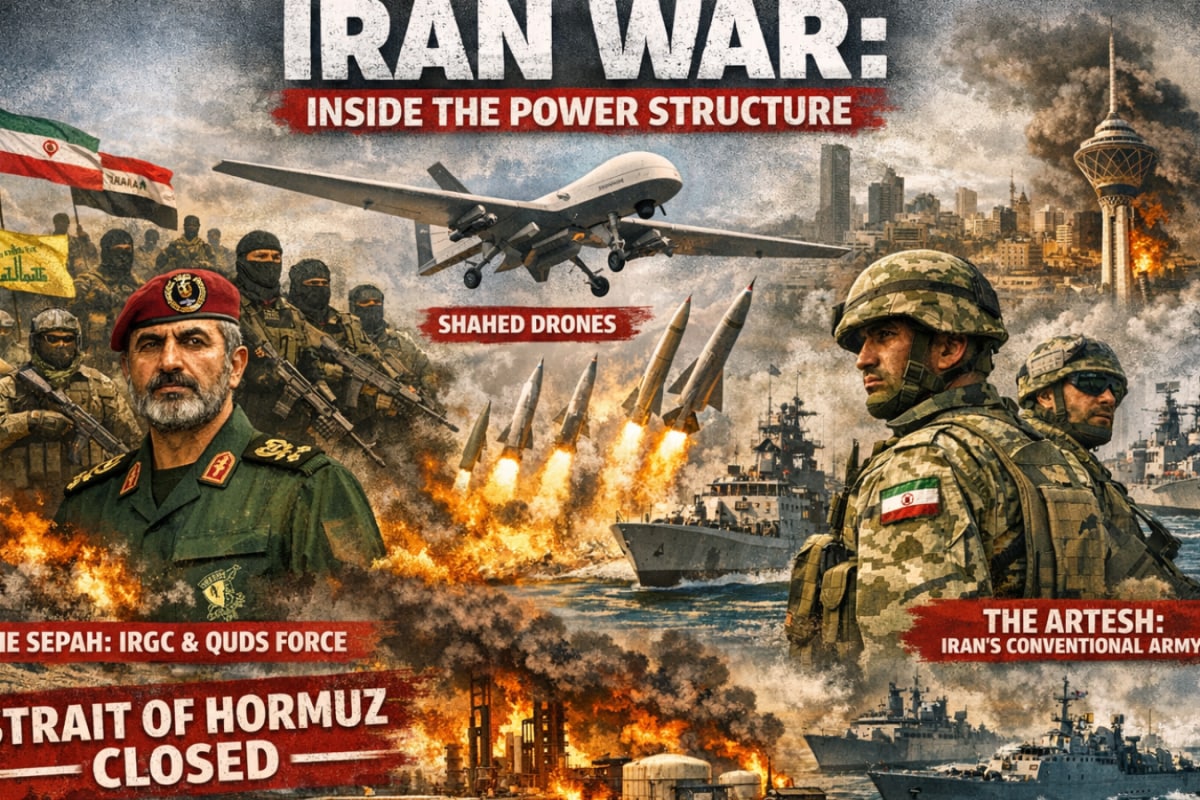
Congress leader Rahul Gandhi on Thursday criticised Prime Minister Narendra Modi for not issuing a public statement after reports that an Iranian warship, IRIS Dena, was sunk by the United States in the Indian Ocean. Gandhi said the development signals a dangerous escalation in global tensions and could threaten India’s critical energy supply routes. He warned that the conflict is unfolding close to India’s strategic neighbourhood and argued that the government’s silence raises concerns about India’s preparedness and diplomatic posture at a time of mounting geopolitical uncertainty.
Energy Routes At Risk
In a post on X, the Leader of Opposition in the Lok Sabha warned that the world had entered a “volatile phase” and that worsening tensions in the region could directly impact India’s energy security.
The world has entered a volatile phase. Stormy seas lie ahead.
India’s oil supplies are under threat, with more than 40% of our imports transiting the Strait of Hormuz. The situation is even worse for LPG and LNG.
The conflict has reached our backyard, with an Iranian warship…
— Rahul Gandhi (@RahulGandhi) March 5, 2026
Gandhi noted that more than 40 per cent of India’s oil imports pass through the Strait of Hormuz -a narrow but crucial shipping lane connecting the Persian Gulf to global markets. Any disruption in the area, he said, would have significant implications for India’s economy.
He added that the risks extend beyond crude oil supplies. According to Gandhi, India’s dependence on the same maritime corridor for LPG and LNG shipments makes the country particularly vulnerable if the conflict intensifies.
“The world has entered a volatile phase. Stormy seas lie ahead,” Gandhi wrote, warning that India must prepare for potential disruptions in energy supply chains.
“Compromised PM”: Rahul
Gandhi also pointed to reports that the conflict had reached India’s immediate maritime neighbourhood, referencing the sinking of the Iranian warship IRIS Dena in the Indian Ocean.
Despite the seriousness of the situation, he said, the Prime Minister had not addressed the development publicly.
“At a moment like this, we need a steady hand at the wheel,” Gandhi said, arguing that the government should clearly articulate India’s strategic position.
In a sharp attack on the Prime Minister, Gandhi accused Modi of weakening India’s strategic autonomy. He claimed the country currently has a “compromised PM who has surrendered our strategic autonomy”.
The remarks come amid growing global tensions and heightened scrutiny of India’s diplomatic response to emerging conflicts affecting critical maritime routes and regional stability.