
 The state has signed a three-year agreement with RPPL Motorsports–known for building India’s first FIA-graded street circuit in Hyderabad.
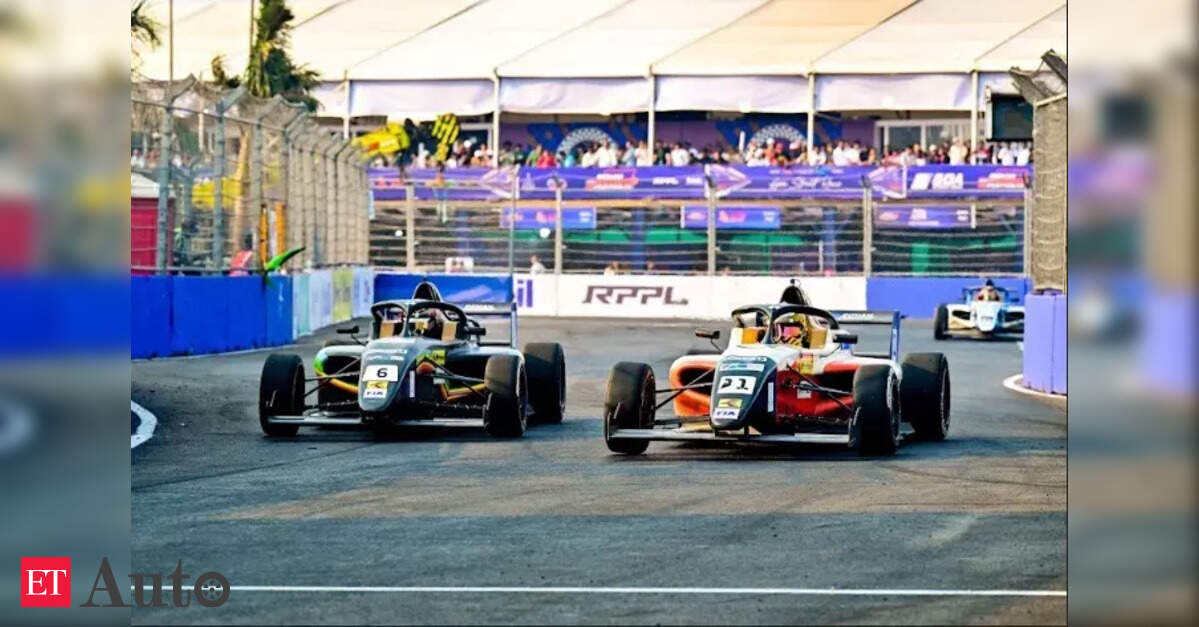
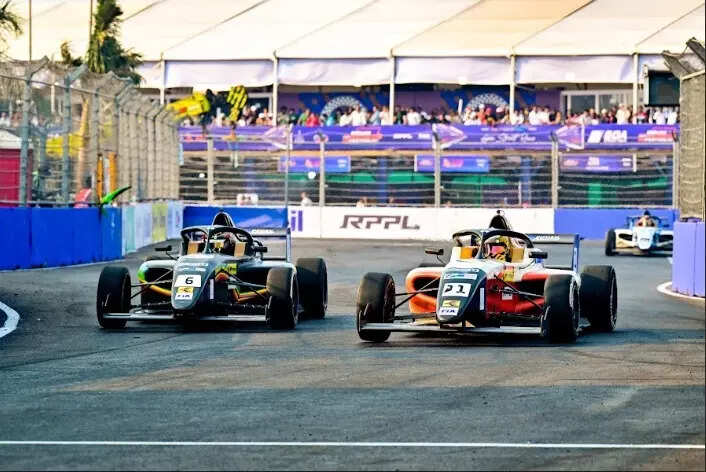
As the chequered flag dropped on Round 4 of the Indian Racing Festival, held at the specially constructed 2.064-kilometre FIA-compliant street circuit within the premises of Manohar International Airport (GOX) in Goa on February 14-15, State Chief Minister Pramod Sawant said the sporting event was more than just entertainment, positioning it instead as an economic strategy.
“Motorsport should not be treated as a private entertainment activity. It should be treated as a destination-building economic structure,” Sawant said, outlining why the state has chosen to back Formula racing.
The state has signed a three-year agreement with RPPL Motorsports–known for building India’s first FIA-graded street circuit in Hyderabad– and venue partner GMR, aiming to use feeder categories like Formula 4 and Formula 3 to showcase governance, safety, and logistics capabilities, a preparatory step toward hosting Formula 1.
The CM said the state government will be following a calibrated pathway in hosting feeder categories such as Formula 4 and potentially Formula 3 to demonstrate governance capability, safety compliance, logistics readiness and crowd management, before chasing Formula 1.
Sawant noted that governments spend anywhere between ₹800–1,200 crore annually to host a single Formula One Grand Prix because of its tourism multiplier effect.
Ambition and its cost
Akhilesh Reddy, Chairman and Managing Director of RPPL, acknowledged the scale of investment required to build a credible street circuit.
While he did not break down the exact split between capital expenditure and operational costs, he stressed that safety investments alone are substantial. Debris fencing, concrete barriers, track engineering and logistics systems all adhere to FIA standards, the same global benchmarks applied across top-tier series. “When I say FIA safety standards, it means the utmost safety proven globally, the same standards used in Formula 1.”
For a two-day race weekend, the economic footprint extends beyond spectator revenue. According to Reddy, between 1,500 and 2,000 people were engaged over the past 15–20 days on average in various roles like construction, operations, logistics and event management. “Though it’s a two-day event, it gave employment to so many people for almost a month,” he said.
That employment argument dovetails neatly with the CM’s destination-building pitch. However, the longer-term question is sustainability.
There are early signs of growing institutional openness. Reddy acknowledged that government attitudes are shifting. “When I approach them, I can see the positive attitude. They are giving time to understand the inner story and backend benefits of the sport,” he noted.