
 As for demand following the slash in GST 2.0 levies, Suzuki was of the view that the rural ratio in demand was rising.
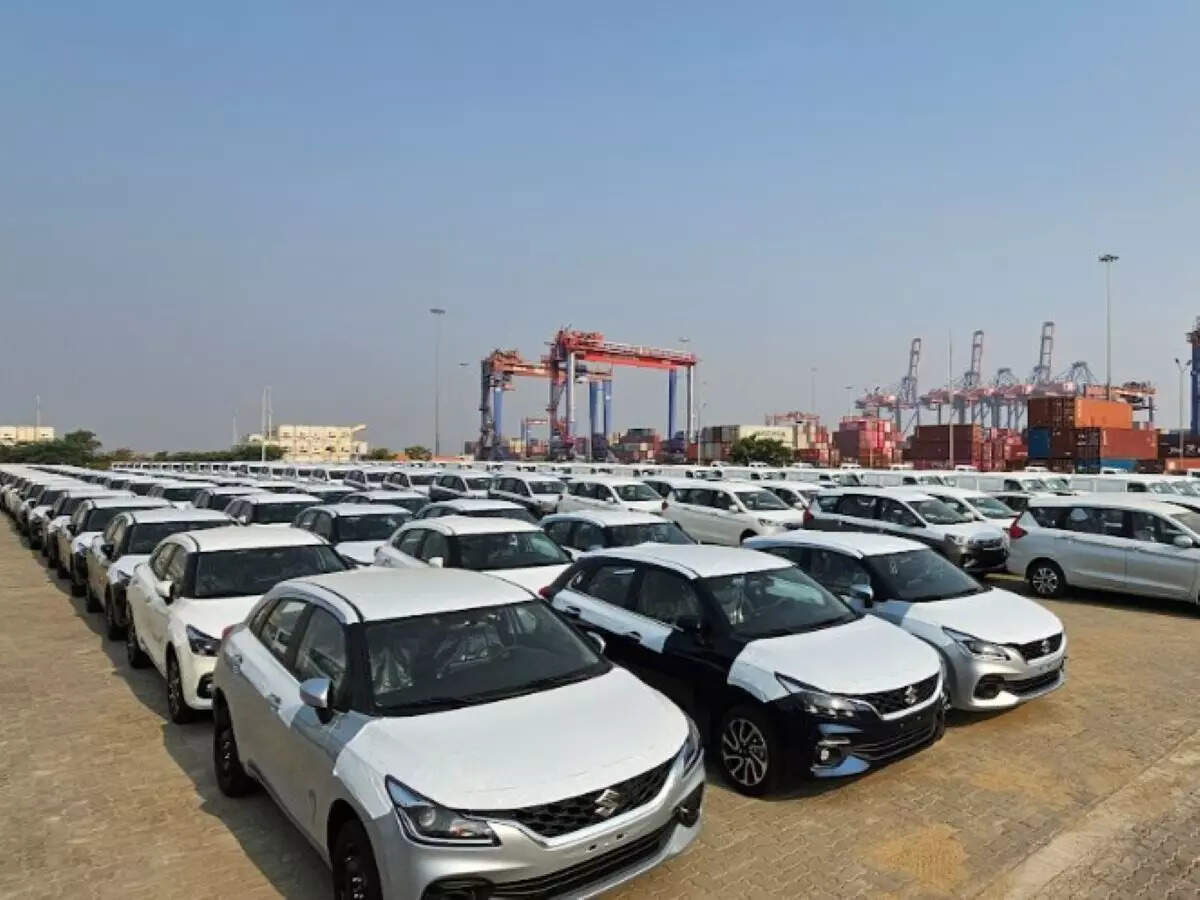
Suzuki Motor Corporation hopes to increase its exports from India in 2026-27 when capacity expansions are implemented at its new plants in Haryana and Gujarat.
“Exports are in demand in Africa, the Middle East etc and with expanded production capacity next fiscal year (two new plants), about 20,000 units/month will be added, which we look forward to,” the top management in Japan told analysts during a rant Q&A session.
“Currently, we produce 220,000–230,000 units/month, with 170,000–180,000 units/month for India domestic and about 50,000 units/month for exports,” it added. Beginning next fiscal, Maruti Suzuki, the Indian arm expects capacity additions of 250,000 units/year each at the new plants (Kharkhoda Plant 2/Hansalpur Plant 4).
According to the Japanese management, “since ramp-up production is necessary, contributions will be phased”. Kharkhoda in Haryana is expected to contribute from the first quarter of next fiscal year and Hansalpur in Gujarat from the second quarter.
Exports on track in FY 26
The Maruti Suzuki team had earlier told analysts during its Q3 conference call of January 28 that the company had sent out the first shipment of about 400-500 units of its Victoris model from Gujarat and was on track to achieving the guidance given of about 400,000 units of exports in FY 26.
Till end-December, 13,000 units of e Vitara had also been shipped out with the UK being the top destination in terms of volumes. “The chain is slightly long and it is slightly premature to get retail level feedback but the momentum continues and we will keep shipping out,” said the Maruti team.
Also read:
Maruti steps up exports to Japan though Africa, Middle East dominate
The global alliance between Toyota and Suzuki has also played a key role in the growing exports story. The latter is a bigger global player whose markets are now accessible to Maruti. Toyota, in its turn, is benefiting from its ally’s manufacturing efficiencies and platform sharing to increase its product range. This is an alliance that is poised to grow even more strongly in the coming years, say industry observers.
Meanwhile, the leadership team in Japan told analysts that in the third quarter (October–December), production in India was about 490,000 units (domestic market only) with wholesales at 540,000 units and retail sales at 680,000 units, “leaving factory inventory almost zero and retail inventory depleted to about three days’ worth” of monthly sales.
“In January, the situation continues that almost all production units are being despatched immediately. Backorders were about 190,000 units at the end of January,” it elaborated. Currently, production is being wholesaled as is and retail inventory at the end of January is about 10 days, much lower than the standard level (about 30 days is desirable).
Thinning dealer inventory
As the management explained, considering transport times, dealer inventory is even thinner. There is a risk that customers who cannot wait for delivery may switch to other companies, “so it is desirable to secure inventory close to the standard level, but the situation remains tight, and we see strong supply-demand”.
Suzuki said fixed costs in the Indian operations would increase due to investment in production expansion, but “we believe this will be offset” by volume effects. On the other hand, one-off expenses and rising raw material prices are challenges for profitability.
In India, we will propose advantageous trade-in programmes to customers driving Maruti Suzuki vehicles, combining high preowned car prices and financial products, which are competitive compared to other companies.Suzuki management team
“Therefore, we will strengthen activities to improve profitability across the value chain. Specifically, in India, we will propose advantageous trade-in programmes to customers driving Maruti Suzuki vehicles, combining high preowned car prices and financial products, which are competitive compared to other companies,” said the management.
As for new financial products (lease, residual value credit such as balloon loans), they face resistance from both supply and demand sides which means “careful explanation and fostering understanding” are necessary.
“Additionally, leveraging the characteristic of high preowned car residual values, we believe it is important to promote trade-ins by applying the value of owned vehicles as down payments to reduce monthly payments,” said the management.
Rural demand on the rise
As for demand following the slash in GST 2.0 levies, Suzuki was of the view that the rural ratio in demand was rising. “We feel demand is expanding for trade-ins from motorcycles and first-time buyers,” it pointed out.
For example, in Jharkhand, where average income is less than half the national average ($2,700–$2,800), “we hear that many customers” bring helmets to showrooms as they switch from motorcycles. As the leadership team in Japan put it, these customers have been heard saying, “For about two years, I wanted to buy a car but could not afford it, but with the GST cut, I could get a loan and am happy to switch.”
Also read:
Maruti working on greater flexibility across its plants
The Indian management at Maruti had also referred to this behavioural pattern in its analyst’s meet of January 28. “We have seen a positive swing and observed a delta of about seven per cent. This is the increase in first-time buyers’ percentage and a very healthy sign. We are seeing a lot of helmets in our showroom, which means there are positive signs that the two-wheeler owner is upgrading to small and compact cars,” it said.
Thanks to the GST 2.0 revision in levies, Maruti has been able to reduce sales promotion expenses more than the price reduction and except for rising raw material costs, this has had a positive impact on profit and loss.
“On the other hand, regarding rising raw material prices, we would like to consider price revisions within the range that does not increase sales promotion expenses,” said the Suzuki management.
Making the most of GST 2.0
Back home in India, the Maruti leadership team had told analysts that this “historic GST reform” presented an opportunity when “we should build momentum” and add to the selling efforts.
We always have time ahead of us where, if we have cost pressures, we can recover that from the market. But temporarily, we would like to continue with the momentum.Maruti leadership team
“We always have time ahead of us where, if we have cost pressures, we can recover that from the market. But temporarily, we would like to continue with the momentum,” it continued.
Reiterating that it was not “ethical” to have a price increase immediately after the Centre had reduced taxes, Maruti said some manufacturers may be doing it, but “we think we should make a decision in favour of the consumer”.
As for rising affluence levels in India which could fuel the car buying momentum, the Suzuki management was of the view that wage increases of “several to 10 per cent” are progressing along with rising salaries. However, living cost increases and government policy trends (tax, interest rates, etc.) could adversely affect demand.
Monitoring the situation carefully
“The current boom is recognised as being supported by policy measures such as raising minimum taxable income, lowering policy interest rates and GST revisions, which have contributed to higher disposable income. We will continue to monitor the balance of income, living costs and policy,” it added.
Asked about the medium-term impact of the India-EU FTA and the potential risk of imported cars from Europe on Maruti’s own volumes, the Suzuki team said tariffs on imported vehicles from the EU, now between 60 and 110 per cent, would be reduced to 10 per cent over seven years.
Also read:
For Suzuki, producing 4 million cars in India will mark turning point
This would also happen within a quota (current market: 4.5 million units/year, quota: 250,000 units/year) while tariffs on exports from India to the EU were also expected to gradually decrease from the current 10 per cent.
“However, we intend to use this opportunity to strengthen India’s competitiveness by expanding sales networks and improving quality. Also, the price range for imported vehicles applicable for this scheme is high (shipment price from Europe is €15,000 or more).
“Assuming the domestic sales price in India is about twice the shipment price, we recognise that there is a certain distance from Maruti Suzuki’s main price range,” continued the management.
FTA is a positive for India
The Indian arm has echoed these views at its own earnings conference call of January 28 when this subject was brought up by analysts. It said the Centre would have been “extremely calibrated and sensitive” to the domestic industry, while making India participate in the global arena, which is a big positive.
We are exporting EVs to Europe. We do not know what are the specific clauses regarding EV exports but sooner or later, it should be positive for India.Maruti management team
“We have always supported liberalisation and opening up, particularly when we put our money where our mouth is. We are exporting EVs to Europe. We do not know what are the specific clauses regarding EV exports but sooner or later, it should be positive for India,” it signed off.