
The research suggests the Indus Valley Civilisation could be far older than previously believed, not just by a few centuries, but by thousands of years. Experts studying pottery and animal remains at Bhirrana in northern India say the roots of this ancient society may stretch back around 8,000 years. If confirmed, that would place its earliest beginnings well before the era of Egypt’s first pharaohs.For decades, school textbooks have placed the great civilisations of the ancient world in an order from first Mesopotamia, then Egypt with its pyramids and pharaohs. And alongside them, the Indus Valley Civilisation. This timeline study may now be shifting, as the research suggests.
Indus Valley Civilisation may be thousands of years older than believed
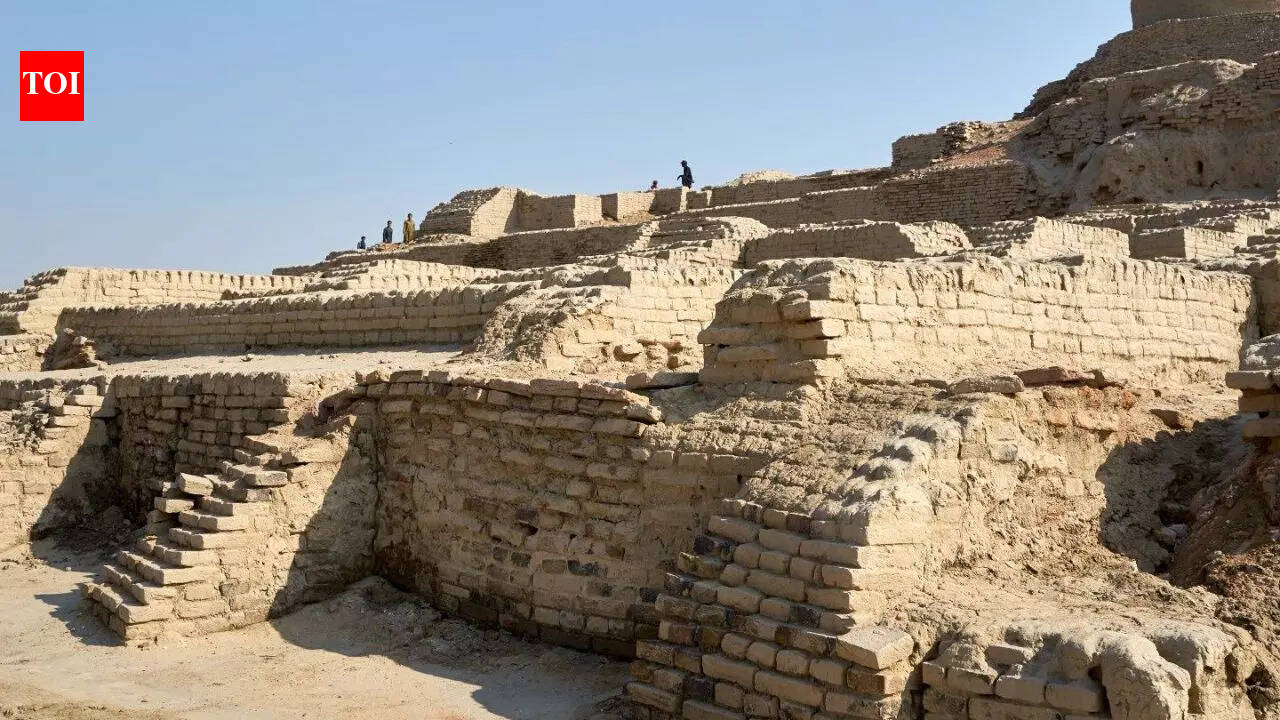
The Indus Valley Civilisation, also known as the Harappan civilisation, flourished roughly between 2600 and 1900 BC. At its height, it covered vast areas of what is now Pakistan and north-west India. It has long been recognised as one of the world’s earliest urban cultures.Fresh carbon dating at Bhirrana, however, is pushing that timeline further back. Researchers from the Archaeological Survey of India and collaborating institutions analysed pottery fragments and animal bones from deep settlement layers. Radiocarbon results suggest occupation dating back nearly 9,000 years before present. The findings, published in Scientific Reports, indicate that organised communities in the region may have formed far earlier than previously assumed. Sites such as Mohenjo-daro and Harappa reveal carefully planned streets laid out in grid patterns. Many homes had access to wells, courtyards, and bathing areas. Covered drainage systems ran beneath the streets, forming what experts often describe as one of the earliest known examples of urban sanitation anywhere in the world.Some houses appear to have had two storeys, while large granaries, marketplaces, and dockyards suggest complex economic organisation. Interestingly, archaeologists have not uncovered grand temples or obvious royal palaces on the scale seen in Egypt. This absence may indicate a different form of governance possibly less centralised although many questions remain unanswered.
How large the Indus Valley Civilisation became
At its peak, the Indus civilisation may have supported more than five million people, representing a significant share of the world’s population at the time. Its territory stretched from the Arabian Sea towards the Ganges basin, forming one of the largest cultural zones of the ancient world.Archaeologists have uncovered finely drilled gemstone beads, standardised stone weights, metal tools made from copper and bronze, and intricately carved seals bearing a script that remains undeciphered. Despite decades of study, the writing system of the Indus Valley continues to puzzle researchers.
Why the Indus Valley Civilisation declined
For many years, scholars pointed to climate change as a key factor in the civilisation’s decline. The weakening of monsoon patterns and the drying of river systems may have disrupted agriculture and trade. However, the recent findings from Bhirrana suggest a more gradual transition rather than a sudden collapse. Evidence indicates communities adapted to shifting environmental conditions by changing crops, moving from water-intensive wheat and barley to more drought-resistant varieties such as millets and rice. This shift may have reduced the need for large centralised storage facilities and dense urban centres.Instead of a dramatic downfall, the civilisation may have slowly dispersed into smaller settlements over time. Other theories, including migration, flooding, disease or social change, are still debated. Go to Source