

Last Updated:
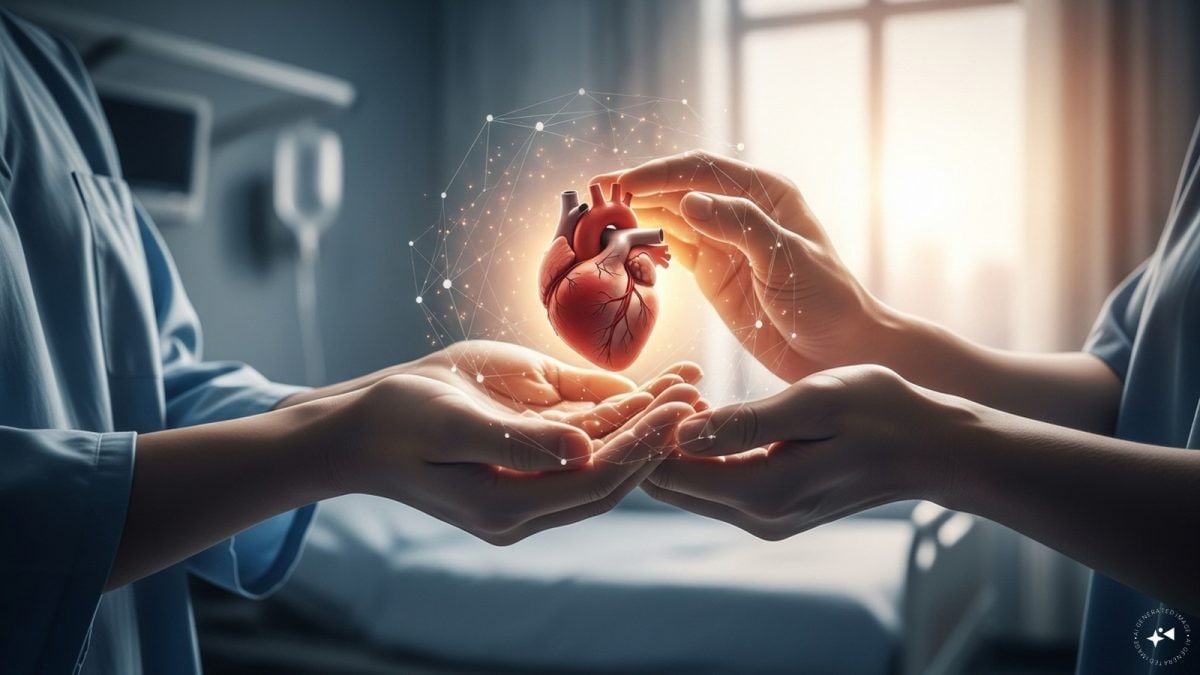
Living organ donation, where a healthy individual voluntarily donates an organ has become a life-saving option for thousands of patients waiting for transplants



Experts say for India to improve its organ donation rate, every hospital needs trained counsellors and awareness campaigns.
When most people in India think of organ donation, they imagine a selfless act that happens only after death. But the reality is more hopeful and immediate, you don’t have to die to donate. Living organ donation, where a healthy individual voluntarily donates an organ (usually a kidney or part of a liver), has become a life-saving option for thousands of patients waiting for transplants.
“Many in India still believe donation is only possible after death, but that’s not true,” explains Dr. Tanmay Pandya, HOD & Director, Nephrology & Renal Transplantation, Sarvodaya Hospital, Faridabad. “An individual in good health can donate a kidney or part of their liver without compromising their own well-being. This simple act bridges a critical gap between demand and availability, offering patients a second chance at life.”
Recommended Stories
Medical progress has made such outcomes possible. Donors undergo comprehensive health checks to ensure their own safety, and in most cases, the remaining organ is fully capable of sustaining a healthy life. “Most donors return to normal routines within a few weeks,” adds Dr. Pandya. “Living donation is not just a medical procedure, it’s a profound human act of giving life.”
However, donation is not just a matter of willingness; it is closely regulated under Indian law. Rajesh Mittal, Secretary & Director of the Rotary Action Group on Blood and Organ Donation (RAG BOD), explains: “In India, organ donation is governed by the Transplantation of Human Organs and Tissues Act (THOTA). The Act permits donation by living persons, but under specific conditions.”
According to the Act, a donor must be above 18 years of age. The first category of living donors includes “near relatives”, a term legally defined to include spouses, parents, children, siblings, and even grandparents or grandchildren. A living person may donate organs or tissues to a relative within this definition, and such donations are generally straightforward.
There are also provisions for donations beyond immediate relatives. “If someone feels affection or attachment toward a recipient, they may donate,” says Mittal. “But in such cases, the approval of an Authorization Committee is mandatory, as the law strictly prohibits trafficking and the sale of organs. Committees remain cautious in granting permissions to prevent misuse.”
A third provision under THOTA is for “swap donations.” Mittal elaborates: “Suppose Donor A wants to donate to Recipient A but is not biologically compatible, and Donor B faces the same issue with Recipient B. If Donor A is compatible with Recipient B and Donor B with Recipient A, the law allows the swap. Both transplants are then carried out simultaneously, with prior approval.”
The kidney remains the most commonly donated organ, but living donors may also contribute a part of their liver or pancreas. Remarkably, the liver has regenerative capacity, it can regrow in both donor and recipient after surgery. “The law ensures that only those organs that do not compromise the donor’s long-term health are permitted for donation,” notes Mittal.
Despite medical safeguards and legal frameworks, cultural hesitation and lack of awareness remain barriers. “Living donation offers recipients and their families not just survival, but a better quality of life,” stresses Dr. Pandya. “We must work to dispel myths and encourage people to see it as an act of courage and compassion.”
Mittal echoes the sentiment, “Living organ donation is not merely about surgery. It is a unique act of love, empathy, and humanity, one person giving another the gift of life.”
About the Author

Swati Chaturvedi, a seasoned media and journalism aficionado with over 10 years of expertise, is not just a storyteller; she’s a weaver of wit and wisdom in the digital landscape. As a key figure in News18 Engl…Read More
Swati Chaturvedi, a seasoned media and journalism aficionado with over 10 years of expertise, is not just a storyteller; she’s a weaver of wit and wisdom in the digital landscape. As a key figure in News18 Engl… Read More
Loading comments…
Go to Source
Author: News18
 "This Week in Explainers: How Trump’s ‘peace plan’ for Ukraine is falling apart")
