
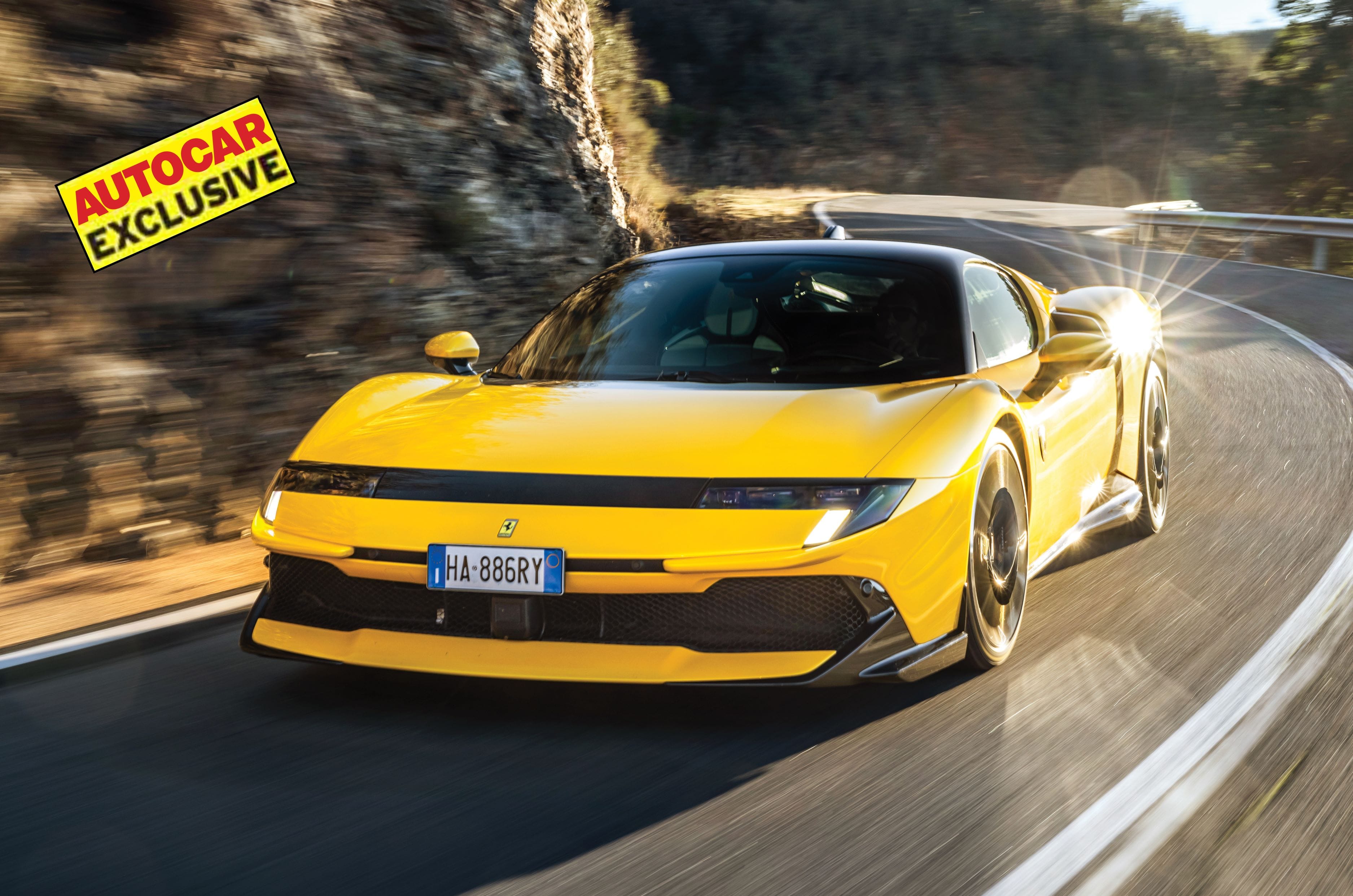

Ferrari’s revived 849 Testarossa is the SF90 replacement and takes over as the flagship of the legendary Italian sportscar maker’s regular range. It mixes a proper heritage badge and design cues from the 1970s / 80s with a very modern and potent plug-in hybrid powertrain. Ferrari has taken the basic ingredients of the SF90, added dollops of nostalgia, tech and spice to cook up the most powerful production Ferrari short of the F80. Producing 1,050hp and rocketing to 100kph from standstill in 2.3 seconds, the 849 Testarossa is deep into hypercar territory while still being a series-production Ferrari. But does it live up to the Testarossa legacy?
Ferrari 849 Testarossa Exterior Design and Engineering
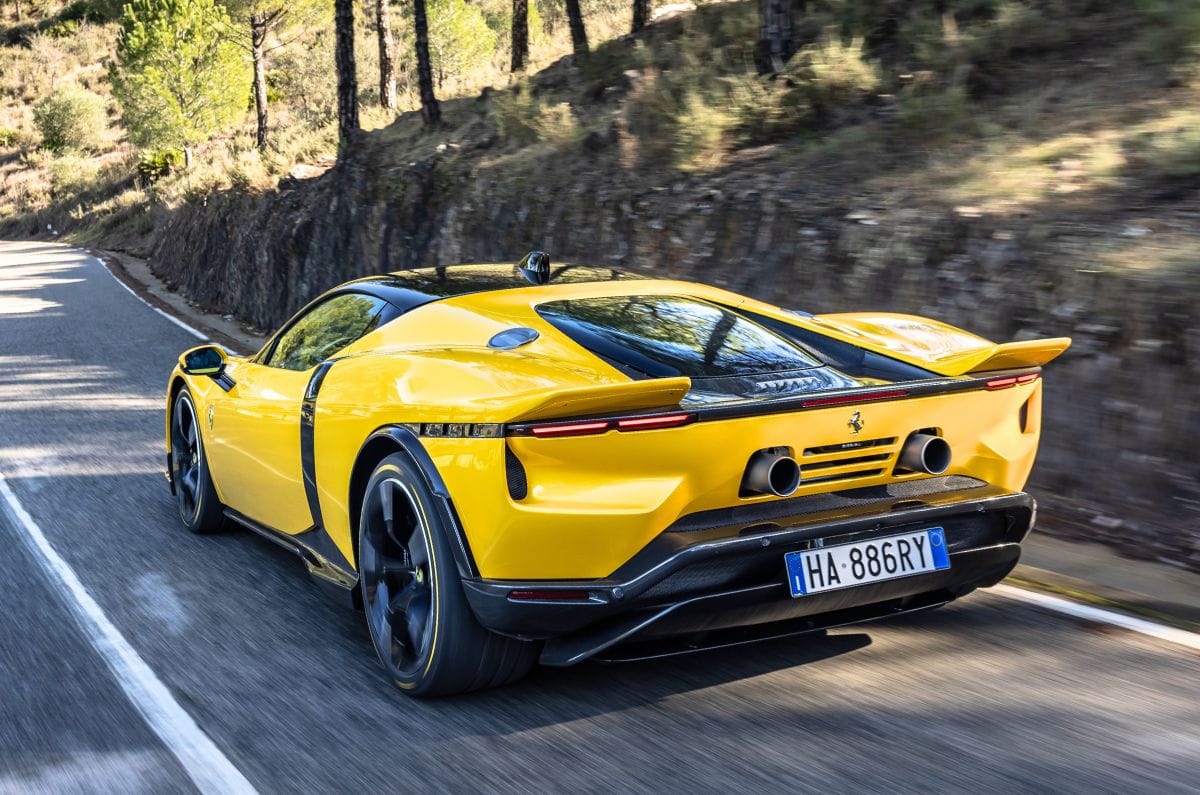
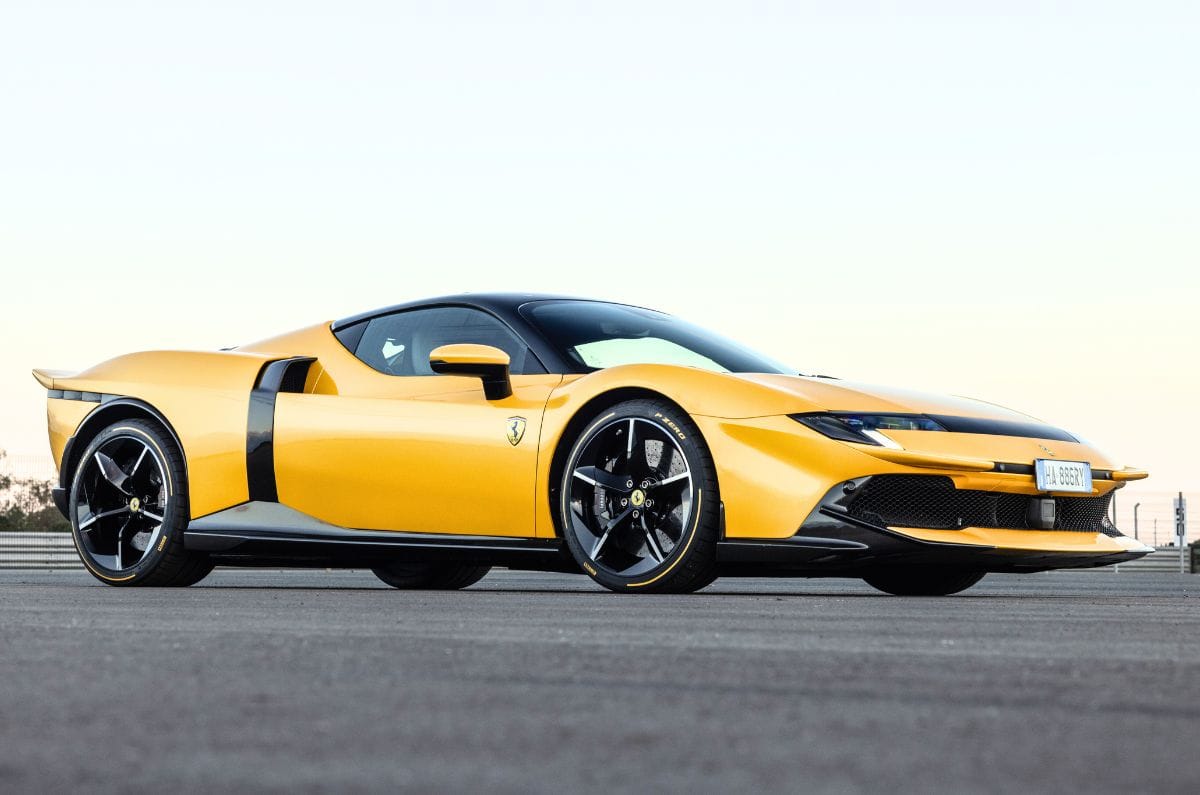
The 849 Testarossa’s design walks a fine line with a nod to the ’80s icon but without going full retro. It combines a sharp, almost concept-car silhouette with cues from Ferrari’s ’70s sports prototypes. Some will see it as a bold reinterpretation, others as a slightly overstyled attempt to cash in on Testarossa nostalgia without the drama of the original car’s side strakes and flat 12 aura.
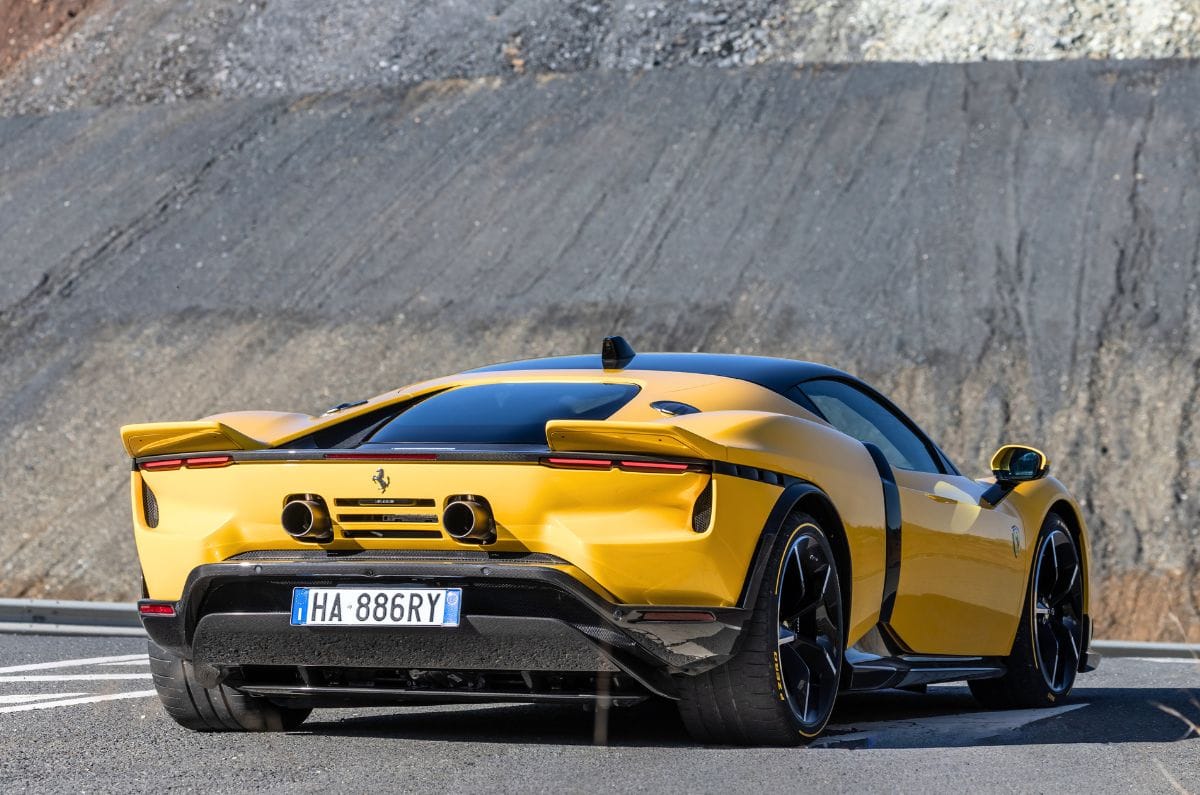
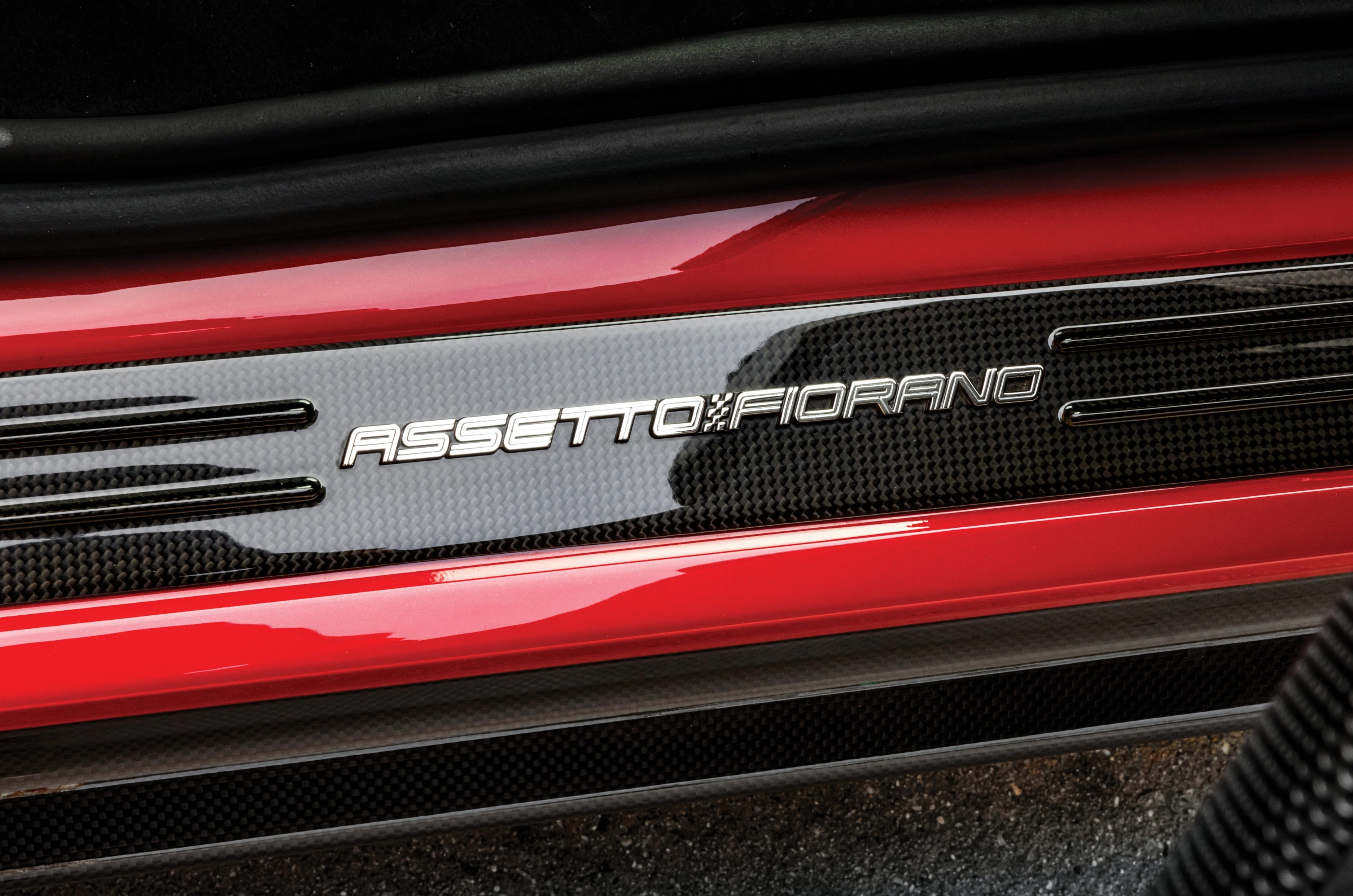
The twin tail rear, inspired by the 512 S and 512 M racers, is the 849 Testarossa’s defining design element, effectively splitting the tail into two buttresses with an active panel between them that can add up to 100kg of extra downforce when raised. With the optional Assetto Fiorano pack, which includes lighter components, extra aero bits and more aggressive rubber, total downforce is quoted at 415kg at 250kph – 25kg more than the SF90 – while reducing drag by around 10 percent.
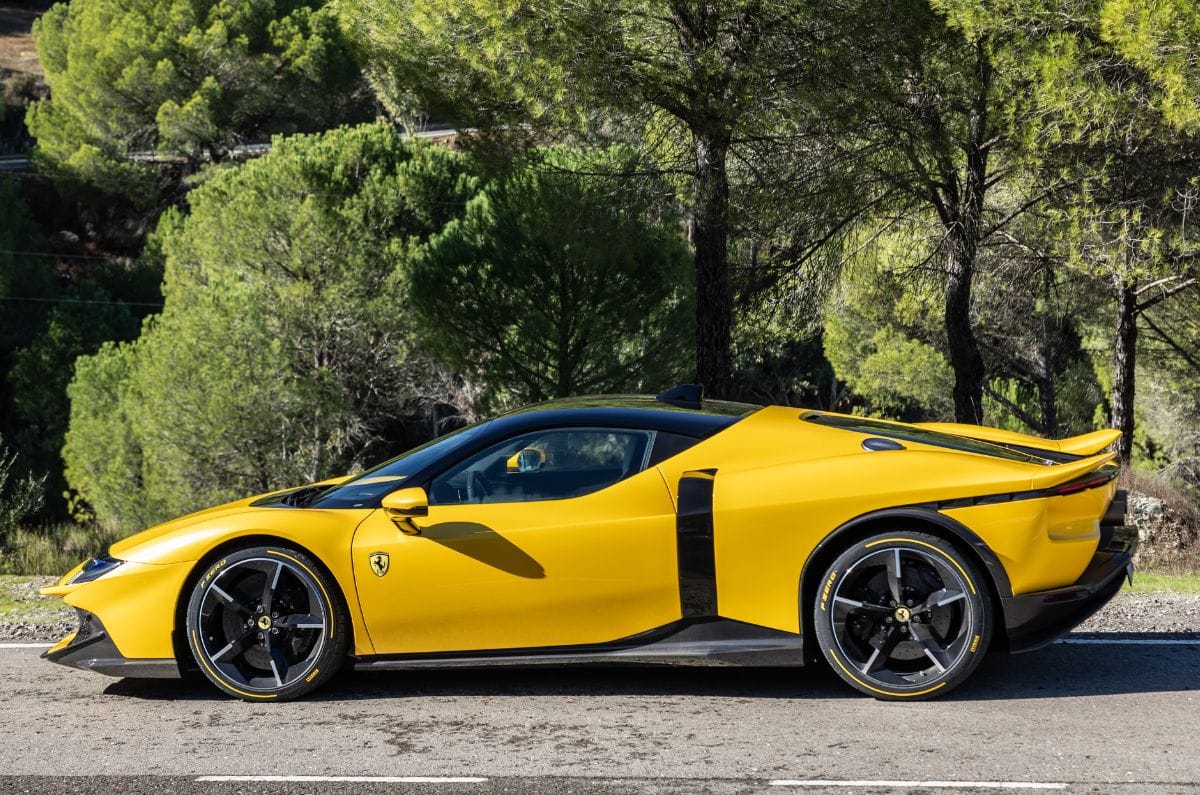
The front is less theatrical, and the black band running across the nose masking the lights is to mimic the pop-up headlamps of the last Testarossa. The underbody is more complex than before, reworked with multiple pairs of vortex generators and a more deliberate pathway for cooling and underbody airflow. In fact, Ferrari engineers say that the 849’s doors are the most complex – sculpted units channelling airflow into the side intakes, highlighted by a vertical black band.
Visually, the 849 takes Ferrari’s current design language and pushes it into more polarising territory. Whether you like the overall look is subjective; the car has drawn plenty of comments online, particularly from those nostalgic for Pininfarina’s cleaner lines. But it undeniably has presence, and in the Indian context, the 849 Testarossa’s strong visual identity is almost part of the value proposition. Indian supercar buyers just love to flex, and with the distinctive 849 Testarossa, they certainly can!
Ferrari 849 Testarossa Interior Space and Comfort
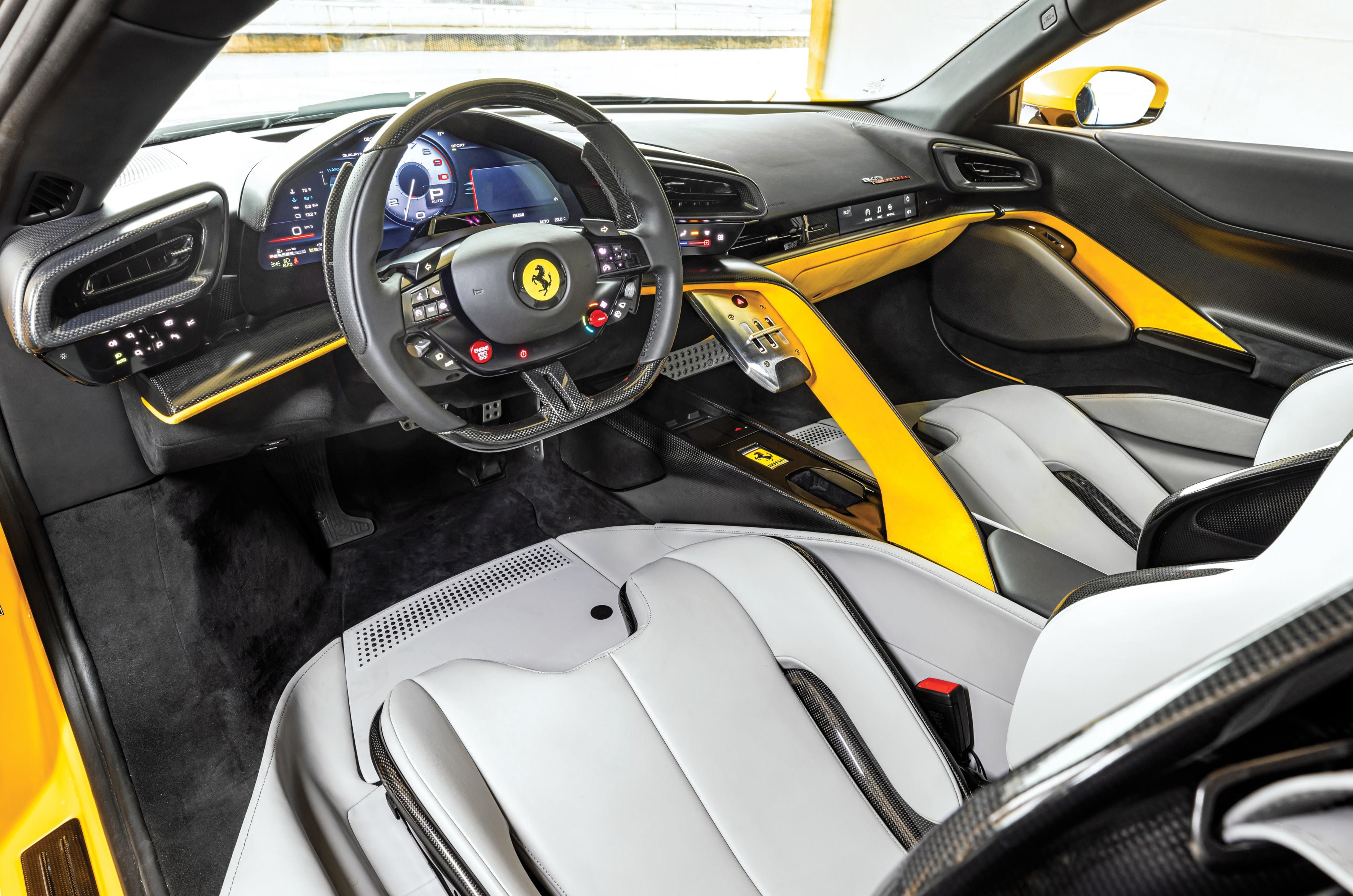
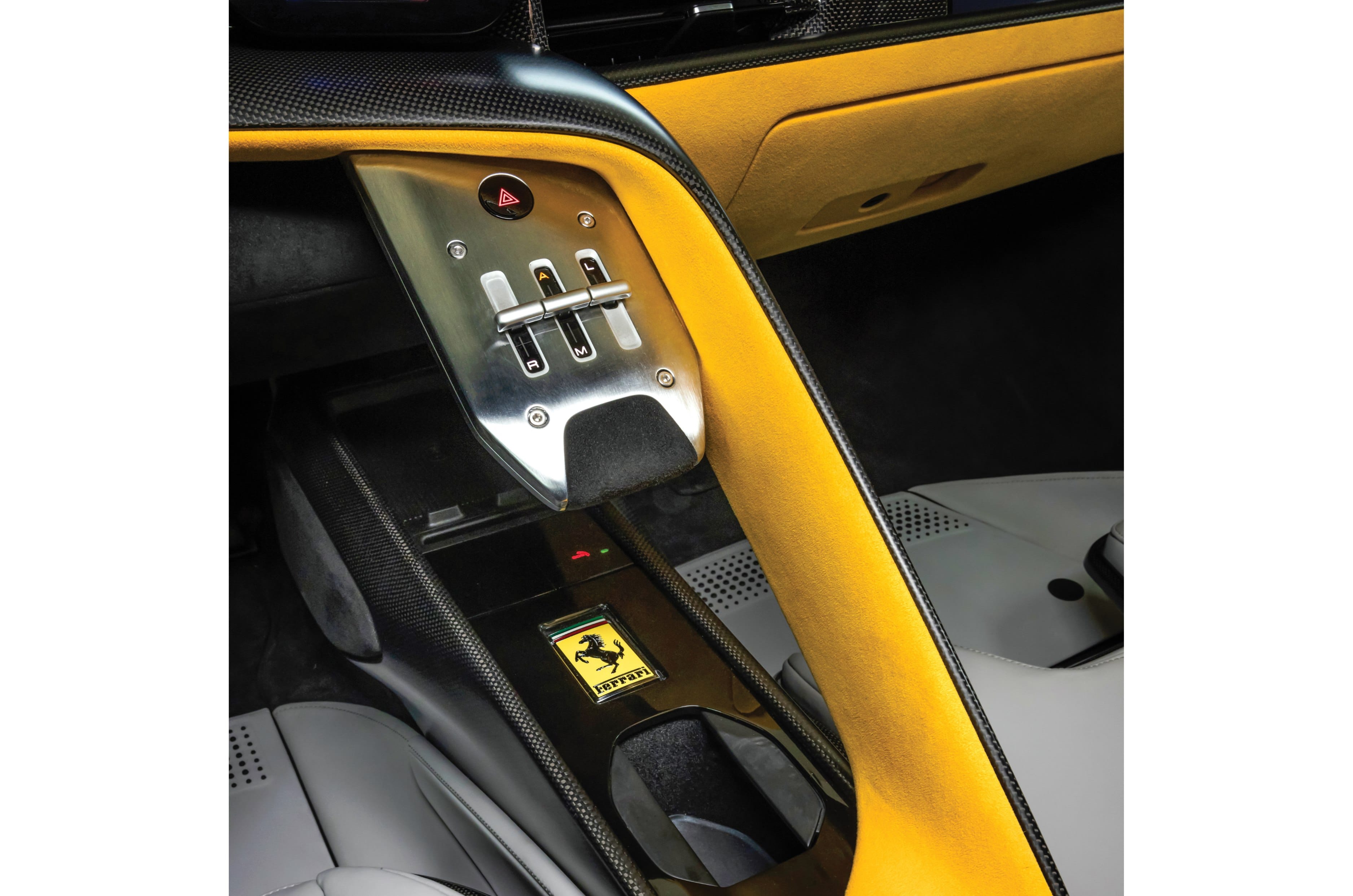
Inside, the 849 is more evolution than revolution. The split cabin layout from the SF90 is retained, with the driver cocooned by a high centre console and a wide digital instrument panel – a separate screen is available for the passenger. However, Ferrari has responded to criticism of its all-haptic steering wheel by reinstating physical buttons for most key functions, leaving only the e Manettino as a capacitive control. Also, the drive-controller aluminium gate has been shifted up, so it’s more in your line of sight. These sound like small changes but make the basic interaction with the indicators, wipers and drive modes so much easier when driving flat out.
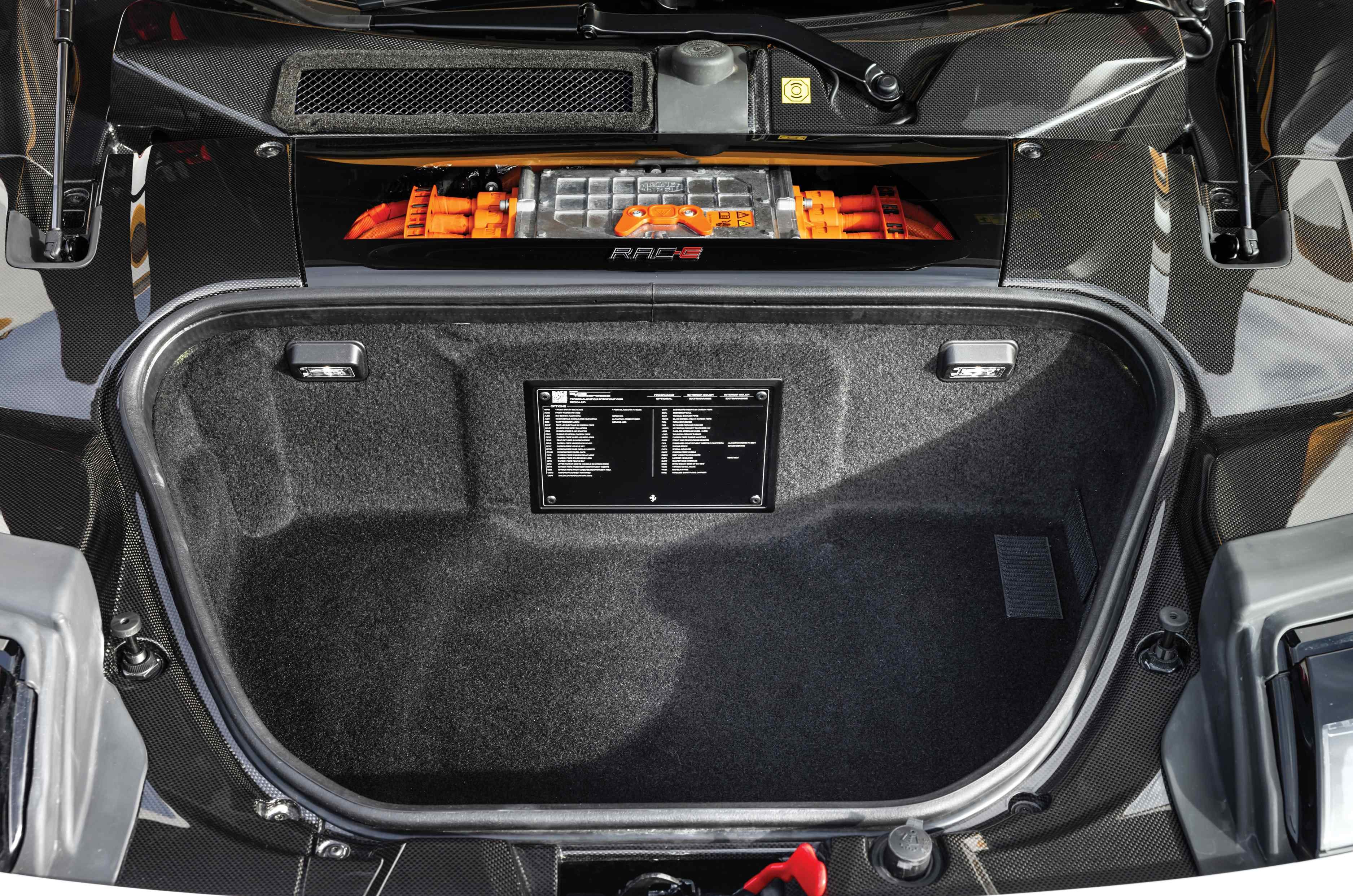
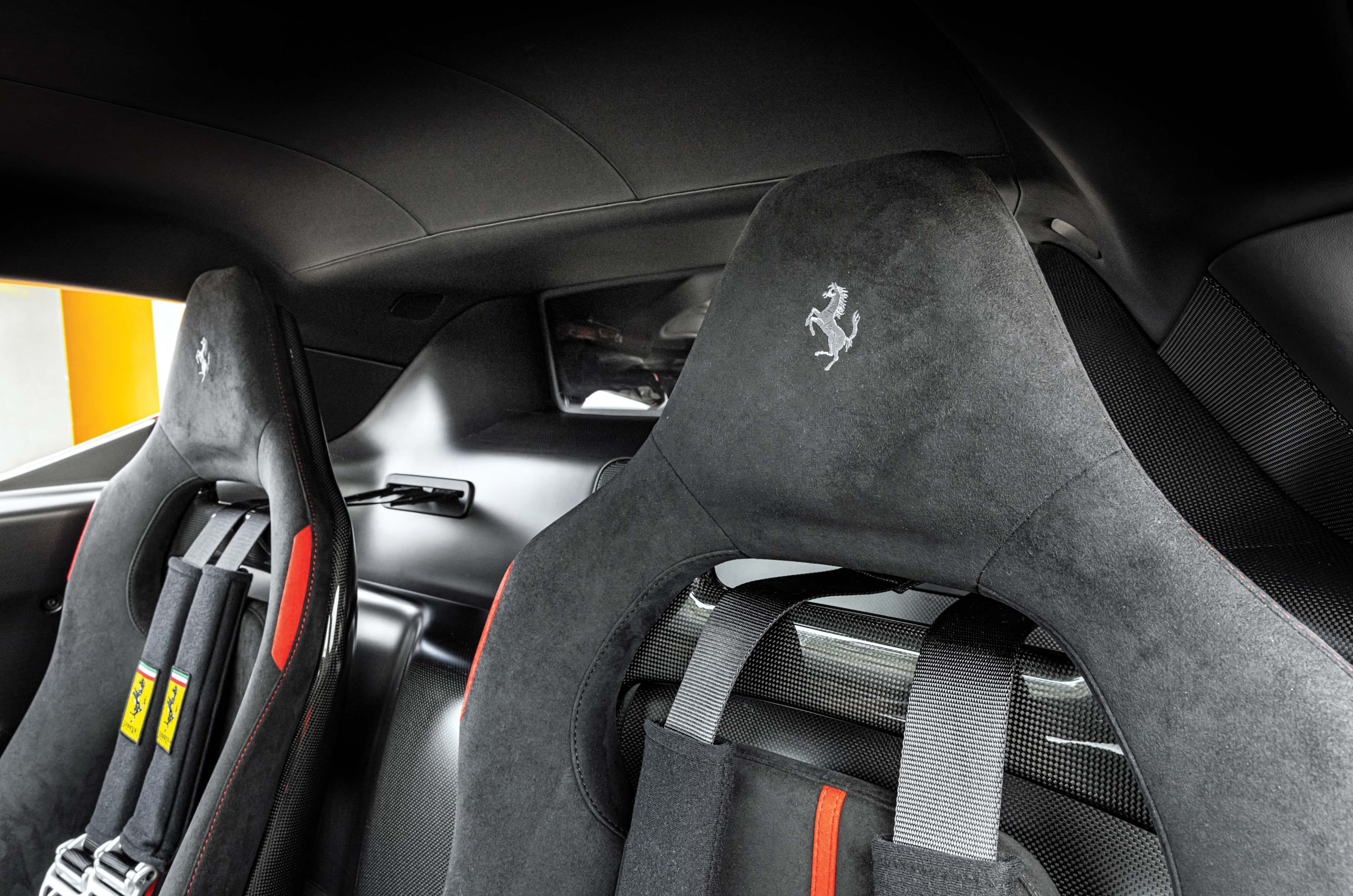
A new ‘bridge’ divides the space between the driver and passenger, and the quality of materials is suitably high. Assetto Fiorano cars layer in more exposed carbon and slimmer bucket seats, while the standard specification leans a little more toward a GT. Space remains tight. Storage is limited to a shallow front boot and a few small cubbies in the cabin – enough for an overnight bag or two, but nothing more commodious. That pretty much matches how a hypercar like this is used – for track days and short, focused drives, not long, luggage-heavy tours for which you need something like the Amalfi or 12Cilindri.
Ferrari 849 Testarossa Engine and Spes
The 849’s PHEV hybrid engine is conceptually the same as the SF90’s, pairing a 4.0-litre V8 with three electric motors. Two motors sit on the front axle for all-wheel drive and torque vectoring (helping pull the car out of corners), and one on the rear axle (the MGU-K from F1 tech) that assists the V8 for extra power and energy recovery under braking.
Ferrari says that the combination of a V8 and three e-motors offers the perfect blend between power, weight and balance. However, individual components have been heavily reworked.
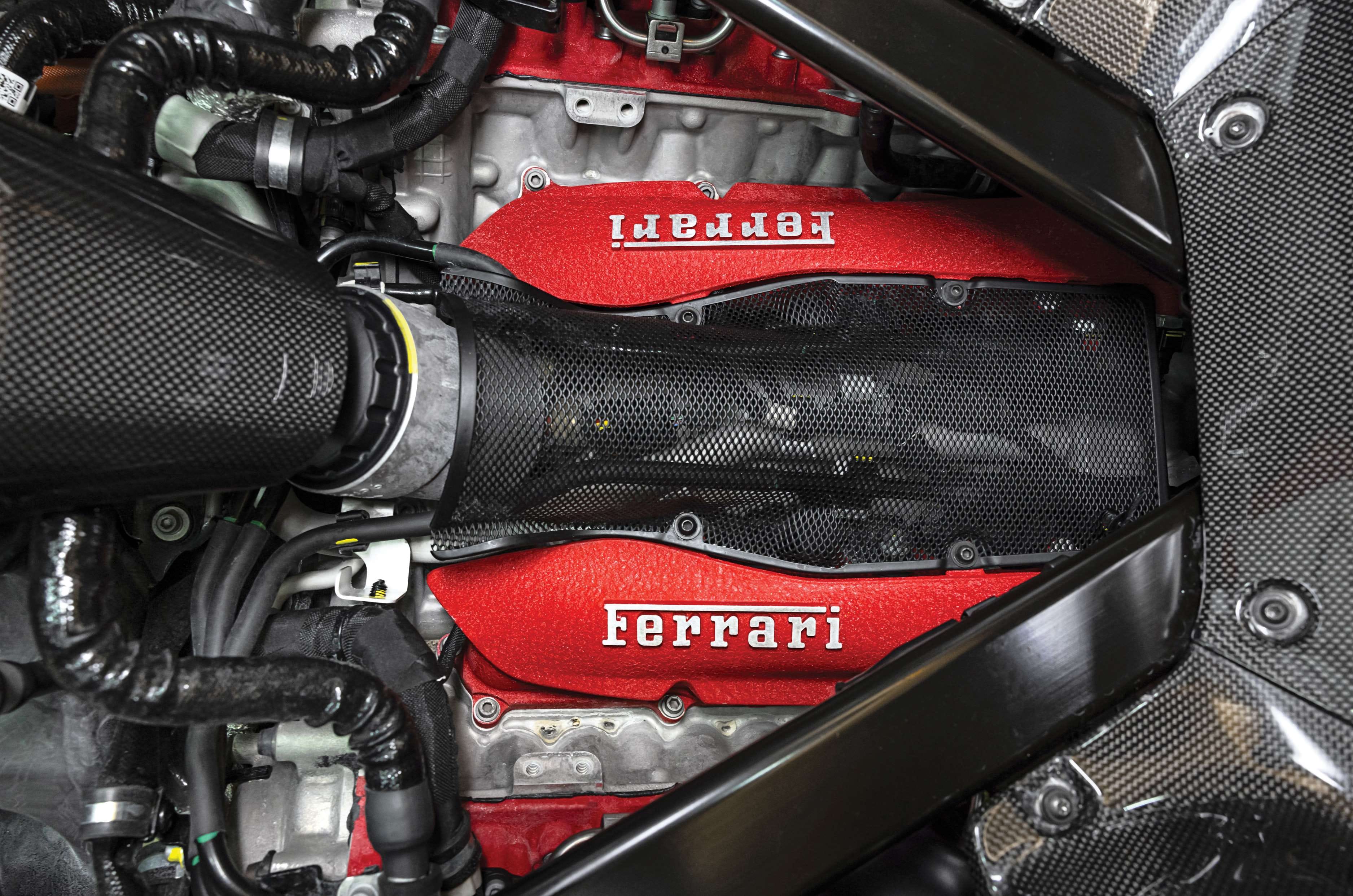
The V8 now uses a new block and heads, lighter valvetrain components and the biggest turbos yet on a Ferrari engine to achieve its 830hp peak at 7,500rpm and 842Nm of torque at 6,500rpm. The three e motors draw from a 7.45kWh battery mounted low and transversely behind the cabin, producing a combined 220hp – total system power stands at a massive 1,050hp. There’s roughly 16-25km of electric-only running in eDrive mode, which turns the 849 into a front-drive EV at modest speeds, quietly unobtrusive when leaving or returning home in the wee hours of the day. There’s no conventional reverse gear either; all rearward motion is handled electrically, with Ferrari always retaining a small energy reserve in the battery to ensure it’s available when needed.
Integrating three electric motors with a combustion engine in a cohesive, seamless way is the real secret sauce behind making a car feel dynamically exceptional. That’s where the 849 is a big step ahead of the SF90, in how intelligently all these systems are made to work together. Ferrari has introduced an entirely new control philosophy centred on an electronic brain – the Ferrari Integrated Vehicle Estimator (FIVE). This creates a “digital twin” of the car in real time to predict how it’s moving – speed, yaw, grip, weight transfer – and then finely orchestrates traction control, all-wheel drive, braking and stability systems for sharper, more consistent handling.
Numbers provide some context. With this new setup, the springs are now optimised and 35 percent lighter, roll stiffness is around 10 percent higher, and there’s a claimed 3 percent increase in lateral grip. So how does all this techno wizardry translate onto the road and track? 849 Testarossa Performance and RefinementFerrari
Ferrari 849 Testarossa Performance and Refinement
The day starts on a glorious stretch of Spanish countryside, north of Seville. The road snakes its way through the hills, narrow but empty, with clear sightlines that let you gently straighten a few corners without fear of oncoming traffic. From the very first squeeze of the throttle, the impression is one of utterly ferocious pace. Acceleration is staggering, and with this gearing, the 8,300rpm redline is something I can only hit in first, second, and occasionally, third gear.
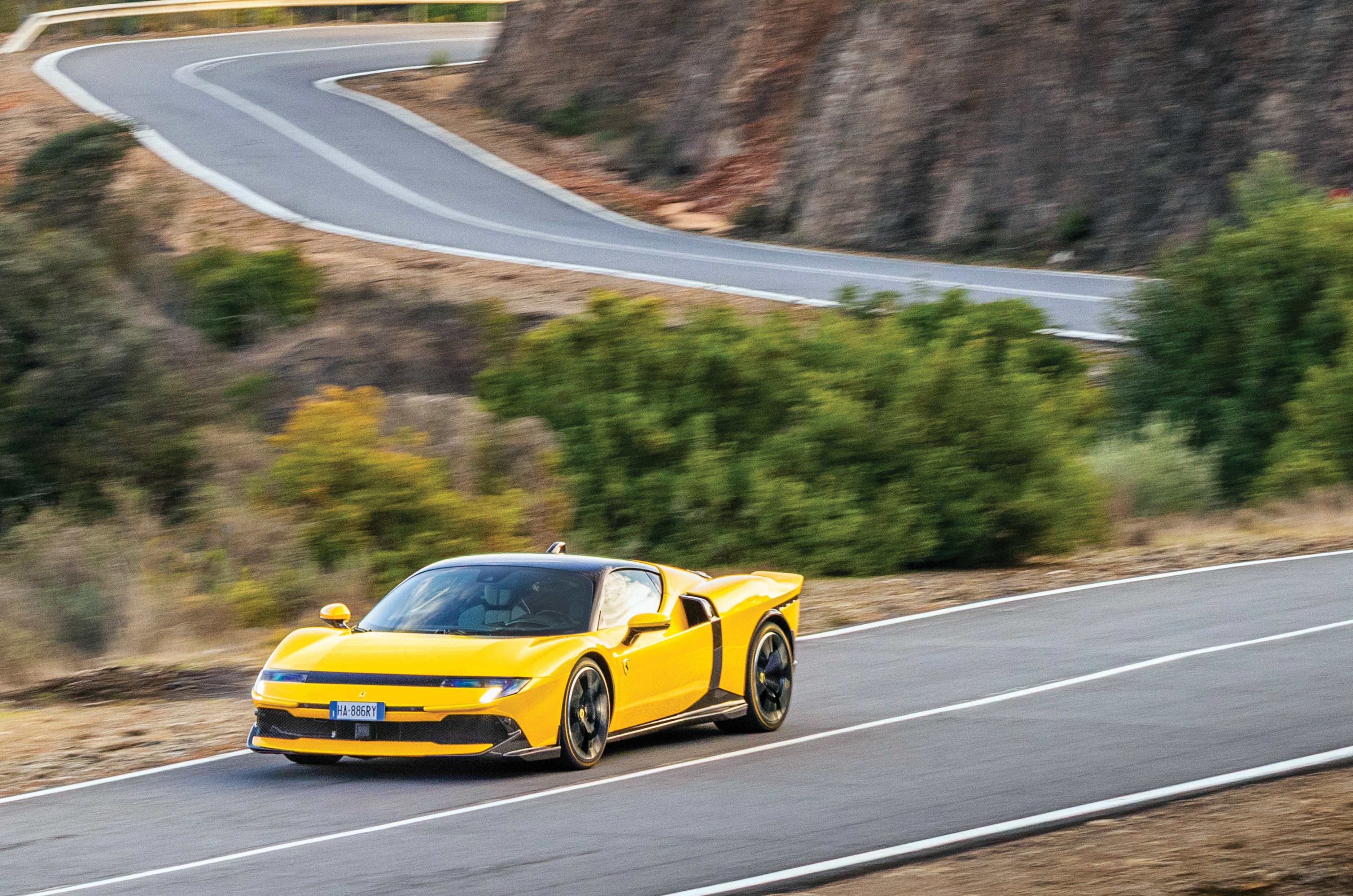
The surface is slightly damp, so I stop short of the more extreme modes and settle for Race, which already feels borderline excessive in these conditions. The 8-speed twin-clutch auto gearbox is simply fantastic. Gear shifts snap through instantaneously, and the software blips the engine on downshifts to match revs. The mildest squeeze of my right foot results in an immediate and brutal response, and the way the car hurls itself forward, pinning me to my seat, briefly knocks the breath out of me. My brain tries to process just how quickly the 849 gathers speed, and on these single-lane roads, the trees close in and whip past like I’m blasting through a tunnel.
The electric motors are the silent enablers here, seamlessly filling in any power gaps and completely masking any trace of turbo lag. What you get isn’t a classic big-turbo crescendo, but a relentless, hyper-EV-style surge that never lets up. At full throttle, the combined punch of the engine and e motors arrive almost instantly, at any rev and any gear. Performance is on a stratospheric level, and exploiting it properly demands the right road, the right conditions, and a fair bit of restraint.
The 849 Testarossa’s complex powertrain is hugely effective, but it also underlines a few criticisms of the engine itself. Compared to the 296 GTB’s V6, the V8 here is less vocal and not as distinctive, particularly at road speeds. The soundtrack, though throaty, is more functional and linear than operatic, especially when you’re not pulling it to the redline.
Ferrari 849 Testarossa Ride Comfort and Handling
Flicking through the curves and twists, the 849 Testarossa feels extremely stable and predictable, unlike the SF90 that could occasionally feel as if the front axle had a mind of its own when the hybrid torque vectoring kicked in. The FIVE system in the 849 largely resolves this, so instead of intimidating you, the car flatters your inputs, builds confidence and makes you feel like a hero.
What makes the 849 controllable at speed, particularly in tight sequences or over broken surfaces, is that the weight is concentrated between the axles, so agility doesn’t suffer in the way it might in a big, front-engined V12.
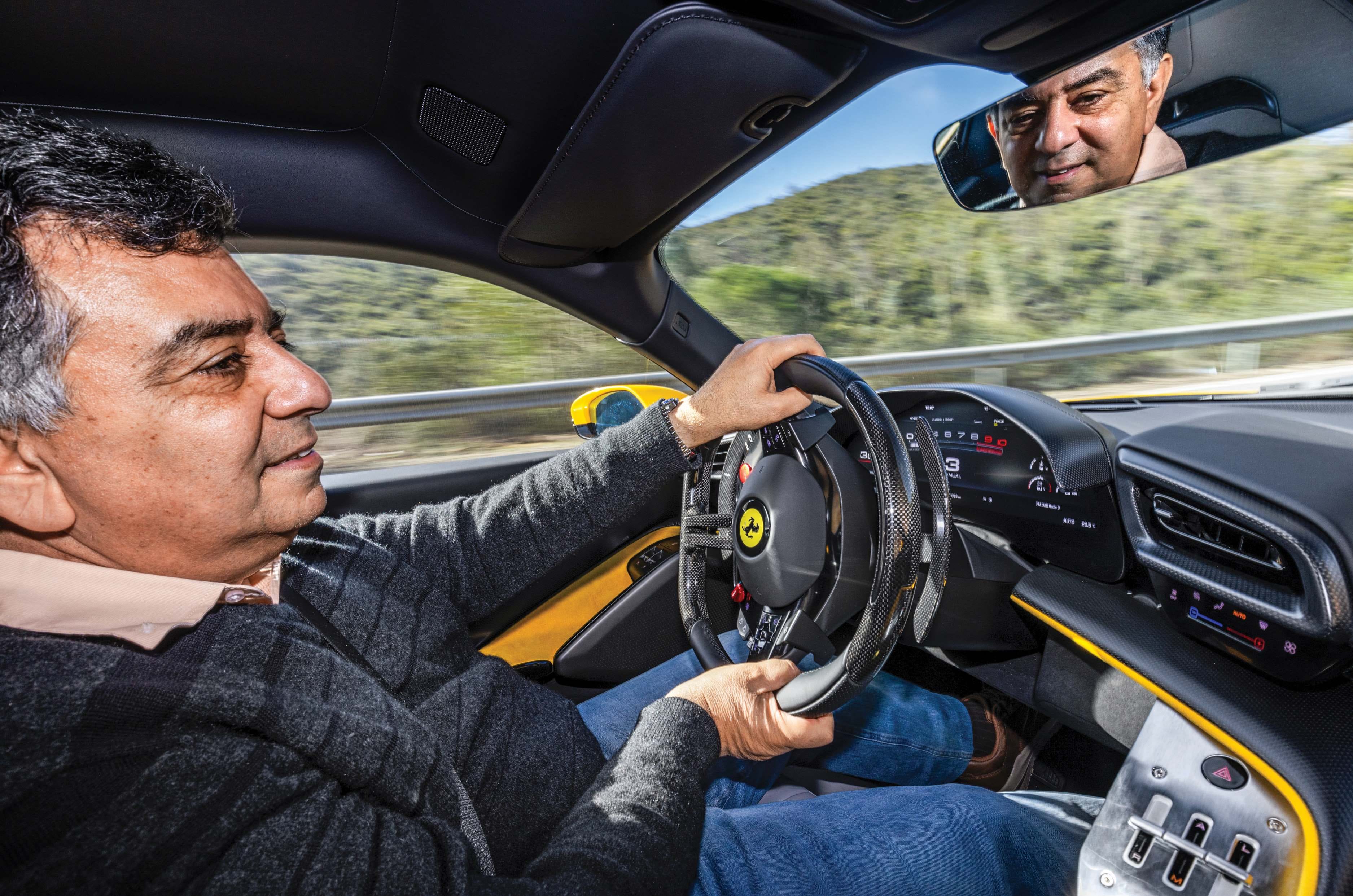
With just two turns lock-to-lock, the 849’s steering is quick, though not as hyperactive as the 296’s, which feels ultra-alert straight off centre. That slight calmness is partly down to size and weight: the bigger, heavier, all-wheel-drive 849 simply doesn’t deliver quite the same level of intimacy as its younger sibling. The 296, as a pure two-wheel-drive car, feels more involving and dynamically purer, with an unsullied steering feel. Push hard in the 849, and you can feel the influence of the driven front axle under full power subtly filtering to the steering.
Of great importance to the Indian owner is the astonishing ride quality of the 849 Testarossa. With the standard MagneRide dampers in their softer “bumpy road” setting, the 849 rides with more compliance than you’d expect of a 1,700kg hyper hybrid on 20-inch wheels, and ground clearance with nose lift is sufficient for most urban obstacles and speed breakers; however, you still need to exercise some caution.
Ferrari 849 Testarossa Track Experience
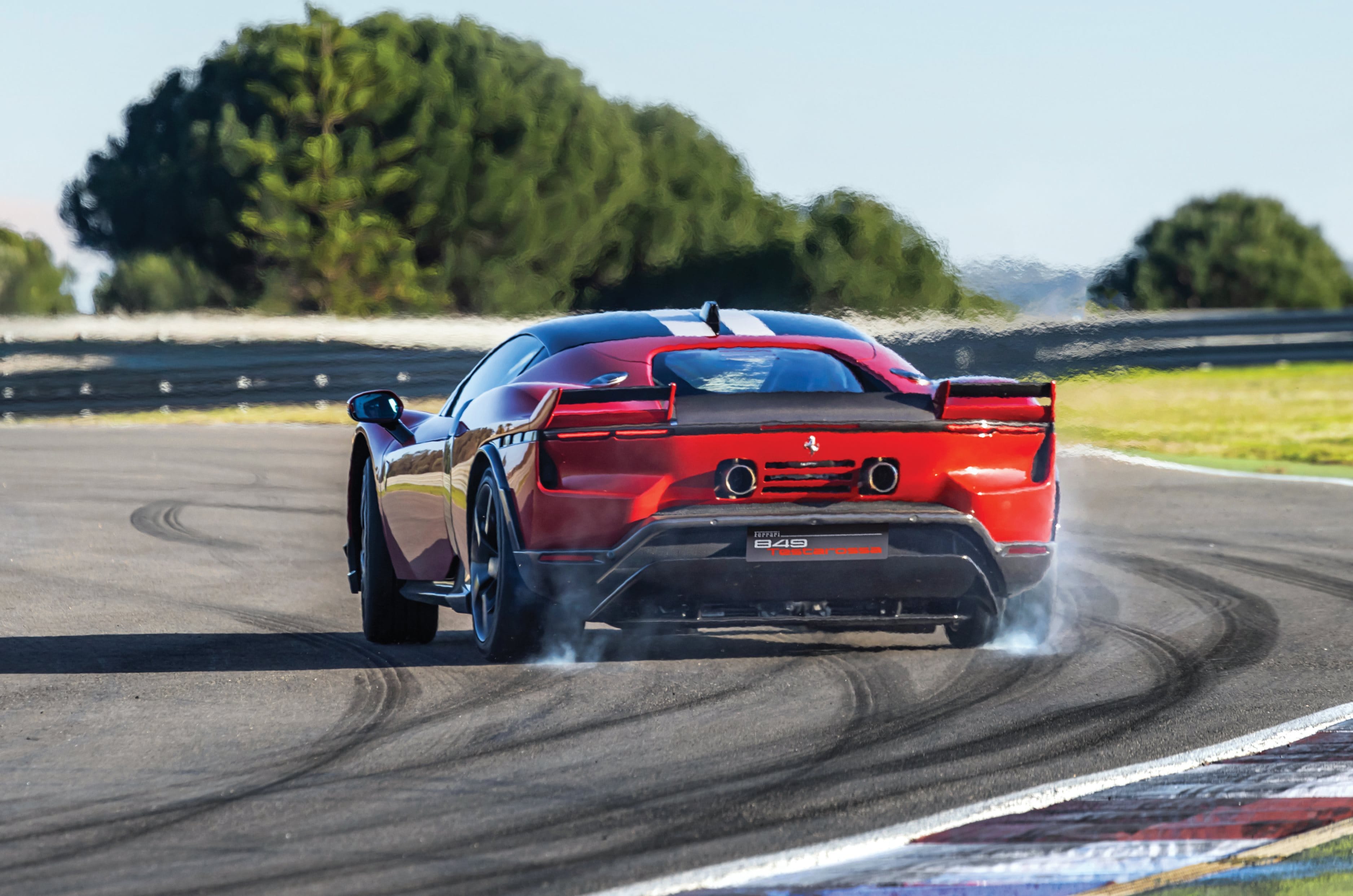
Back at base – the Monteblanco circuit, around 60km west of Seville – a bright red Assetto Fiorano 849 is waiting for me in the pit lane. In Assetto Fiorano spec, the 849 Testarossa feels like it’s shed its last layer of civility and gone fully track-native. It gets racing seats with a four-point harness, sticky Michelin Cup 2 rubber, extra downforce, multimatic dampers and loses 30kg in the process.
The effect is immediately obvious. There’s a greater sense of bite on turn-in, phenomenal grip everywhere, and a car that is glued to the tarmac in a way the standard setup simply isn’t. Even on a damp circuit where grip is limited everywhere, the Assetto Fiorano car feels locked-in and eager to change direction.
The best part for novices like me is that the Assetto never feels nervous. The pin-sharp and ultra-precise steering conveys exactly how much front-end grip you have. At the limit, there’s that initial bit of confidence building understeer into the corners, which smoothly blends to oversteer as you press on the throttle. Where it all comes together beautifully is with the Manettino set to CT OFF.
This is when the Testarossa stops feeling like an intimidating hypercar and starts making you feel like a hero. With CT OFF, the electronics allow small, neat slides out of the corner, easily caught with a dab of opposite lock. It’s an incredible feeling being able to step the tail out knowing that there’s a safety net that’s always quietly in place to make sure your reflexes and car-control skills aren’t tested beyond their limits.
And it’s on the track that you can fully exploit all 1,050hp. Powering down the 1km straight, with lightning-quick upshifts, I could hit around 270kph before stomping hard on the super-effective brakes – massive carbon-ceramic discs (410mm front, 372mm rear) that delivered rock-solid consistency and superb pedal feel lap after lap.
The Assetto Fiorano is one incredible track tool, and the best part is just how accessible all the power and performance feels.
849 Testarossa price and verdict
But how accessible will the Ferrari 849 Testarossa be to Indian customers? Priced at just over Rs 10 crore, ex showroom (plus options, of course), it’s an eye-watering sum that could buy you a 3BHK in South Mumbai. Frankly, the lesser 296 GTB is the sweeter car to drive. It has more character, sounds better, feels more involving and, in many ways, is all the Ferrari you’ll really ever need.
But the 849 Testarossa is a statement car. With over 1,000hp, outrageous straight-line pace, cutting-edge hybrid tech and unmistakable road presence, it represents the absolute peak of Ferrari’s regular production range.
And that matters in the Indian context. Indian supercar buyers love to flex, even if they can only ever exploit a fraction of the performance on public roads. The 849 Testarossa delivers that flex in spades – visually, technically and emotionally. For most owners, the new Ferrari flagship hypercar is simply a declaration of arrival.

