
Epstein Files: Sacred Kaaba Cloth Shipped to Jeffrey Epstein via UAE Contacts
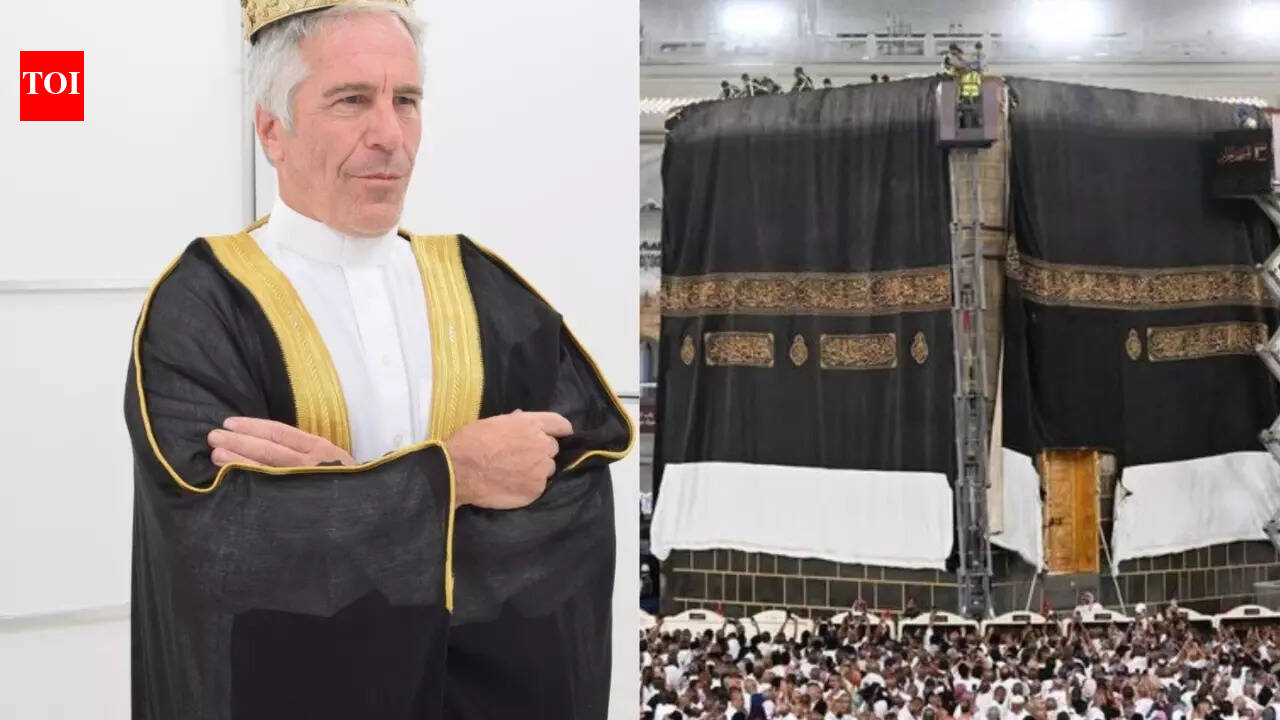
In one of the most startling disclosures yet from the recently unsealed Jeffrey Epstein Files, emails show that three pieces of the Kiswa, the sacred black and gold cloth that covers the Kaaba in Mecca, Islam’s holiest site, were shipped from Saudi Arabia to convicted sex offender Jeffrey Epstein in the United States in 2017. What has made the revelation particularly explosive is that the shipment was reportedly arranged through contacts linked to the United Arab Emirates (UAE), including an Emirati businesswoman and a Saudi intermediary.The documents, part of a growing cache of correspondence released under increased legal transparency demands, include detailed emails from February and March 2017 outlining how the cloth, normally a deeply revered religious artefact, was handled, packaged and transported by air freight from Saudi Arabia to Florida via British Airways before reaching Epstein’s residence in the US Virgin Islands.
What the Epstein Files mails reveal
According to multiple reports summarising the newly released files, the transaction involved:
- Three separate pieces connected to the Kiswa, one from inside the Kaaba’s covering, one from the outer embroidered cloth that had been used and a third unused piece made from the same material.
- Coordination between Emirati businesswoman Aziza Al-Ahmadi and a Saudi contact named Abdullah Al-Maari, who arranged the shipment.
- The shipment was described in part as “artwork” for customs classification purposes, likely to avoid scrutiny over its sacred origin and contents.
Emails underscore the religious significance of the pieces, noting that the cloth had been touched by millions of pilgrims of varied Islamic denominations during tawaf rituals, with prayers, tears and hopes embedded in it. Despite the detailed logistics in the correspondence, the documents do not explain how Al-Ahmadi first came into contact with Epstein, nor the reason Epstein wanted or had shipped to him such deeply symbolic religious artefacts.
International outrage and cultural backlash over Epstein Files’ Kiswa shipment
As news of the shipment circulated online, reactions in Muslim communities were intense and polarised. On social platforms like Reddit, users expressed shock, disgust or disbelief, touching on the religious weight of the Kaaba’s covering and what it means for sacred items to be diverted to a private figure, much less a convicted child sex offender.
🚨 BREAKING:
Kaaba covering pieces were PURCHASED by Jeffery Epstein as CARPETS for his home.
The Kaaba Kiswa was shipped from Saudi Arabia to Jeffrey Epstein, with their religious significance explicitly explained in emails.
Who was involved?
– Aziza Al-Ahmadi (UAE based…
pic.twitter.com/QPNcbvHyUk
— Jvnior (@Jvnior) February 1, 2026
One thread noted simply, “This is sad because now the pro-Trump restarts are going to see this … An Emirati”, reflecting broader mistrust and geopolitical reads on the leaks. Another discussion highlighted how some online commenters questioned the intent behind the shipment, with speculation ranging from religious misunderstanding to deeper conspiracy theories, even if these are not grounded in verifiable evidence.
Why is Kiswa or Kaaba cloth sacred?
The Kaaba’s Kiswa holds profound spiritual significance in Islam. Worn during the annual Hajj pilgrimage, the cloth is replaced each year and fragments of the old covering are traditionally distributed as honoured relics or diplomatic gifts to select institutions and dignitaries, not trafficked to private individuals.
Pieces of the Kaaba covering found in Jeffrey Epstein’s home.
They were given to him by Saudi woman Aziza Al-Ahmadi, who wrote, “This is a piece of the Kaaba covering, the holiest place in Islam. I give it to you as a token of respect and appreciation, and I hope it brings peace…
pic.twitter.com/2IUuKrd8RI
— Ahmed Hassan 🇾🇪 أحمد حسن زيد (@Ahmed_hassan_za) February 1, 2026
Due to this spiritual context, reports of the Kiswa fragments being sent to individuals associated with Epstein have provoked intense debate about religious propriety, cultural respect and possible misuse of sacred heritage. Many Muslims see the Kiswa not just as fabric but as a symbol of unity and worship, and its handling is governed by customs deeply rooted in Islamic tradition.
What the Epstein Files don’t explain
Beyond the religious dimension, the disclosed emails also raise diplomatic and geopolitical questions, especially regarding how artefacts from one Muslim majority country were routed through another to reach Epstein in the United States. Some coverage has highlighted how these revelations intersect with broader scrutiny of elite networks and influence, particularly in the Gulf region.
This is one of the most despicable women in the world, Aziza Al-Ahmadi, from the UAE. This degenerate old woman sent the Jewish child rapist Jeffrey Epstein a piece of the Kaaba’s covering, telling him that 10 million Muslims had sought blessings from it.
#EpsteinFiles pic.twitter.com/ODinixWWbH
— ا🇵🇸صقر الجنوب ؟؟ا🇵🇸؟ (@vvbnm7711) February 1, 2026
The fact that intermediaries in the UAE played a central role in coordinating the shipment including handling customs, invoicing and flights, has prompted discussion about what such interactions say about business links and personal networks among high-profile figures. Crucially, despite detailed logistical correspondence, the Epstein Files do not clarify:
- Why Epstein wanted the Kiswa pieces in the first place.
- Whether the cloth was formally gifted, purchased or obtained through other means.
- The exact motivation or rationale whether spiritual, diplomatic, personal or otherwise, behind the shipment’s organisation.
This ambiguity has fuelled online debate and speculation, even as serious media outlets emphasise reliance on documented emails rather than unfounded conjecture.
Bottom line: Epstein Files and global reaction
This latest revelation comes amid a broader wave of document releases known as the Epstein Files, which have unveiled controversial connections, communications and transactions involving a wide range of prominent figures, business leaders and politicians across multiple regions. Content from this tranche has sparked political turbulence, social media uproar and renewed focus on how power and influence intersect with misconduct allegations. Across Muslim communities and political circles, this specific story has touched a nerve by linking one of Islam’s most sacred symbols to Epstein’s infamy, a nexus that blends religious sentiment, cultural values and global scandal in unprecedented ways. The Epstein Files’ disclosure that sacred Kiswa cloth pieces from the Kaaba were shipped to Jeffery Epstein through UAE-linked contacts and received at his residence in the US has ignited widespread discussion, criticism and consternation.While details about the why behind the shipment remain unknown, the episode adds a deeply sensitive chapter to the ongoing global scrutiny of Epstein’s networks and the handling of religious heritage. Go to Source