
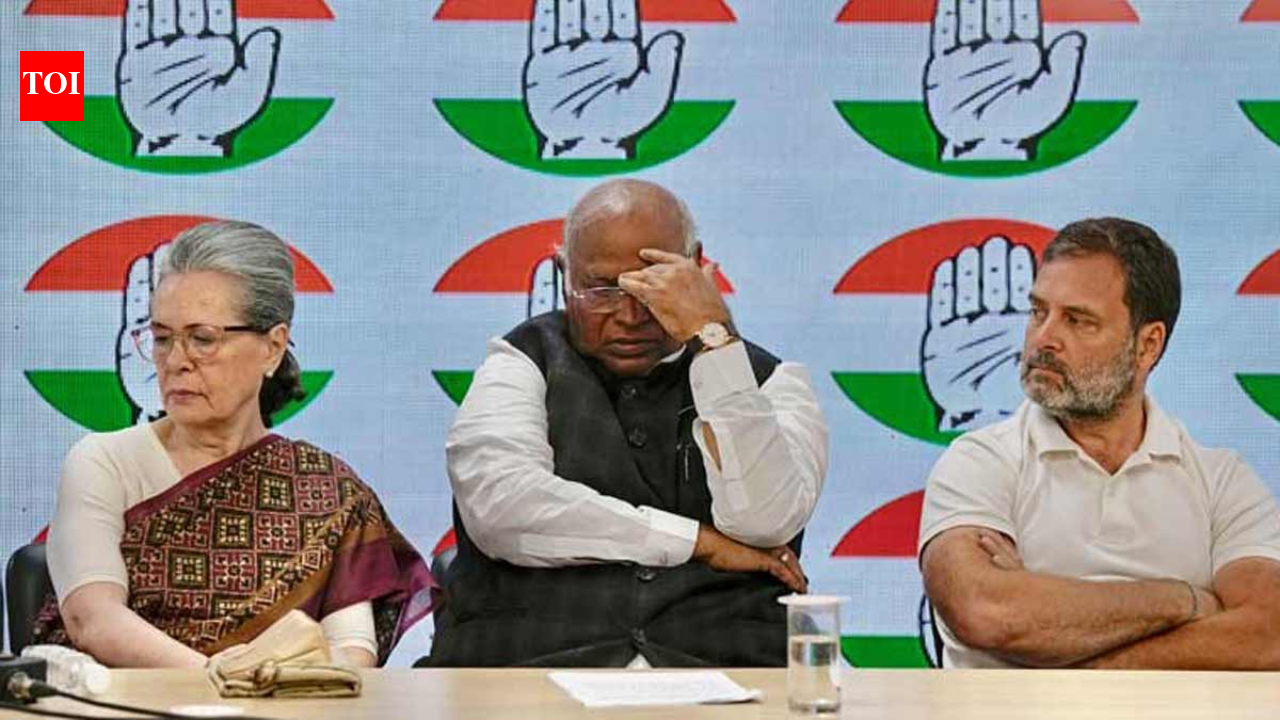


NEW DELHI: 2026 may see the Congress win another state. If the local body election results in Kerala are an indication to go by, the state may turn to Congress-led UDF after 10 years. So far so good. But what after that? Will Kerala go the Karnataka way for the Congress? Will the victory, if it happens, be overshadowed by factionalism and power tussle in the state unit? For quite some time now, the Congress in Kerala has been in the news for all the wrong reasons. Shashi Tharoor, who was for many years the brightest Congress star in Kerala and also a symbol of inner party democracy, has of late been a source of constant embarrassment for the grand-old party. Tharoor, whose differences with the Congress leadership have made headlines, has given the party’s rivals, especially the BJP, enough political fodder to undermine the leadership of the Gandhis.
So, what did the Congress leadership do to solve this crisis? Well, nothing for almost a year. After a prolonged dilly-dally, as the election approaches, the top leadership finally gave an audience to Tharoor to send out a message that “all is well”. However, we still do not know the outcome of this truce meeting. Tharoor has now claimed that he is on “same page” with the leadership and ready to campaign for the party. Unfortunately, this dilly-dally approach of the top Congress leadership in Kerala is not an exception. When it comes to power tussles in states, the Congress high command has been found procrastinating, shying away from taking hard decisions – one way or the other. This has led to unpleasant situations and even political desertions in some cases. Several Congress leaders have left the party in the last 12 years claiming the high command did little to resolve disputes. Here’s a look at how the Congress leadership has handled leadership fights in states in recent years, especially after it lost power at the Centre in 2014.
Karnataka
On Congress’s electoral map, the party’s 2023 assembly election victory over the BJP in Karnataka was like an oasis in the desert of electoral defeats. A victory that was huge and could have helped the Congress script its revival story.Cut to 2026. Karnataka today has become a source of constant embarrassment for the party. Two of its biggest leaders in the state are engaged in an open and ugly power tussle. The fight for the top post between chief minister Siddaramaiah and his deputy DK Shivakumar, or DKS has overshadowed not just the party’s glorious victory but also its governance initiatives in the southern state. At the root of this crisis is a claimed power-sharing deal for rotational chief ministership allegedly brokered by the Congress’s top leadership. Supporters of DKS claim that this was agreed upon after the 2023 victory to ensure that both the leaders were rewarded equally for their efforts in bringing back the Congress to power in the state. But the Siddaramiah faction leaders deny any such deal.However, both the warring factions have been asserting that they will abide by any decision of the Congress high command (read Rahul Gandhi). But the problem is that the Congress high command seems reluctant to take any decision. This despite the fact that every now and then leaders of the two factions engage in open war of words to embarrass the party.
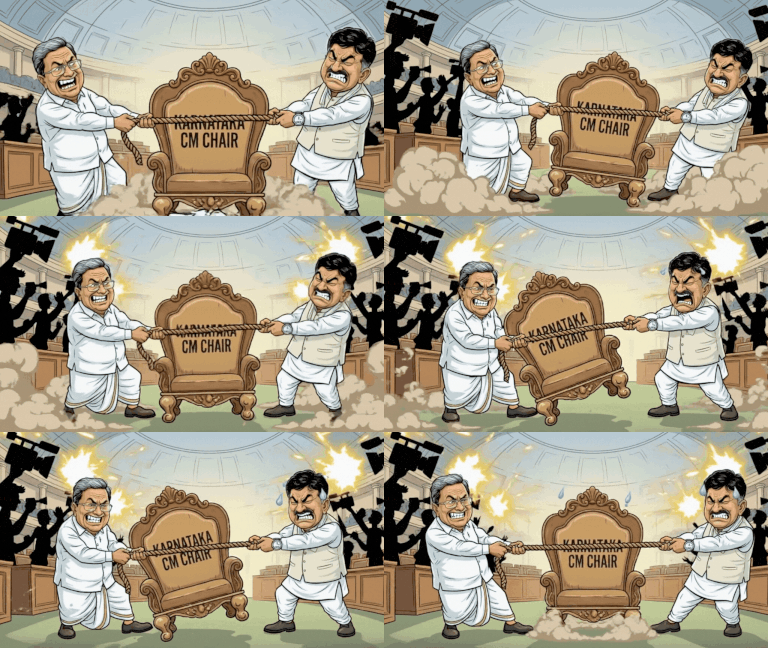
(AI generated)
So, is the Congress leadership shying away from taking a hard decision for the fear of losing its government in the state? Why has it allowed the power tussle to linger on?
Rajasthan
In Rajasthan, one of the key reasons for the Congress losing power was the power tussle between the then chief minister Ashok Gehlot and ex-state party chief Sachin Pilot. Pilot as the then party chief had led efforts to defeat the BJP and bring Congress back to power and was vying for the top post. However, Congress veteran Ashok Gehlot was not ready to leave his claim and also had enough support within the party MLAs. The two leaders engaged in open war of words – accusing and targeting each other as the Congress leadership allowed the crisis to linger. Eventually, Sachin Pilot raised a banner of revolt and locked himself up in a resort. Pilot, who perhaps did not have adequate support of MLAs, decided to back off after Priyanka Gandhi intervened. He is still with the party, but the Congress lost power in the state.
Madhya Pradesh
In Madhya Pradesh, the Congress leadership appeared powerless as former chief minister and senior party leader Kamal Nath called all the shots. Kamal Nath and another former chief minister Digvijaya Singh enjoyed a complete grip on the party in the state, which turned Jyotiraditya Scindia into a rebel. However, unlike Sachin Pilot, Scindia junior had enough numbers to topple Kamal Nath’s government in the state. Ironically, despite all the developments, the Congress leadership still did not take any hard decisions and allowed Kamal Nath to completely dominate all decisions in the run up to the assembly elections. The result: Congress which had lost power midway could not make a comeback in the state. Jyotiraditya who had joined the BJP, is now a Union minister and his supporters are part of the state government.
Chhattisgarh
Chhattisgarh also saw leadership tussle when Congress had a government in the state. The then chief minister Bhupesh Baghel had a challenger within the party in T S Singh Deo. Ironically, here also the bone of contention was similar to Karnataka. Singh Deo had claimed that the leadership at the time of the election victory in 2018 had proposed a rotation of the chief minister’s post after 2.5 years. Rahul Gandhi met both the leaders but there was no immediate solution. In July 2022, Singh Deo resigned as a minister to pressurise the Congress high command. Eventually in June 2023, just months before the assembly elections, the Congress leadership appointed him as the deputy chief minister to settle the power tussle.
Punjab
Punjab was a classic case where the Congress high command took a decision, but instead of solving the power tussle in favour of one of the two high-profile contenders – Captain Amrendra Singh and cricketer-turned-politician Navjot Sidhu, imposed a third unknown face Charanjit Singh Channi to lead the government. Channi, as widely expected then, failed to do the magic and Congress was decimated by Arvind Kejriwal’s AAP in assembly elections. Channi has been out of the picture since then and while Kejriwal and his chief minister Bhagwant Mann is leaving no stone unturned to win Punjab again, the Congress is yet to decide its future strategy in the state.
Himachal Pradesh
Himachal Pradesh stands out as an exception and also an example for the Congress leadership. When the party won the elections in the state, Sukhwinder Singh Sukhu who played a key role in the victory faced a challenge for the top post from Pratibha Singh, wife of former chief minister late Virbhadra Singh. Pratibha Singh and her supporters claimed that the legacy of her late husband and his goodwill among people was a major factor in the Congress victory in the state. The Congress leadership faced a dilemma, but eventually decided in favour of Sukhu as chief minister. It’s a different matter though that Pratibha Singh and her son Vikramaditya, who is a minister in the government, have kept Sukhu under constant pressure. Clearly, Himachal Pradesh proves that the Congress high command needs to take hard decisions and solve leadership tussles one way or the other.
Rahul Vs Priyanka in Congress?
So, why does the grand-old party appear to be struggling to troubleshoot the simmering crises in the states? Several Congress leaders who have left the party have claimed that a part of the problem is the Gandhis, especially the sibling rivalry between Rahul and Priyanka. Assam chief minister Himanta Biswa Sarma, who spent 22 years in the Congress before joining the BJP, recently claimed that he was a “victim” of an alleged rift between Rahul and Priyanka Gandhi during his time in the party.
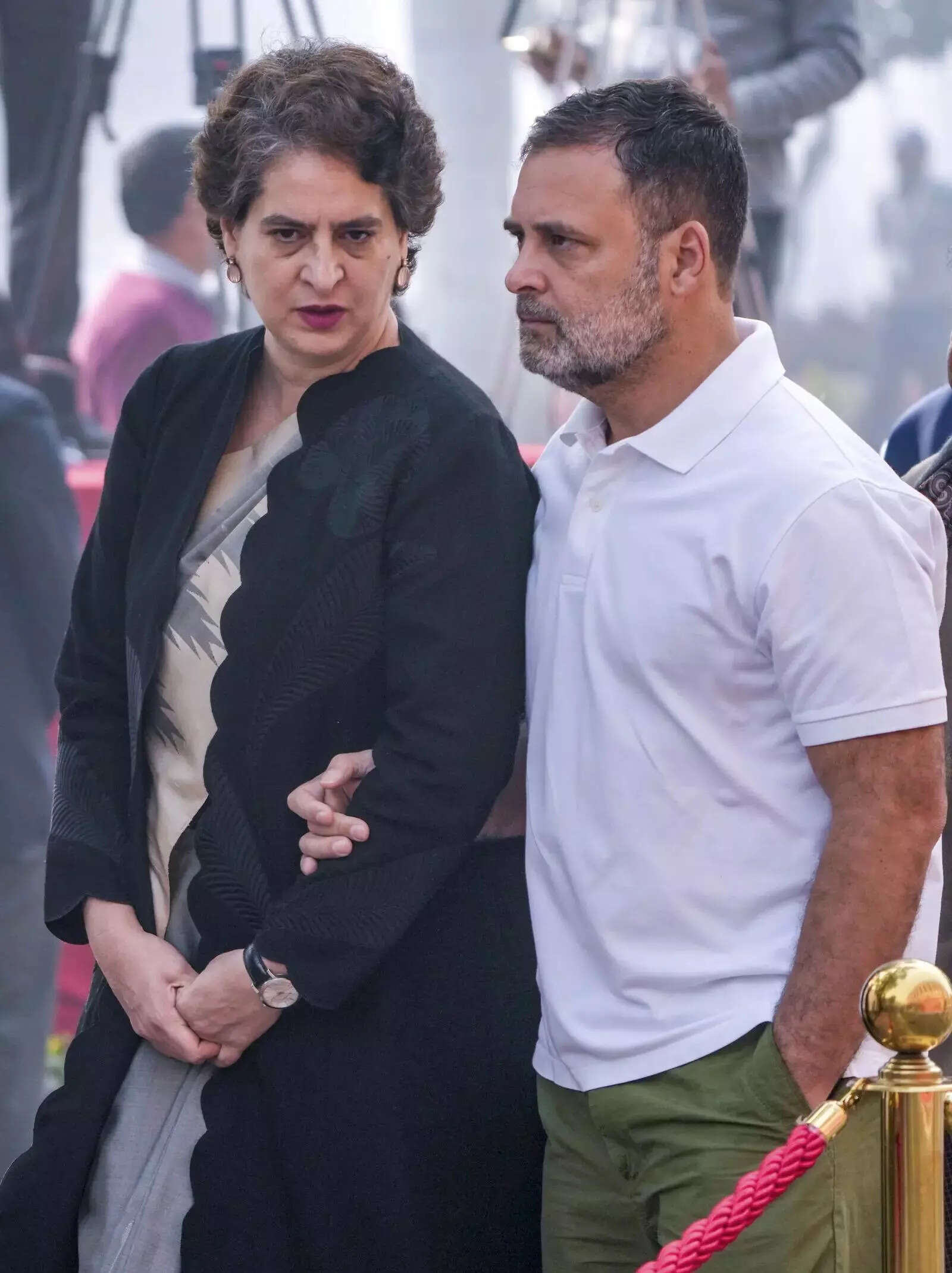
In fact, the BJP has all along alleged that the Congress is internally divided into two groups – one owing allegiance to Rahul and the other to Priyanka. Every time a disgruntled Congress leader speaks against Rahul, BJP leaders reinforce the point of divide. When Mohammed Moquim, a former Congress MLA from Odisha, wrote to Sonia Gandhi against Rahul and Mallikarjun Kharge’s leadership and sought active role for Priyanka, the BJP was quick to claim vindication for its charges. The same script played out again when a former Congress leader from Bihar became the latest in the list of Congress rebels to target Rahul. Shakeel Ahmad, a three-time MLA and two-term MP from Bihar, who had resigned from the Congress after the 2025 Bihar Assembly elections targeted Rahul and said: “Rahul Gandhi is uncomfortable with strong voices. His leadership thrives on insecurity and obedience,” Ahmad said and claimed that such a leadership style would ultimately “finish the Congress.” As expected, the BJP latched on to his remarks to target the Gandhis.The Congress junks all these rivalry claims and says that rebels target Gandhis, especially Rahul, as part of their deal with the BJP.
Helpless leadership?
The power tussle in states has not just taken a heavy toll on the Congress but also has been one of the biggest hurdles in the party’s revival efforts. In most of these states, the old guard is reluctant to pass over the baton to the young leaders and the leadership appears to be helpless. Being out of power at the Centre, the Congress today does not enjoy the privilege like the BJP of adjusting state leaders in Delhi as it used to do earlier. But indecision in matters of leadership tussle in the states has proved costly for the grand-old party. When did we last hear Congress leadership take a decisive action to quell rebellion in a state unit? It needs to start that process now, because it is only the states that can eventually lead the party on the road to Delhi. Go to Source