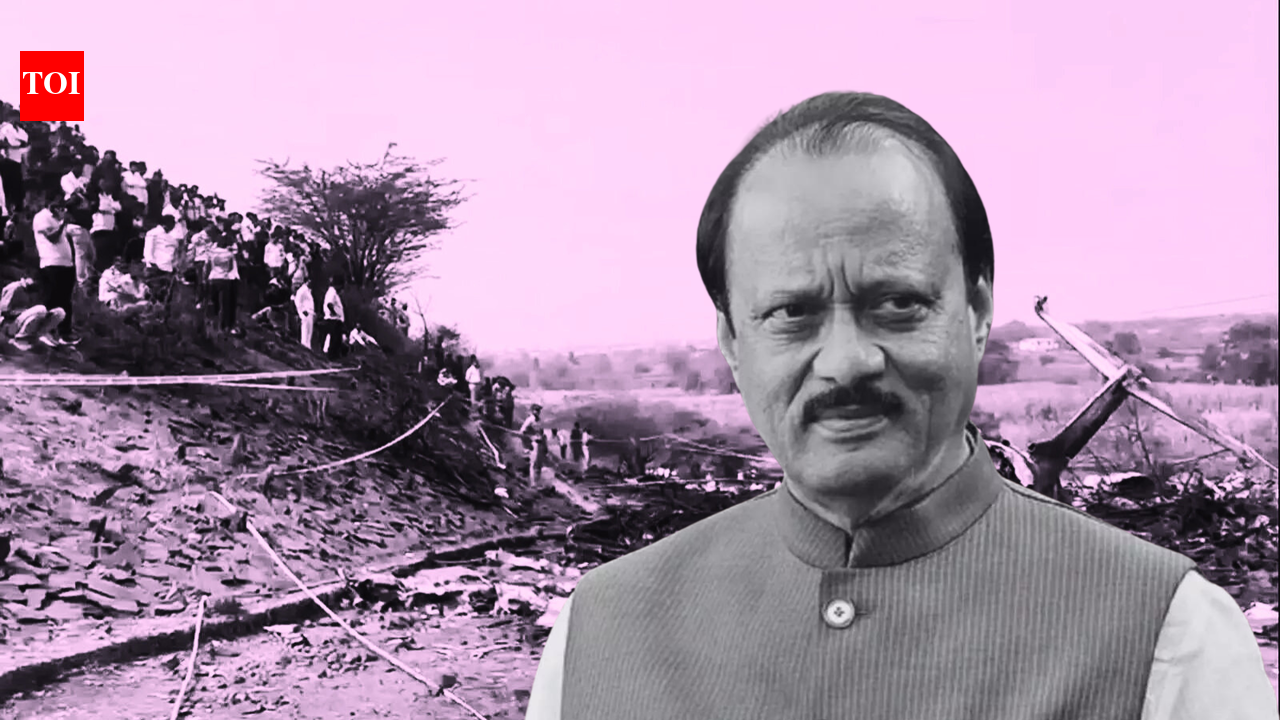

NEW DELHI: The final moments of the Learjet 45 carrying Maharashtra deputy chief minister Ajit Pawar were marked by repeated landing attempts and poor visibility, before the aircraft crashed and burst into flames near the runway threshold at Baramati.Union civil aviation minister Ram Mohan Naidu Kinjarapu said preliminary information indicates poor visibility at the time of landing. He said ATC asked the pilot whether the runway was in sight, to which the pilot initially said it was not. After a go-around, the aircraft returned for another landing attempt. The pilot then confirmed the runway was visible, after which the aircraft was cleared to land. Moments later, the accident was reported.A civil aviation ministry account of the timeline states the aircraft first contacted Baramati ATC at 8.18 am, reported on final approach of runway 11, said the runway was not in sight, and initiated a go-around. The aircraft later reported spotting the runway and was cleared to land at 8.43 am, but did not give a read-back. ATC then observed flames around the threshold of runway 11 at 8.44 am.According to DGCA, the chartered plane flying from Mumbai crash-landed at around 8.45 am at the runway threshold in Baramati. Five people, including the crew, died. Along with Pawar, the aircraft carried two personnel (one PSO and one attendant) and two crew members.The Aircraft Accident Investigation Bureau (AAIB) has taken over the investigation. Maharashtra CM Devendra Fadnavis announced a state holiday and three days of mourning following Pawar’s death.As investigators reconstruct the final approach, here are the five key questions still unanswered.1) What exactly happened after the final landing clearance?The aircraft was cleared to land at 8.43 am, but ATC received no read-back or acknowledgement from the pilot. Flames were observed by 8.44 am, and DGCA’s crash-landing time is around 8.45 am.This raises the question that was there a sudden systems failure, control loss or cockpit emergency in the final seconds after landing clearance?2) Why attempt landing amid poor visibility at an uncontrolled airfield?The civil aviation minister said preliminary information suggests poor visibility at landing time. The crew initially said the runway was not visible, then returned after a go-around. Baramati is an uncontrolled airfield, where traffic information is shared by instructors or pilots from flying schools.Were the weather and airfield conditions suitable for a safe landing attempt, or should the aircraft have diverted after the first missed approach?3) What caused the abrupt radio silence after clearance?Until landing clearance, the crew was actively communicating: requesting wind/visibility updates and reporting runway sighting status. The loss of response came only after the final clearance was issued.Was it a communication failure, crew incapacitation, workload overload during an emergency, or a sudden electrical/avionics malfunction?4) Did the aircraft suffer a mechanical or engine failure during go-around or final approach?The aircraft burst into flames at the runway threshold/edge. Regulatory records cited in official statements say the aircraft had valid certifications and recent airworthiness reviews.Did the jet suffer an engine failure, bird hit, fuel leak, electrical fire, or a hard landing that triggered ignition?5) Was the landing approach stable and were standard procedures followed?The aircraft was advised to descend in “visual meteorological conditions” at the pilot’s discretion.The crew first failed to sight the runway, then reported sighting it shortly before clearance.Was the approach stabilised according to SOP, or did the aircraft arrive too high/too fast/too late to safely complete the landing?What happens nextAAIB investigators will now retrieve and analyse flight data, cockpit voice recordings, aircraft maintenance records, and airfield/weather logs to reconstruct the final approach and the moments after landing clearance. Until those findings emerge, the reason for the crash remains a mystery. Go to Source