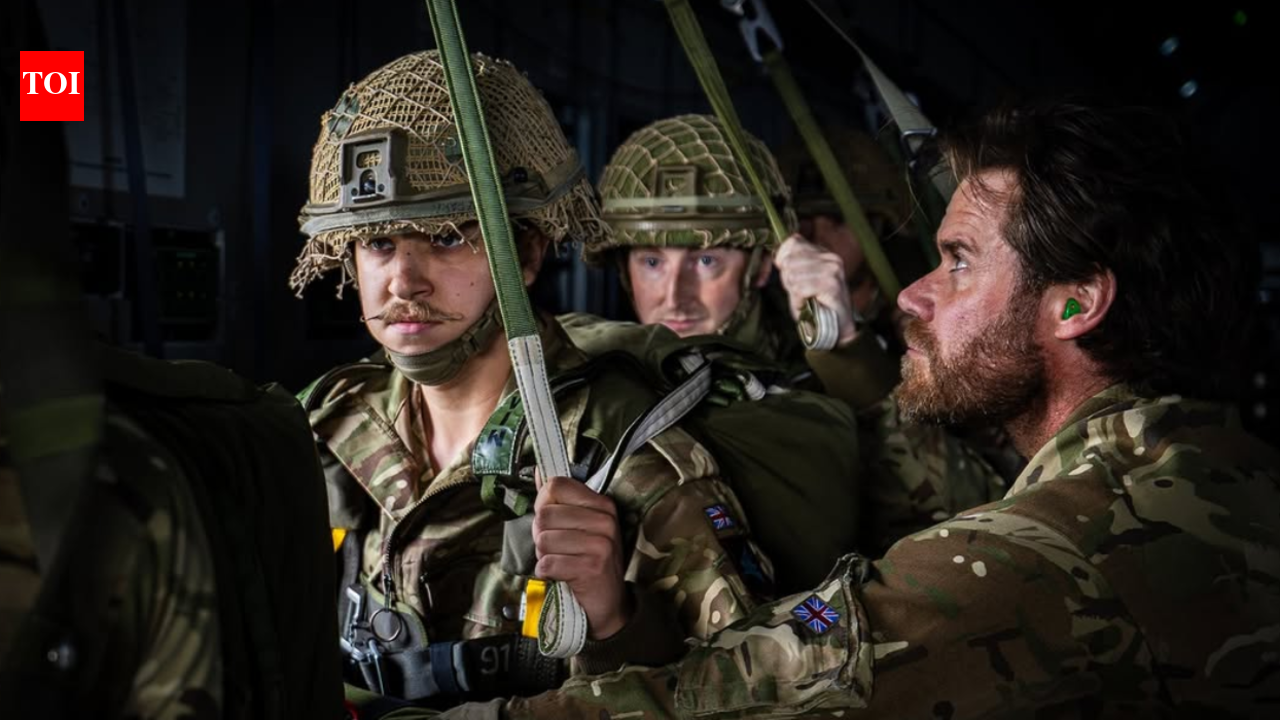

Though still unlikely, the idea of mandatory military service has returned to the table in Britain/ Image: Instagram@Britisharmy
The UK has no plans to reintroduce conscription. Ministers have been clear on that. But rising global tensions, a shrinking army and increasingly blunt warnings from abroad have dragged the once-unthinkable idea back into public discussion, along with a harder question: what would actually happen if people refused to serve? Conscription has been used in Britain only twice in the past 126 years, during the two world wars. Yet fears of another major conflict have resurfaced as Russia’s invasion of Ukraine grinds on, Donald Trump’s administration rattles allies over Greenland and Iran, and senior figures in Moscow issue explicit nuclear threats towards Europe. Sergey Karaganov, a member of Russia’s Council for Foreign and Defence Policy, recently warned that a Russian defeat would trigger nuclear escalation. Speaking to Tucker Carlson, he said: “What is defeat of Russia? If Russia comes ever close to a defeat, that would mean that Russia now would use nuclear weapons and Europe would be finished physically.” Against that backdrop, concerns about Britain’s military readiness have sharpened. The British Army is now at its smallest size in decades, with around 73,000 regular full-time soldiers, down from more than 110,000 in 2010. Although the government insists there are “no plans” to bring back conscription, national security analysts have warned that a prolonged or expanded conflict would stretch existing forces.
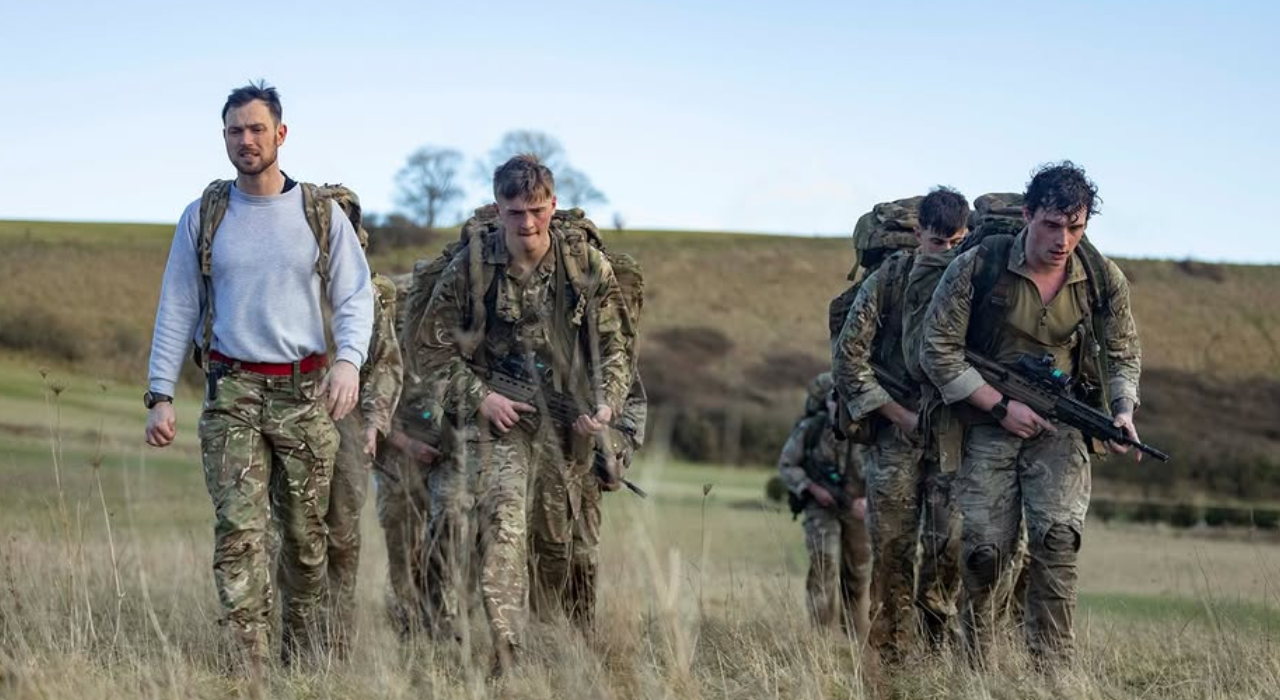
Britain’s regular Army and reserves have both shrunk significantly over recent years/ Image: Instagram@British Army
That context is why historians and defence commentators have begun revisiting how conscription would work, and what penalties might follow for those who refused.
What punishment could refusal bring?
David Swift, a historian who has written extensively on Britain’s wartime mobilisation, told the Express that refusal would likely be punished financially rather than with prison sentences. “I imagine it would be fines rather than imprisonment or anything like that,” he said, citing three reasons: the lack of prison capacity, the difficulty of enforcement and questions of legitimacy, and the likelihood that any modern form of conscription would be tied to financial incentives rather than pure coercion.
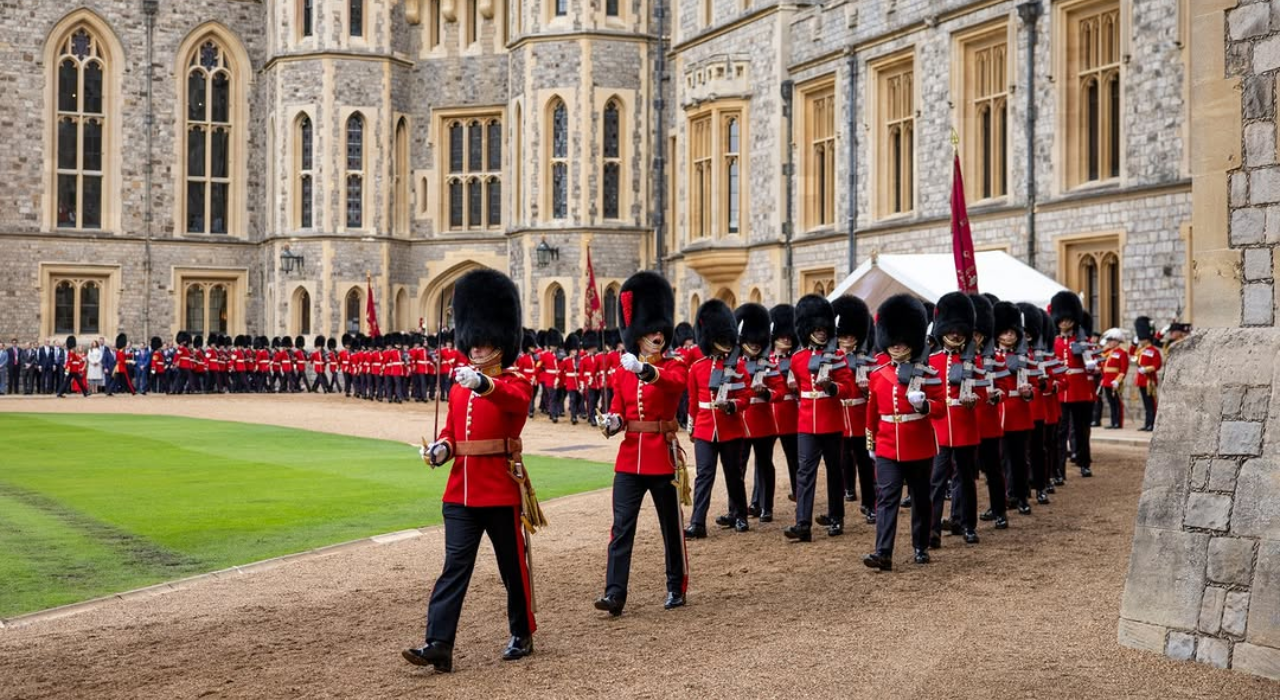
Those who refused mandatory service could face financial penalties rather than immediate imprisonment/ Instagram@ Britisharmy
Swift suggested Britain could look abroad for models. In Greece, refusal to sign up has carried a fine of €6,000 (£5,200), although the country debated scrapping the penalty in 2019. In Switzerland, those who refuse military service pay an additional three per cent in income tax for the duration of the service they would otherwise have completed. “This way, the fines are severe enough so that they present a genuine disincentive not to serve,” Swift said, “but not as severe as imprisonment.”
Who might be exempt?
Conscription has never been applied uniformly. Historically, exemptions were built in for those whose civilian work was considered more valuable to the war effort than frontline service. Swift said the same logic would almost certainly apply again. With Britain under pressure to rebuild defence manufacturing and industrial capacity, workers in key sectors could be exempted, or even directed into those industries instead of the armed forces. “People in these important occupations would be exempt,” he said. “Or even ‘conscripted’ into working in these industries.” Military service, he suggested, could be targeted at unemployed graduates, an idea he said would appeal to some within Labour’s Blue Labour wing. Moral objection has also been recognised in past conflicts. During the world wars, conscientious objectors were often assigned non-combat roles in farming, healthcare, civil defence or forestry. Only those who refused all war-related work faced imprisonment.
Why the debate has resurfaced now
Public reluctance is part of the picture. A YouGov poll in 2024 found that 38 per cent of under-40s said they would refuse to serve if conscripted in a future world war, compared with 28 per cent who said they would comply. Even if the UK were under imminent threat of invasion, refusal still narrowly rivalled willingness to serve.
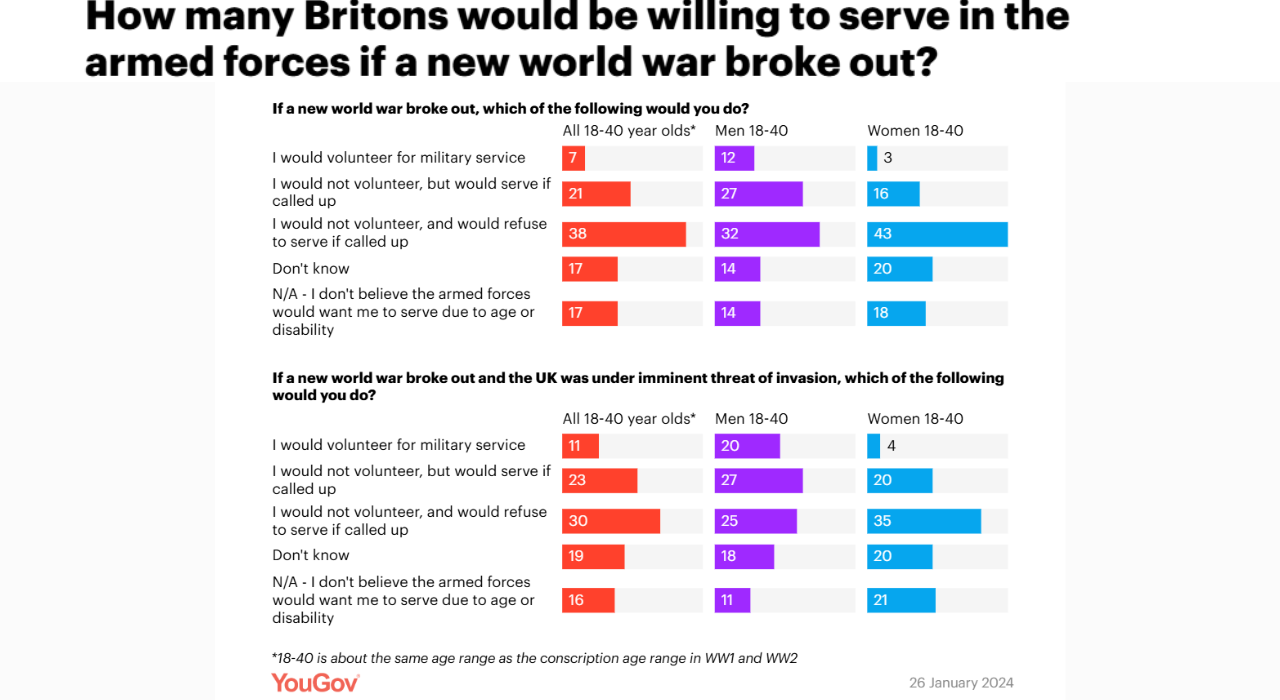
YouGov Poll 2024
At the same time, European neighbours are preparing their populations for crisis scenarios. Sweden, Finland and Norway have issued guidance on surviving conflict-related emergencies, from cyber-attacks to infrastructure disruption. In the UK, local authorities have been urged to strengthen defences against potential Russian cyber-operations, with the National Cyber Security Centre warning of the risk of large-scale denial-of-service attacks.
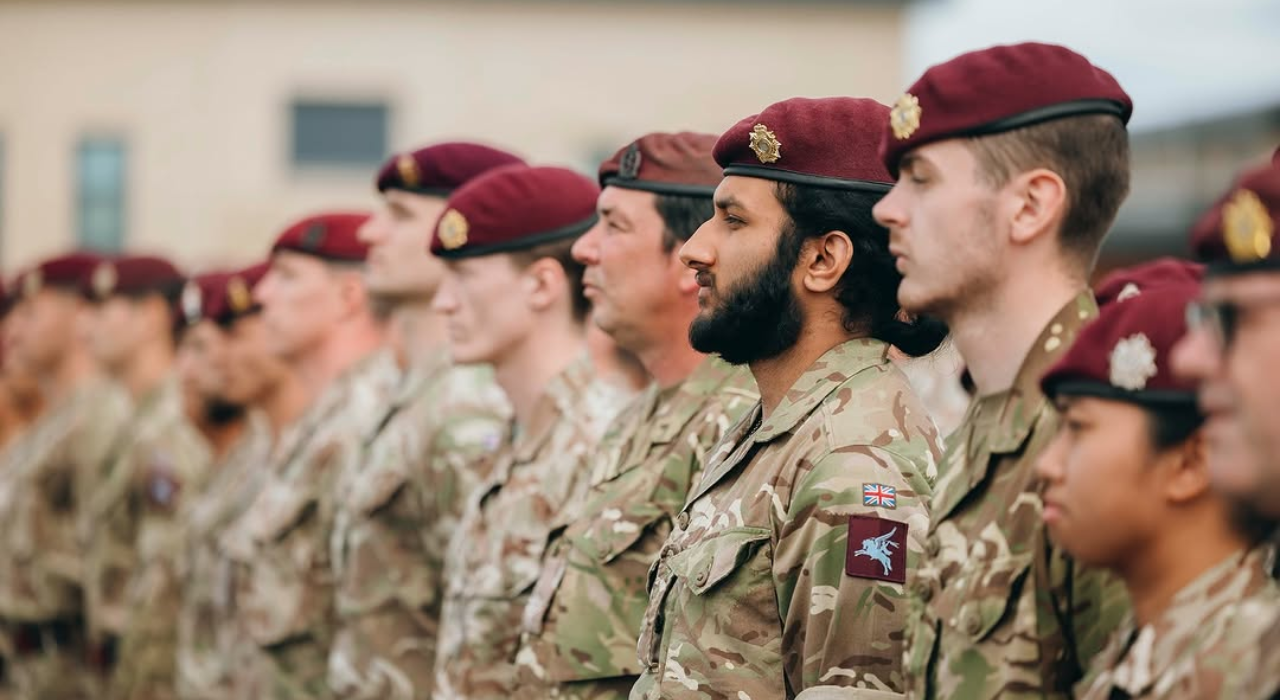
Moscow’s aggression in Eastern Europe is seen as the most significant military threat facing the continent/ Image: Britisharmy
Senior military leaders continue to play down the likelihood of conscription. Sir Richard Knighton, the Chief of the Defence Staff, has said he “cannot see conscription returning in the short term” and that there are “no plans” to introduce it. But he has also warned that “the situation in the world may deteriorate very significantly”. For now, conscription remains hypothetical. But the fact that historians, pollsters and security officials are openly discussing fines, exemptions and enforcement is itself a sign of how sharply the international climate has shifted, and why a policy last used in 1945 has found its way back into Britain’s uneasy conversation about war. Go to Source