
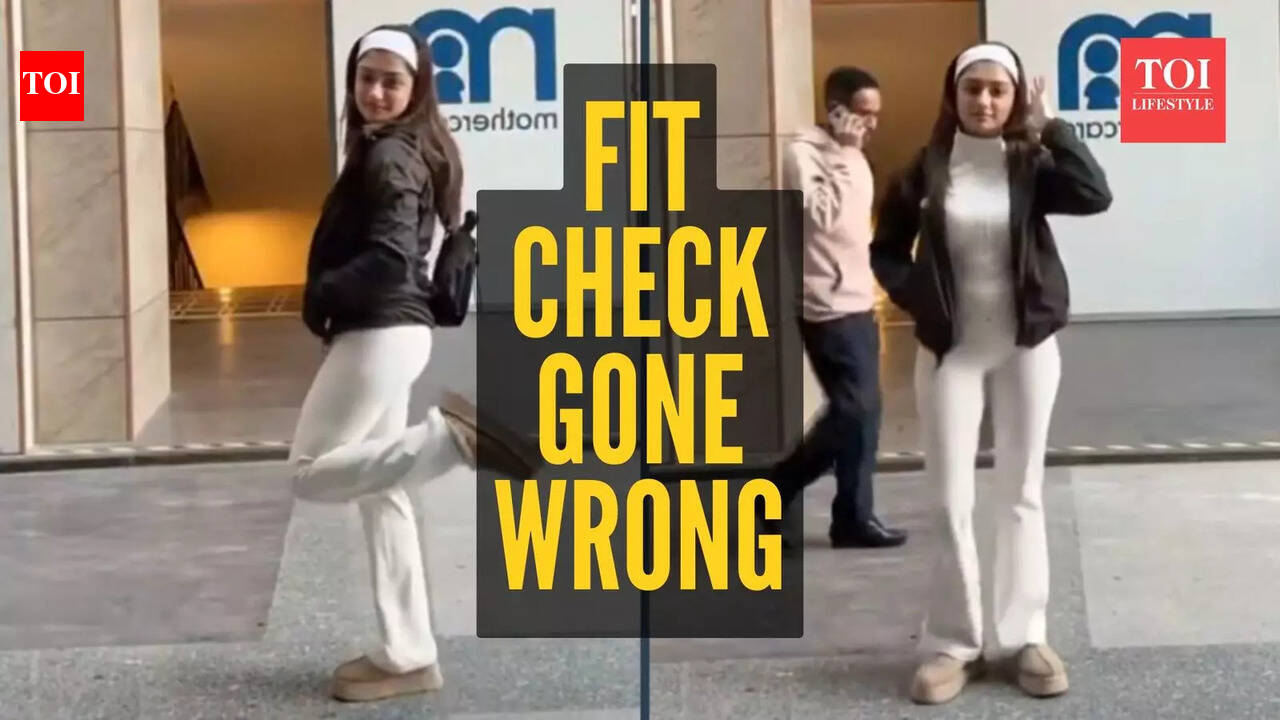



Influencer Snaps at Pedestrian During Sidewalk ‘Fit Check’, Internet Is Furious
A short video circulating on X (formerly Twitter) has sparked fresh debate about influencer behaviour in public spaces, public etiquette and the growing tension between social media content creation and everyday life in crowded cities. The clip was shared from Instagram, early Thursday, by X user Chota Don and featured an Indian woman, Amulya Rattan, recording a “fit check” or a style video showcasing her outfit.In the video, Amulya, who has 4.6 million Instagram followers, publicly snaps at a pedestrian who inadvertently walked into her shot. When the bystander entered the frame, she complained that there is no civic sense in people for accidently photobombing and then leaving without an apology, a remark that ignited widespread criticism online. Viewers quickly lambasted her attitude as a display of entitlement, treating a public sidewalk as if it were a private film set and the video has garnered thousands of reactions, highlighting growing frustrations over how content creators use public places.
What happened in the viral clip
In the now-viral post, the influencer is seen filming her outfit on a busy city walkway when a pedestrian, minding his own business while on a phone call, unintentionally walks through her shot. Rather than pausing or reshooting, she reacts sharply and suggests that the pedestrian should apologise for interrupting her content creation.These moments may seem trivial but they tap into a larger conversation about who gets to occupy public space and how. An ongoing subreddit thread hammered this point in colourful language, with commenters arguing that influencers often act as though “every public place is their private property.” One frequent line of critique read, “If it was so important then hit the record button again… No ma’am, next time the whole street will be closed for you to record your ‘fit check.’”
Why this resonated with the viewers
The reaction underscores two broader tensions. In many urban settings, especially crowded Indian cities like Mumbai, Delhi or Bengaluru, sidewalks are shared by pedestrians going about daily life. When influencers set up or pause pedestrian movement for filming, it can lead to collisions (literally and figuratively) between content creation and civic courtesy. Critics argue that public space is just public and no one person has priority over others simply because they’re recording.
What does these influencers think that every public place is their private property.
Look at the audacity of this girl to blame the person who was just walking by and didn’t even notice her. Next time the whole street will be closed for her to record her “fit check” 🤡 pic.twitter.com/FKUCnRDAR2
— Chota Don (@choga_don) January 22, 2026
This is not an isolated sentiment. Similar frustrations have been voiced in other viral contexts. For example, videos mocking narrow footpaths on busy bridges or calling out influencers making reels amidst chaotic public events. People often lament that “civic sense” appears forgotten when cameras are rolling.A recurring online critique focuses on what critics see as a sense of entitlement among some creators, acting as if public life must bend to their content creation needs. In the Reddit thread responding to the sidewalk clip, commenters suggested that the influencer lacked basic civic awareness, with one remarking about “zero civic sense,” while others jested that she expected the world to stop for her video.This criticism ties into larger debates about online personalities, whether their large followings grant them de facto authority in public spaces and whether they should be held to higher standards of courtesy.
Voices from both sides
Not all responses were negative. A minority defended the influencer’s right to film undisturbed, arguing that public personalities should be able to work in public spaces without constant interruption, especially if many viewers follow their work. Some claimed that pedestrians should “be aware” they were filming and adjust accordingly. These defenders, however, were often outnumbered by critics emphasising respect for shared spaces.The debate echoes broader conversations about how public spaces and digital content creation intersect, particularly in dense urban centres where movement and recording often collide.
Influencer behaviour in public settings
This is not the first time when influencer behaviour has drawn ire online. Across India and other countries, a series of viral incidents have made similar headlines, such as:
- An influencer in Haryana’s market allegedly being confronted by locals after filming an out-of-place reel amid a crowd, sparking discussions about public decency and content boundaries.
- Videos from destinations like Shimla where content creators continued to record during public disturbances, prompting calls for stricter restraint and respect for onlookers.
These situations highlight the global nature of the discussion, from fashion fit checks to street stunts, about where to draw the line between creative expression and public disruption. Though the clip lasted only seconds, it tapped into deeper issues about urban etiquette, online culture and community norms. In busy cities, pedestrians expect smooth movement, spontaneous filming that blocks pathways can frustrate commuters and residents alike.With increasing reach comes increased scrutiny; many argue that creators should plan shoots responsibly to minimise disruption. Digital platforms amplify reactions, turning what might have been a minor moment into a trending topic as netizens dissect actions and motives. The commentary following the incident suggests that many city dwellers desire respectful use of shared public space, where filming does not impede movement.Civic awareness, a general sense that public etiquette matters as much as follower counts. Better planning by content creators is encouraged, such as choosing less crowded spots or filming at times that minimise interference with pedestrians. In essence, the clip struck a nerve because it symbolises a clash between self-expression and social coexistence.What began as a trivial fit check video quickly became a flashpoint in an ongoing cultural conversation about how we use public space in the era of social media fame. While some defended the influencer’s right to record, most viewers used the incident to spotlight broader frustrations with entitlement, etiquette and the blurred lines between digital content and real-world public life.In crowded metropolises around the world, whether in India, Dubai, London or New York, these tensions will likely continue as content creators and everyday pedestrians negotiate who gets priority on shared streets and walkways in an age where every sidewalk can be a stage. Go to Source