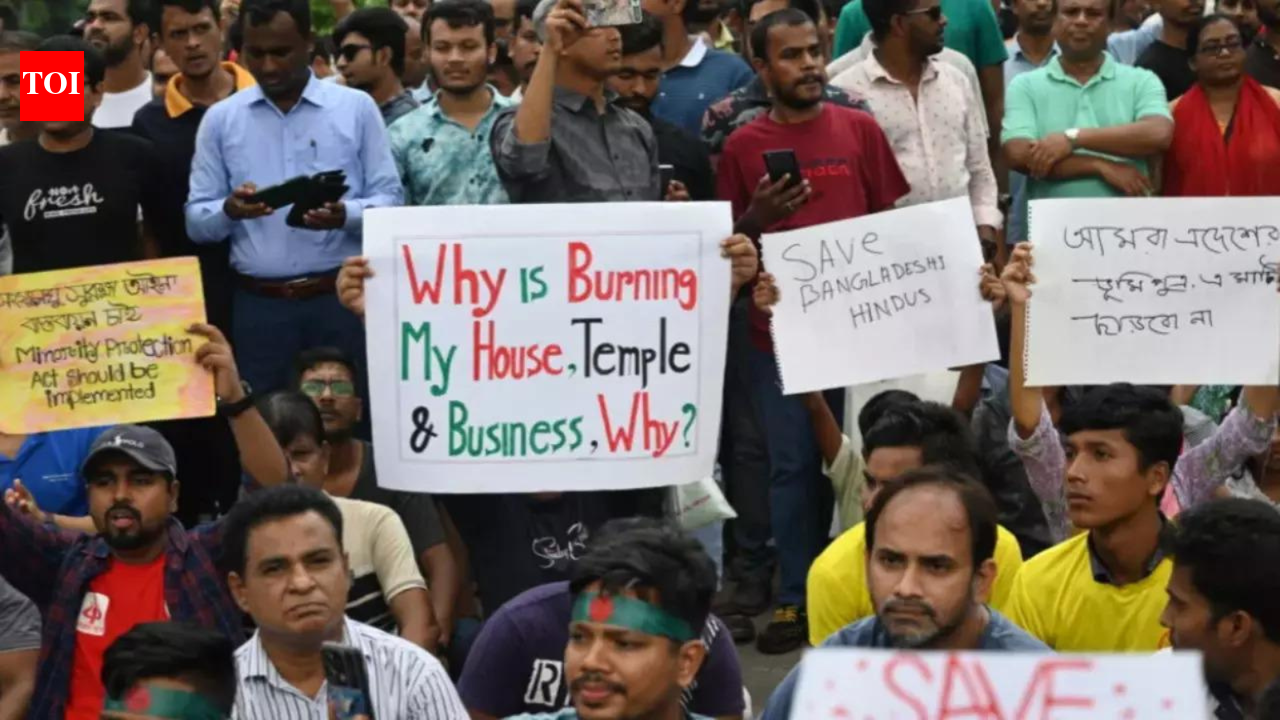

Bangladesh’s interim government on Monday said that the majority of incidents involving members of minority communities in the country during 2025 were “criminal in nature” and not driven by communal motives, asserting that only 71 of the 645 cases recorded had communal elements.The statement, issued by the office of chief adviser Muhammad Yunus and later highlighted by him in a post on X, came days after India pressed Dhaka to “swiftly and firmly” deal with attacks on minorities and described as “troubling” attempts to attribute such incidents to extraneous reasons. Citing a year-long review of official police records from January to December 2025, the interim government said 645 incidents involving minority communities were documented nationwide based on verified FIRs, general diaries, charge sheets and investigation updates. “While every incident is a matter of concern, the data presents a clear and evidence-based picture: the overwhelming majority of cases were criminal in nature rather than communal,” the statement said.According to the data, 71 incidents were identified as having communal elements. These included 38 cases of temple vandalism, eight incidents of arson, one case each of theft and murder, and 23 other incidents such as threats to break idols, provocative social media posts and damage to worship pavilions. Police cases were registered in 50 of these incidents, with arrests made in an equal number, while preventive or investigative measures were taken in the remaining cases.The remaining 574 incidents, the government said, were linked to criminal or social disputes unrelated to religion. These included neighbourhood disputes (51), land-related conflicts (23), theft (106), prior personal enmity (26), rape (58) and 172 cases of unnatural death. Police registered 390 cases in this category, filed 154 unnatural death reports and made 498 arrests, with additional measures taken in 30 incidents.The statement stressed that accurate classification was necessary to counter misinformation and enable effective law enforcement. “While all crimes are serious and demand accountability, the data demonstrates that most incidents involving minority victims were not driven by communal hostility, but by broader criminal and social factors that affect citizens across religious and ethnic lines,” it said.However, the Bangladesh Hindu Buddhist Christian Unity Council (BHBCUC) questioned the government’s assessment. “If the government thinks these are not communal incidents, the question then is whether anyone can take the law into their own hands,” BHBCUC leader Kajal Debnath said, warning that such statements could embolden criminals and create a sense of impunity.India has repeatedly raised concerns over attacks on minorities in Bangladesh, particularly Hindus. On January 9, external affairs ministry spokesperson Randhir Jaiswal said, “We continue to witness a disturbing pattern of recurring attacks on minorities as well as their homes and businesses by extremists,” adding that such incidents must be dealt with “swiftly and firmly”.Relations between India and Bangladesh have remained strained since the interim government headed by Yunus took charge following the collapse of the Sheikh Hasina government in August 2024, with New Delhi continuing to flag concerns over minority safety.(With inputs from agency) Go to Source