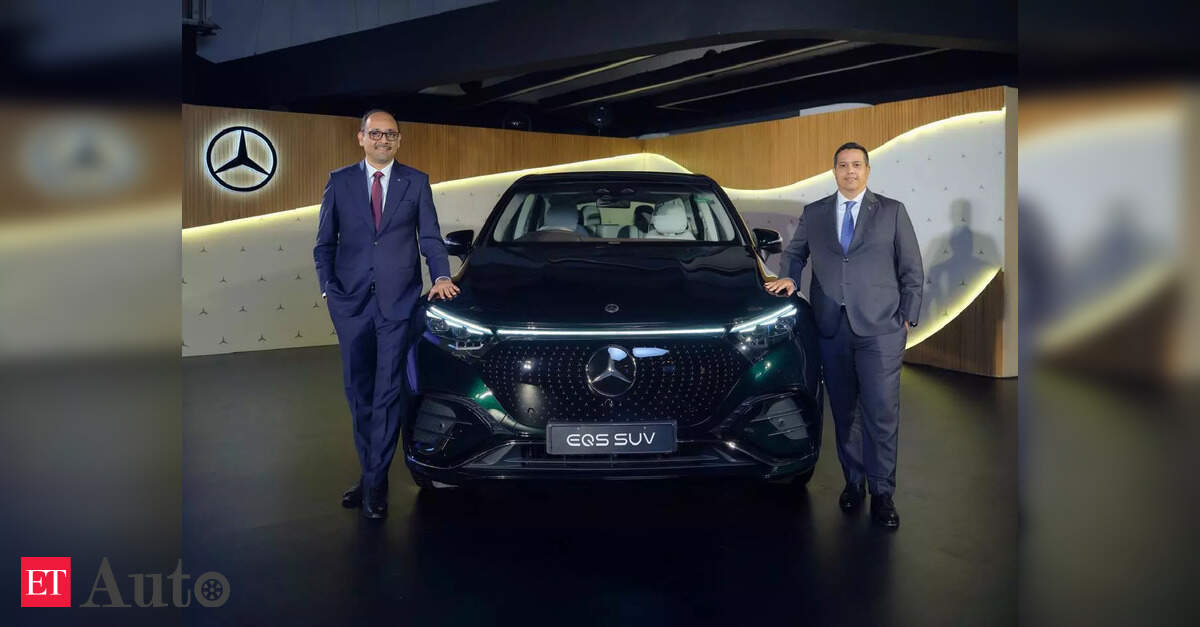

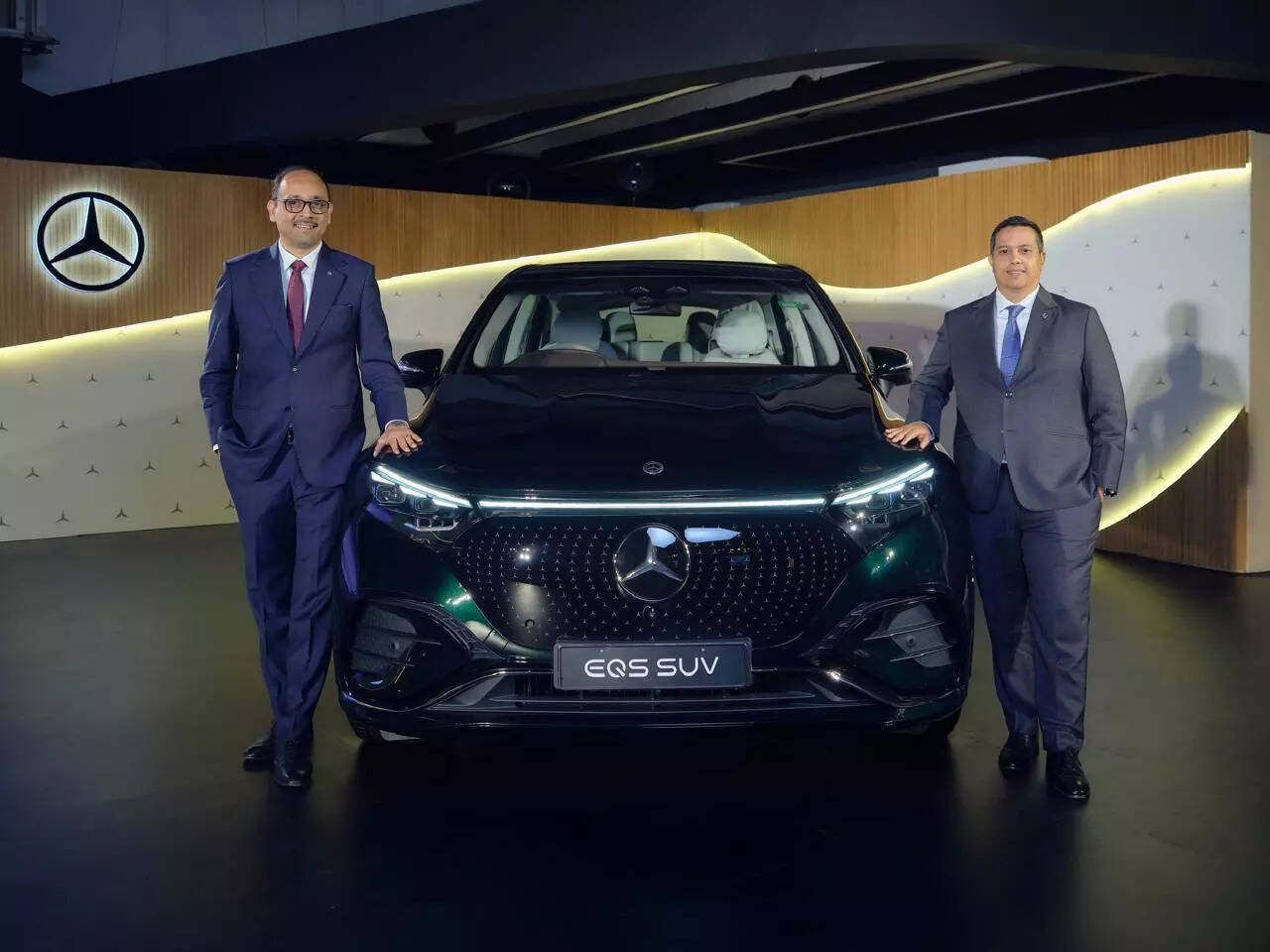
 Mercedes-Benz will be launching more than 40 new products across their brand globally. In India alone, there will be 12 new model launches in 2026.
For Mercedes-Benz, India’s role in the company’s global technology ecosystem is growing due to its strong talent pool and engineering capabilities. Santosh Iyer, Managing Director and CEO of Mercedes-Benz India, feels the country is steadily emerging as a strategic hub for the brand’s digital and software-led transformation.
“With strong teams in Bengaluru and Pune, including Hinjawadi, India is contributing across digital twins, AI, core digital architecture and MB.OS, and a growing share of critical work is being driven from here,” Iyer said. He was speaking at the brand’s Annual Press Conference at its Chakan facility near Pune, where he also reflected on the company’s legacy, calling it a “140 year-old startup”.
He said India’s deep and adaptable talent pool has enabled the company to operate largely without expats. “Local talent today manages everything from engineering and manufacturing to sales, marketing and customer services. Our focus is on identifying talent early, embedding them in our culture and developing skills internally, especially given our unique direct-to-consumer model.”
Iyer added that over 100 professionals from Mercedes-Benz India are now working across global markets, underscoring the country’s expanding international footprint. “Hiring continues for key roles, even as automation improves productivity and large-scale workforce expansion is not a priority,” he said.
The annual congregation also proved to be a time for reflection for the luxury carmaker as it set the direction for 2026 and evaluated a year characterised by unpredictability, shifting consumer behaviour, and a rapidly evolving policy environment.
Product fireworks in 2026
Mercedes-Benz will be launching more than 40 new products across their brand globally. In India alone, there will be 12 new model launches in 2026. Besides, he has indicated that all of these new model launches have been developed to “surprise, delight, and inspire” customers around the world.
The focus is firmly on the customer journey rather than just products. “The only luxury brand in the nation using a direct-to-consumer retail model is Mercedes-Benz India,” said Iyer. The retail and finance teams have merged into what Iyer refers to as a “One Customer Unit,” with Mercedes-Benz Financial Services financing more than 50 per cent of sales.
Initiatives such as three-click financing and MB Charge: a unified public charging platform, are aimed at removing friction from ownership. “Electric luxury must be effortless,” he stressed.
The company is also leaning on network expansion alongside this transformation. The brand currently operates in over 60 cities with 140 touchpoints. “We will enter three new cities, add 20 new touchpoints, and upgrade 15 facilities to our new luxury retail architecture,” Iyer said, highlighting dealer investments of over ₹450 crore across three years.
Traversing the VUCA world
On ETAuto’s question on how Mercedes-Benz de-risks its supply chain and capital allocation in today’s VUCA– a short form for volatile, uncertain, complex, and ambiguous environment world – Iyer said flexibility is the need of the hour.
“Honestly, I’ve been hearing about volatility for many years now,” he said, ticking off COVID-19, semiconductor shortages, elections and geopolitical tensions. “A stable planning environment doesn’t really exist anymore, not just in India, but anywhere.”
“Flexibility is the name of the game,” Iyer said. Mercedes-Benz’s ability to move between petrol, diesel and electric powertrains has become a strategic advantage.
“Nobody saw diesel coming back the way it did,” he admitted. Today, around 42 per cent of Mercedes-Benz India’s sales come from diesel vehicles. “We steer for it, but six months later, by the time cars arrive, something else may have changed again.”
Electric vehicles reflect similar policy-driven swings. “In the same state, with the same product, we’ve seen EV penetration go from 12 per cent to 3 per cent when road tax benefits were removed and back to 12 per cent when they returned,” Iyer said. “Add to that the 5 per cent GST on EVs, and suddenly the electric car can be cheaper than a combustion one. This is exactly why flexibility is critical.”
Alternate fuels and GST reality
When asked about how diesel, EVs, hybrids, and alternative fuels fit Mercedes-Benz’s India strategy, Iyer shared a well-defined vision. “So, at present, we are focusing primarily on the three powertrains that are gas, diesel and electric,” he added. “That’s the core technology that is currently powering the way we’re going to pursue things.”
“We are continuing to monitor hybrid technology closely, as hybrids had a unique tax benefit prior to GST. However, since GST has been standardised at 40 per cent for all powertrains, hybrid technology no longer enjoys that benefit. Hybrids are usually more expensive than other powertrain options due to the combination of two powertrains into one vehicle; thus, it is ultimately up to the consumer if they are willing to pay the premium associated with hybrid technology.”
He also mentioned that Mercedes-Benz has hybrid powertrain offerings in its global line-up; however, Mercedes-Benz does not currently have a regulatory reason to introduce this in India at this time.
“We are comfortably within corporate fuel efficiency norms, so there is no compulsion from that standpoint. However, we are completely agnostic — if customer demand emerges, we are well positioned to respond.”
Euro–Rupee gap and pricing pressures
On policy, Iyer welcomed GST 2.0 but explained why luxury growth lagged the mass market. “The rupee depreciated nearly 19 per cent against the euro, from about ₹89 to ₹105,” he said. “That meant luxury customers effectively saw only a 1 per cent price benefit, compared to 8–9 per cent in the mass market.”
Mercedes-Benz India responded with calibrated price increases. “Last year, we took a 5 per cent price increase. From 1 January this year, there’s another 2 per cent,” Iyer said. “At the same time, there was a 6 per cent GST reduction. So technically, the customer actually saw a 1 per cent benefit then.”
That cushion, however, has now disappeared. “If you look at it end to end, we still have another 10 per cent to cover,” he said, noting that future pricing will depend on currency movements, free trade agreements and geopolitical developments.
ADAS and a maturing market
Asked whether advanced driver assistance systems and sensors influence buying decisions, Iyer was refreshingly candid. “Everyone likes the lingo,” he said.
“People want everything in the car.”True sensitivity to quality and reliability, however, will take time. “Take a rear-view camera; every car has one today. But the quality varies massively. The average Indian buyer isn’t fully tuned into that yet,” he added.