
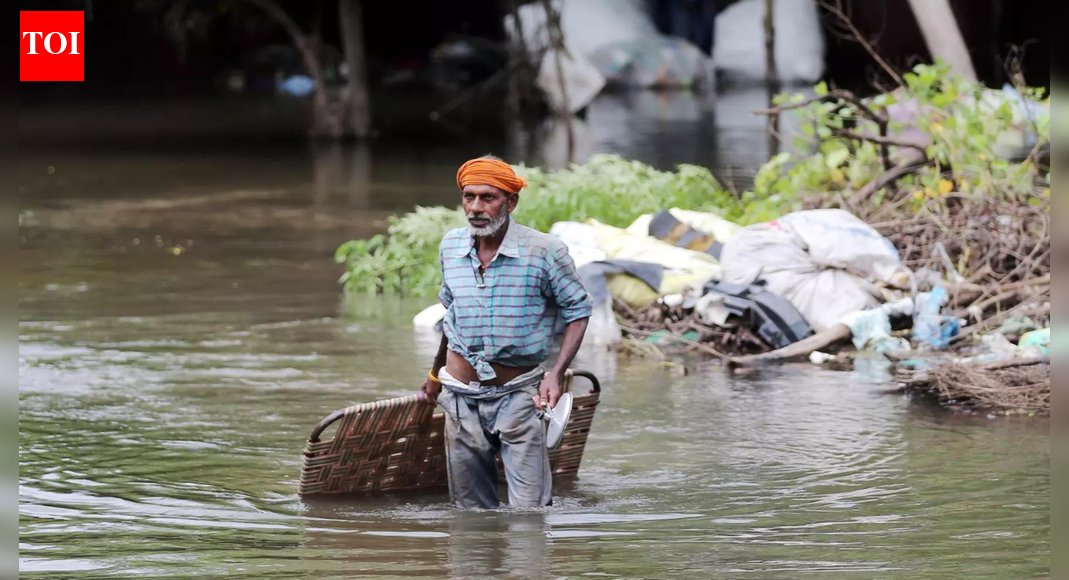

ANI Photo
Disasters don’t just cause infrastructure losses, cripple economies, or claim lives. They shake something far deeper, that is, the very fabric of human existence.Each disaster leaves scars that statistics cannot fully capture silent grief, disrupted childhoods, fractured communities and lives permanently divided into “before” and “after”. Homes swallowed by raging floods erase decades of memory. Landslides bury entire villages in a single night. The suffering often stretches long after the debris is cleared and relief camps shut down.Tiny fingers that once wrapped around toys lie helplessly trapped under rubble. Cyclones obliterate years of hard-earned investments, stripping families of assets and security. Some survive in body but are torn in spirit, carrying the lifelong burden of outliving loved ones.We cannot stand against nature or turn its course. But when nature’s wrath presents itself, we can be prepared.For India , one of the world’s most disaster-prone countries , that preparedness often decides whether tragedy is counted in thousands or dozens.
2025: A year that laid bare India’s vulnerabilities
The year 2025 starkly illustrated how deeply disasters are now woven into India’s everyday reality. Extreme weather events were recorded on most days of the year, with floods, landslides, heatwaves and storms exacting a heavy toll on lives, livelihoods and infrastructure across regions. In North India, the monsoon triggered one of the most devastating flood seasons in decades. Punjab, Uttarakhand, Himachal Pradesh and Bihar bore the brunt as intense rainfall, cloudbursts and swollen rivers overwhelmed both natural systems and human settlements.Punjab, the bread basket of India, witnessed one of its worst flood episodes in decades. Exceptionally heavy monsoon rainfall in August, 253.7 mm, 74% above normal and the highest in 25 years , pushed the Sutlej, Beas and Ravi rivers into spate. Thousands of villages were inundated. At least 57 people lost their lives. Over 20 lakh people across all 23 districts were affected, nearly seven lakh displaced, and preliminary estimates put economic losses at more than Rs 13,800 crore. Over 4 lakh acres of farmland were destroyed, along with extensive damage to roads, bridges and homes.In Uttarakhand, the fragility of the Himalayan ecosystem was once again laid bare. In early August, a cloudburst-triggered flash flood struck Dharali village in Uttarkashi district. Torrents of water, mud and debris surged down the Kheer Gad stream, sweeping away homes, hotels and the entire market area within minutes. At least four people were killed, dozens reported missing, and scores of people, including pilgrims and tourists, were airlifted as rescue operations continued under hazardous conditions.Neighbouring Himachal Pradesh endured one of its most destructive monsoon seasons in decades. Between late June and early September, the devastating monsoon claimed over 400 lives through rain-related incidents and road accidents. Official estimates placed losses at more than Rs 4,000 crore, with over 135 landslides, nearly 100 flash floods and dozens of cloudbursts damaging thousands of homes and cutting off large parts of the state as roads, highways, power lines and water systems collapsed. The monsoon also caused damage to livestock, with at least 1,464 animal deaths and 26,955 poultry deaths reported.Across Delhi-NCR, rising levels of the Yamuna forced thousands of evacuations from low-lying areas and relief camps for displaced residents. Transport systems were paralysed by waterlogging. Haryana, Rajasthan and parts of Jammu & Kashmir also experienced flooding and landslides.Beyond floods, 2025 also saw intense heatwaves affecting more than half of India’s districts, raising serious public health concerns. Industrial accidents, fires, crowd crushes and aviation incidents highlighted how infrastructure stress intersects with natural hazards in densely populated regions.Together, these events underscored a sobering reality: extreme weather and geological hazards are no longer episodic shocks, but recurring tests of India’s preparedness and resilience.
Why India is one of the World’s most disaster-prone countries
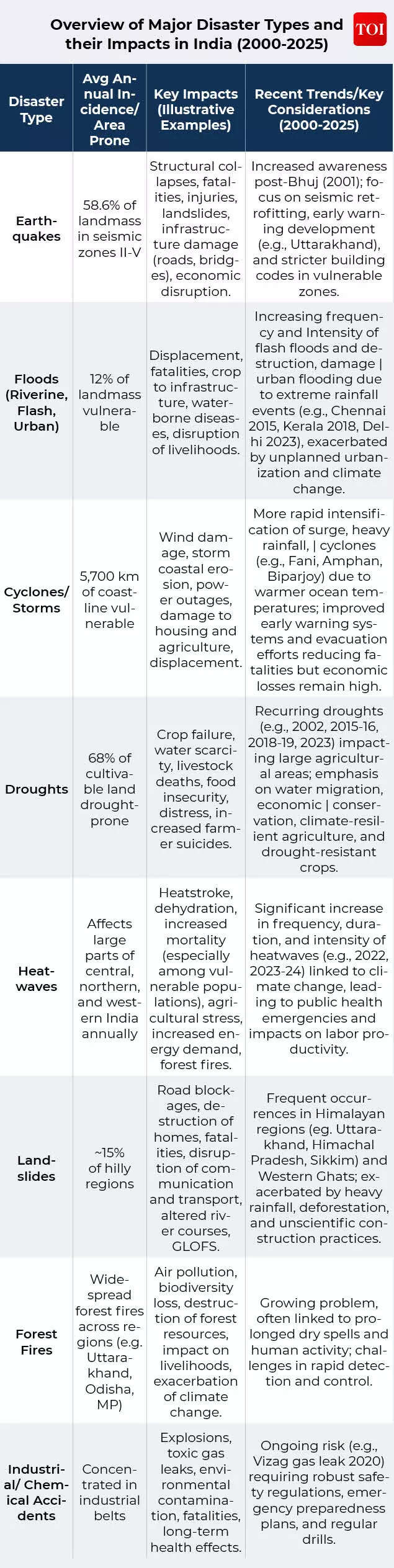
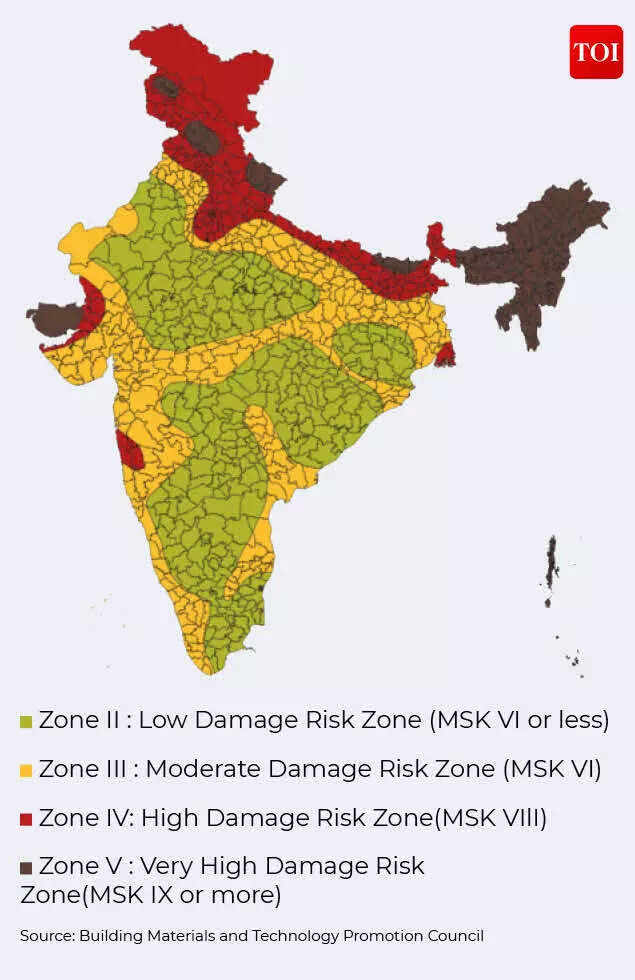
India’s susceptibility to disasters is not accidental but a consequence of the interplay between its geography, climate, population density, and development patterns. According to the World Population Review, India ranks as the third most disaster-prone country globally. Of its states and UTs, 27 remain prone to being exposed to cyclones, floods, droughts, earthquakes, and landslides. The country’s topography significantly contributes to this risk: the Himalayas are vulnerable to earthquakes and landslides, while the vast plains are prone to flooding. Additionally, tectonic activity in surrounding oceans makes India susceptible to tsunamis. Climate change has further exacerbated this vulnerability, increasing the frequency and intensity of natural disasters across the country.According to official assessments by the National Disaster Management Authority (NDMA) and the National Institute of Disaster Management (NIDM):
- Nearly 58.6% of India’s landmass is prone to earthquakes
- Over 12% is vulnerable to floods and river erosion
- About 8% per cent of the areas are vulnerable to cyclone related disasters of various degree.
- Around 68% of cultivable land is drought-prone
- More than 5,700 km of coastline is exposed to cyclones and storm surges
–
Globally, India ranks third after the United States and China in the total number of recorded natural disasters since 1900. Between 1900 and 2022, the country experienced 764 major disaster events, with 361 occurring after 2000, underscoring the accelerating frequency of extreme events.Yes, India was ranked 9th in Germanwatch’s Climate Risk Index (CRI) 2026, reflecting significant impacts from extreme weather (1995-2024) with over 80,000 deaths, 430 extreme weather events, and $170 billion in economic losses, affecting 1.3 billion people and highlighting urgent needs for adaptation. The report, released at COP30, noted frequent floods, heatwaves, and cyclones, showing India’s high vulnerability despite efforts, emphasizing the need for climate finance and stronger resilience.
–
India is highly vulnerable to floods as they alone account for around 41% of all disasters, making them India’s most persistent hazard.Climate change has intensified rainfall variability, increased the frequency of extreme precipitation, amplified heatwaves and altered cyclone behaviour. At the same time, rapid urbanisation, deforestation, encroachments on floodplains and infrastructure expansion into hazard-prone zones have sharply increased exposure. The result is a dangerous compounding of natural risk with human-made vulnerability. In a country where geography and climate collide with dense populations, India faces some of the harshest and most frequent disasters in the world.
What is a ‘disaster’ under Indian law?
India’s disaster framework is anchored in the Disaster Management Act, 2005, which defines a disaster as:“A catastrophe, mishap, calamity or grave occurrence… arising from natural or man-made causes… beyond the coping capacity of the community.”Notified disasters eligible for national assistance include floods, cyclones, droughts, earthquakes, landslides, avalanches, cloudbursts, heatwaves, cold waves, lightning, forest fires and pest attacks.The Act established a multi-tiered institutional structure,from the NDMA at the national level to State and District Disaster Management Authorities intended to focus not only on response, but on prevention, mitigation and preparedness.India’s disaster management framework is anchored in the National Disaster Management Authority (NDMA), created under the Disaster Management Act, 2005, after the 2004 Indian Ocean tsunami exposed gaps in coordination and preparedness. Mandated to steer policy across prevention, mitigation, preparedness and response, the NDMA has helped strengthen early warning systems and response mechanisms. Yet, as experts point out, the larger challenge lies in shifting sustained attention from visible relief operations to the quieter, less visible work of preparedness, a gap that continues to shape outcomes when disasters strike.
Climate change and the environmental cost of development behind disasters
While geography makes India vulnerable, environmentalists warn that human activity is rapidly amplifying natural hazards , turning extreme weather into recurring disasters.Kavita Ashok, a Delhi-based environmentalist who has worked on climate and urban ecology issues, argues that development patterns are accelerating climate risk rather than absorbing it.“In the name of development and urbanisation, human activities are clearing forests and burning fossil fuels for transport, industry and energy, thereby raising global temperatures,” she says.“Certain types of livestock farming, industrial activities and landfill decomposition release greenhouse gases that trap heat close to the Earth’s surface, leading to global warming.”She adds how the cumulative impact of these pressures is destabilising natural systems that once acted as buffers against floods, heatwaves and landslides.“Constant harassment of the Earth and its resources is stripping the planet of its natural wealth and rhythm,” she says.

–
Kavita Ashok further warns that despite years of climate conferences, scientific reports and public protests, action has not kept pace with the scale of the threat.“Sadly, climate conferences and protests are not reaching the deaf ears of authorities and short-sighted capitalists,” Ashok says.“The threat of a global climate collapse is round the corner, even if we turn a blind eye or a deaf ear to this catastrophe.”Her warning adds a critical layer to the disaster preparedness debate: preparedness cannot succeed in isolation if development itself continues to generate risk.
Preparedness vs response: A persistent imbalance
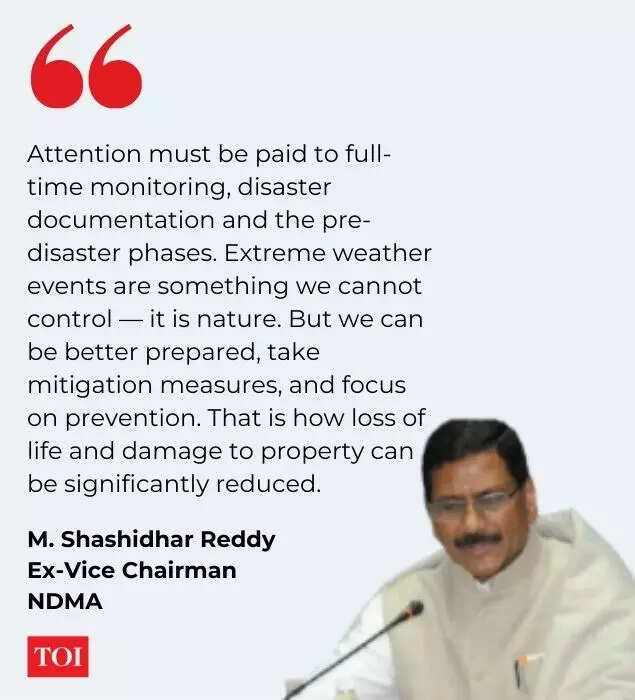
Few individuals have observed the evolution of India’s disaster management system as closely as M. Shashidhar Reddy, the former Vice Chairman of the National Disaster Management Authority who served from 2011 to 2014 and played a key role in operationalising the Disaster Management Act.“Whenever there is a disaster, everybody focuses on response and relief,” Shashidhar Reddy says. “But very little is being done on the pre-disaster phases , prevention, mitigation and preparedness. These are very important stages of disaster management, but not enough attention is being given to them.”
–
The reason, as he explains, is visibility. “Response and relief are visible , the media is there, people are affected, governments act. Preparedness does not get that attention.”Over the past two decades, India has significantly strengthened its response capacity , from the National Disaster Response Force to early warning systems and relief financing. Disaster preparedness, however, remains an area for improvement.
Cyclone Phailin: When preparedness saved lives
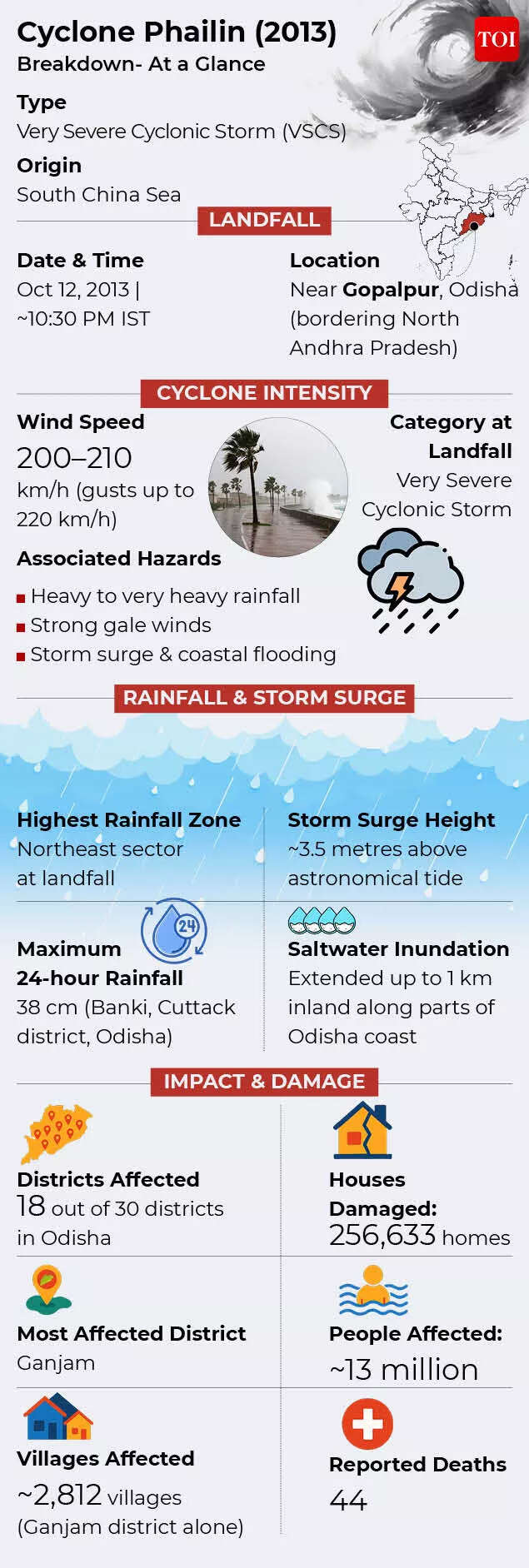
Few episodes illustrate the life-saving power of preparedness as clearly as Cyclone Phailin, which made landfall near Gopalpur in Odisha’s Ganjam district on the night of October 12, 2013.Phailin was the strongest cyclone to hit India in 14 years, packing winds of over 200 km per hour at landfall. Early global assessments warned of catastrophic consequences, with projections suggesting thousands of lives could be lost along the densely populated eastern coast.
–
“During Cyclone Phailin, international agencies predicted that thousands of lives could be lost,” recalls Shashidhar Reddy, adding that “IMD maintained that it would not be a super cyclone, and their forecast about landfall and wind speed turned out to be accurate.”
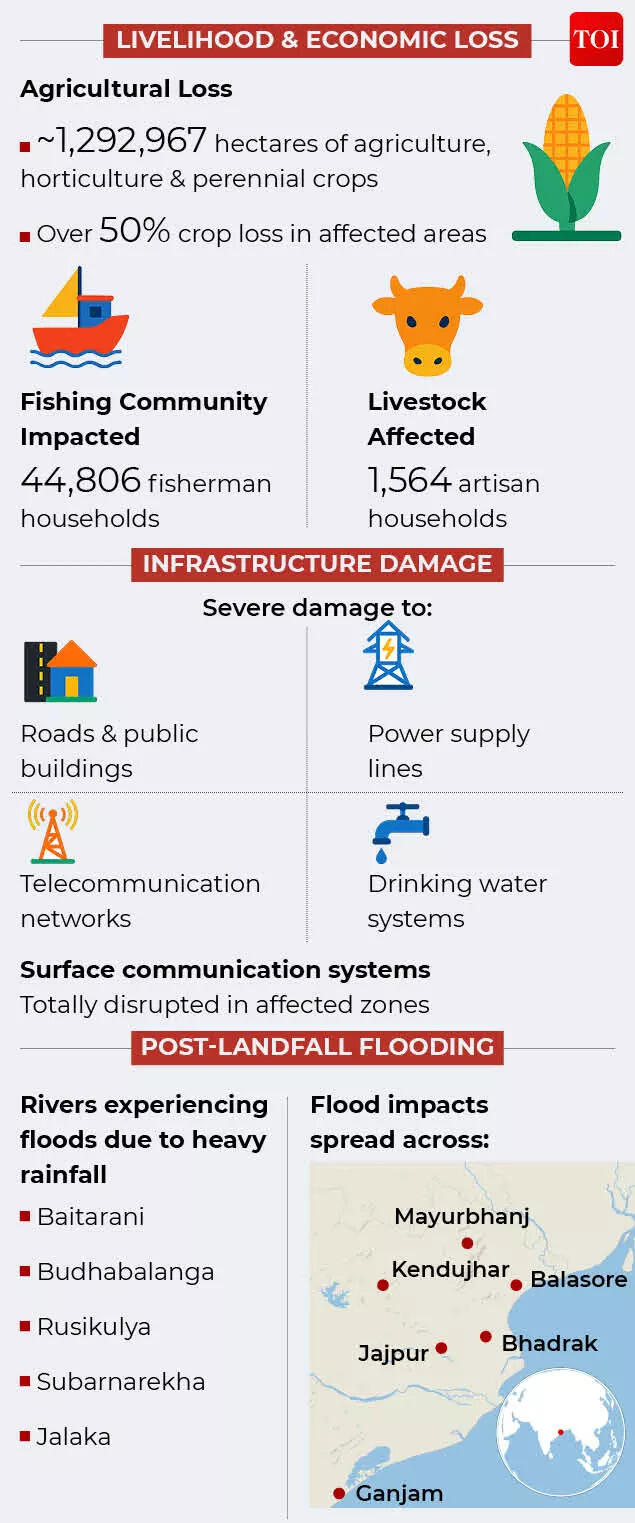
What followed was one of the largest pre-emptive evacuation exercises in history. Acting on accurate forecasts and rehearsed protocols, the Odisha administration moved over one million people out of harm’s way before the cyclone struck.“Because of preparedness measures, the loss of life was reduced to a great extent,” Reddy says. “This was possible only because of preparedness.”The World Bank also described Phailin as “one of the most successful disaster management efforts in the world”, noting that years of planning dramatically reduced fatalities from a very severe cyclonic storm , stronger than Hurricane Katrina at landfall.In one of the most successful disaster management efforts in the world, India’s eastern state of Odisha evacuated close to 1 million people before Cyclone Phailin, the strongest cyclone to hit the country in 14 years, struck the coast in October 2013. Years of planning and preparation dramatically reduced the death toll from this very severe cyclonic storm, which was stronger than Hurricane Katrina upon landfall. The project is in line with the IDA16 special theme on climate change. – World Bank report titled “India averts devastation from cyclone Phailin”For survivors, preparedness meant survival. “Had this cyclone shelter not protected us, we would have become one with the earth,” said P. Bhimraju Prushty, a resident of Prayagi village in Ganjam district.
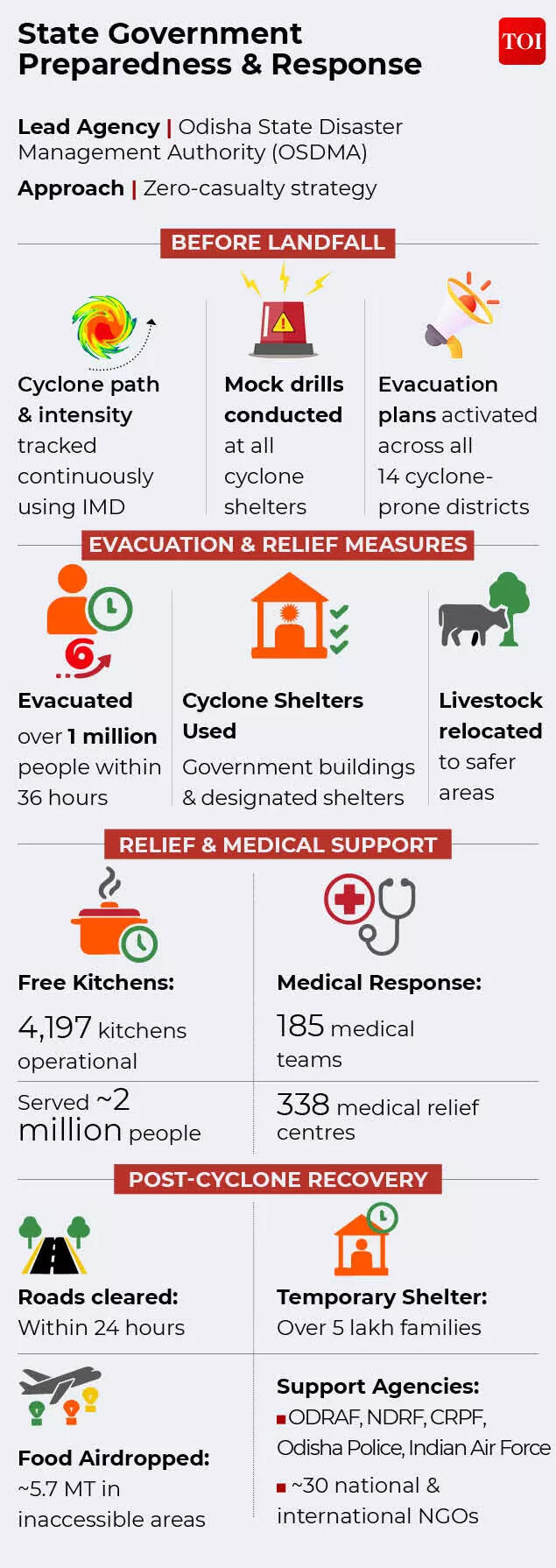
What preparedness achieved on the ground
- Over one million people evacuated in record time
- Death toll significantly low as compared to over 10,000 deaths in the 1999 Odisha Paradip cyclone
- 4,000+ free kitchens serving over two million people
- 185 medical teams and 338 medical centres deployed
- 5.7 metric tonnes of dry food airdropped in inaccessible areas
- Half a million families provided temporary shelter
- Major roads cleared within 24 hours due to pre-positioned resources
–
This response was not improvised. “NDMA had conducted mock drills a month before the cyclone,” Reddy explains. “When the actual cyclone occurred, the administration knew exactly what to do.”
Bihar: Where flooding is a persistent lived reality
If Phailin shows preparedness at its best, Bihar illustrates the cost of recurring disasters without long-term risk reduction.Nearly 73.63% of north Bihar’s geographical area is flood-prone. Of the state’s 38 districts, 28 are affected by floods, with 15 categorised as severely affected. Rivers originating in Nepal carry heavy sediment loads that raise riverbeds, while monsoon flows can increase up to 50 times within three months.The 2008 Kosi floods devastated livelihoods, damaging over 3.5 lakh acres of paddy and affecting nearly five lakh farmers. More recently, floods have impacted over 25 lakh people across ten districts, including Bhagalpur, Patna and Vaishali.The cycle repeats annually: evacuation, relief and reconstruction , often in the same vulnerable locations.
What can we learn from Japan?
Japan, like India, is one of the world’s most disaster-prone countries. Like, Indonesia, Phillipines, its location along the Pacific “Ring of Fire” exposes it to frequent earthquakes, tsunamis, and volcanic eruptions, while typhoons and heavy monsoon rains bring additional risks. Decades of investment in early warning systems, resilient infrastructure, strict building codes, and, importantly, regular nationwide disaster drills, from school exercises to city-wide tsunami and earthquake simulations, have transformed vulnerability into managed risk and that frequency of disaster has somehow made it very resilient, setting an example in disaster management. Citizens routinely rehearse evacuation routes, hospitals test emergency readiness, and local governments coordinate large-scale response exercises. These drills are deeply embedded in daily life, creating a culture where everyone knows what to do when disaster strikes, they are prepared.Japan also leverages innovative technology to reduce disaster risk. Researchers at the Tokyo Institute of Technology have developed a dynamic seawall system (SMS) that harnesses microtidal energy to power gates rising from the seafloor, protecting ports from tsunamis, storm surges, and high waves. Such systems exemplify how combining engineering, early warnings, and community drills can dramatically reduce loss of life and economic damage.India can draw valuable lessons from Japan’s model. Robust urban planning, stringent construction standards in hazard-prone zones, and well-rehearsed evacuation protocols can drastically reduce loss of life and economic disruption. Integrating technology with public awareness campaigns, such as real-time alerts, GIS-based risk mapping, and local disaster response teams, can make communities self-reliant while supporting national emergency efforts. Just as Japanese children practice earthquake drills at school and families rehearse escape plans at home, India could benefit from making preparedness a routine, community-wide practice. Japan demonstrates that high disaster exposure does not have to equate to catastrophe; what matters is preparation, coordination, and a culture that treats disaster readiness as a shared responsibility.
Lessons from Turkey
Turkey sits on multiple active fault lines, making it highly susceptible to devastating earthquakes. On 6 February 2023, the Kahramanmaraş earthquake sequence, consisting of two major quakes of magnitudes 7.8 and 7.7, struck southeastern Turkey and northern Syria. In Türkiye alone, the disaster caused over 50,000 confirmed deaths and over 107,000 injuries across 11 provinces, affecting an estimated 15.7 million people. Damage assessments revealed that hundreds of thousands of buildings were damaged or destroyed, including tens of thousands that collapsed or were heavily damaged, while many more sustained moderate or minor damage. The resulting direct economic losses were estimated at around $34 billion, highlighting how disaster exposure without robust preparedness can magnify both human and economic tolls.
Urban flooding: When cities grind to a halt
Urban flooding is emerging as one of India’s most disruptive disaster risks, threatening not just lives but the very engines of the economy. Rapid urbanization, inadequate drainage systems, and unplanned construction have made cities like Mumbai, Delhi, Chennai, and Bengaluru highly vulnerable to even short bursts of heavy rainfall.When streets turn into rivers, transport comes to a standstill, hospitals face access issues, supply chains are disrupted, and businesses halt. Airports, IT corridors, and industrial hubs can grind to a halt, resulting in losses that ripple far beyond city limits. In 2025, flash floods in Delhi-NCR and Mumbai caused massive disruption: offices, factories, and markets were forced to shut down for days, highlighting how urban flooding is no longer just a local inconvenience but a serious economic threat.Experts warn that without proper urban planning, investment in drainage infrastructure, and early warning systems, cities could see recurring economic losses that far outpace those from rural disasters. Urban flooding is a stark reminder that preparedness must extend beyond evacuation and relief, it must protect the lifelines of India’s economy.
Why documenting disasters is a critical step
The former NDMA Vice-Chairman also pointed out that, despite India facing recurring disasters, systematic documentation remains a key area of improvement. “Unfortunately, our disaster events are not properly documented,” says M. Shashidhar Reddy. “Failure stories, where there was inaction or wrong action, are sometimes downplayed. But that is how systems improve. It is not about blaming anyone; it is just about learning from what went wrong or where improvement is needed.” Drawing an analogy, he adds, “When there is a plane crash, investigators launch an immediate search and look for the black box to understand the cause and prevent future accidents. We need the same kind of seriousness in disaster management to mitigate impending risks.”(For context, a black box, the flight data recorder and cockpit voice recorder, stores critical information about a plane’s systems, speed, altitude, and cockpit communications. By analyzing it after a crash, investigators can reconstruct exactly what happened, identify failures, and recommend changes to prevent future tragedies) In the similar vein, documenting and analyzing disaster response gaps can help India strengthen its preparedness, reduce losses, and save lives.Disasters and extreme weather events are no longer rare and are increasingly shaping the news cycle. Climate change is turning what were once occasional shocks into recurring tests of resilience. While we cannot control the weather, floods, or earthquakes, we can prepare for them. Early warning systems, community awareness, and well-rehearsed evacuation plans make the difference between survival and tragedy.Preparedness is more than a technical requirement; it is a moral, economic, and developmental necessity. Whether a disaster becomes a national tragedy or a story of resilience depends largely on what is done before the first siren sounds. Relief and rescue are critical, but documenting gaps, learning from missteps, and applying those lessons is what strengthens the nation’s defenses.The Prime Minister’s 10-point Disaster Management Plan complements this perspective. From strengthening early warning systems and local response teams to integrating climate risk into urban planning, the plan outlines practical steps to reduce vulnerability. Coupled with community drills, public awareness campaigns, and technological solutions, these measures help ensure that cities, towns, and villages are better prepared when nature strikes.For India, preparedness is a moral, economic, and developmental imperative, one that we can say the country has the expertise, technology, and human capital to achieve. It should be a vital part of our development plans and should be carried out consistently. Disasters will strike. But whether they become national tragedies that cripple the economy, devastate communities, and overwhelm hospitals, or whether they become stories of survival, resilience, and coordinated action, depends entirely on what is done before the warning siren sounds, not after. Relief, rescue, and humanitarian aid are necessary, but they are reactive; proactive planning is transformative. Go to Source

