
AI image
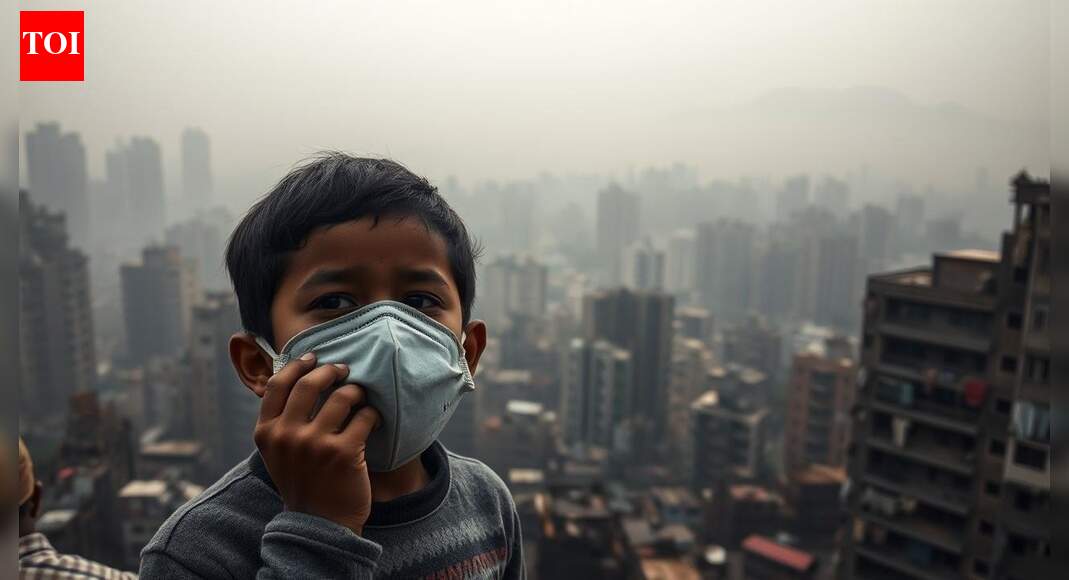
NEW DELHI: Nearly 44 per cent of Indian cities are facing chronic air pollution, pointing to a deep-rooted structural problem driven by persistent emission sources rather than short-term pollution spikes, according to an analysis by the Centre for Research on Energy and Clean Air (CREA). The findings are based on satellite data assessing PM2.5 levels across 4,041 cities over five recent years between 2019 and 2024, excluding the Covid-affected year of 2020.The report said at least 1,787 cities consistently exceeded the national annual PM2.5 standard during this period. However, only 130 cities are currently covered under the National Clean Air Programme (NCAP), with just 67 of them overlapping with these persistently non-attainment cities. As a result, NCAP addresses only about 4 per cent of India’s chronically polluted cities, the analysis noted.For 2025, Byrnihat in Assam emerged as the most polluted city, followed by Delhi and Ghaziabad, with annual PM2.5 concentrations of 100 µg/m³, 96 µg/m³ and 93 µg/m³, respectively. Noida, Gurugram, Greater Noida, Bhiwadi, Hajipur, Muzaffarnagar and Hapur also featured among the top polluted cities, as per PTI. The report highlighted that Uttar Pradesh has the highest number of non-attainment cities at 416, followed by Rajasthan, Gujarat, Madhya Pradesh, Punjab, Bihar and West Bengal. It also pointed out gaps in monitoring, with 28 NCAP cities still lacking continuous air quality monitoring stations.Delhi tops the PM10 list with an annual average three times the national standard, according to the report.The situation on the ground also remained worrying on Friday, with cold weather and smog pushing air quality in several parts of the national capital into the ‘poor’ and ‘very poor’ categories, as per CPCB data cited by news agency ANI.According to CREA India analyst Manoj Kumar, strengthening air quality governance through targeted, science-based reforms may be the only way forward.He stressed the need to prioritise PM2.5, revise the NCAP list of non-attainment cities and adopt an airshed-based approach, among other measures.