
–
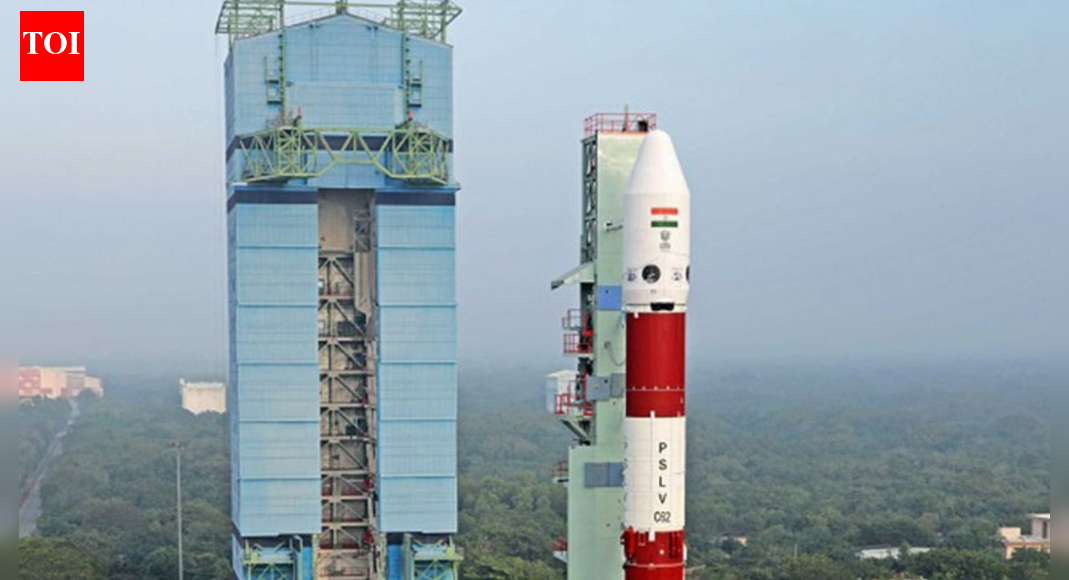
NEW DELHI: Isro will usher in the new year with the first launch of 2026 — PSLV C62 mission — on Monday (January 12) at 10.17 am from the first launchpad at the Sriharikota spaceport. The rocket will launch an advanced earth observation satellite EOS-N1 (codenamed ‘Anvesha’), another ‘eye in the sky’ that will boost India’s surveillance powers from space. Besides the primary payload EOS-N1, PSLV will also be carrying an European demonstrator satellite and 17 other satellites belonging to Indian and foreign agencies.EOS-N1 is a hyperspectral imaging satellite developed primarily for the Defence Research and Development Organisation (DRDO). It is capable of “seeing” in hundreds of wavelengths to identify materials on the ground—making it a high-priority asset for national security and surveillance. It will help India secure its borders because of its advanced remote sensing capabilities and will also be used in various fields such as agriculture, urban mapping and environmental observation.Besides EOS-N1, 18 secondary payloads, including Europe’s Kestrel Initial Demonstrator (KID), will piggyback on the primary satellite and will be placed in space. The KID mission will feature an experimental re-entry of a small capsule in collaboration with a Spanish startup, with a planned splashdown in the South Pacific Ocean. Other secondary payloads are cubesats from Indian startups and universities, including OrbitAID’s AayulSAT, CV Raman Global University’s CGUSAT-1, Dhruva Space’s DA-1, Space Kidz India’s SR-2, Assam Don Bosco University’s Lachit-1, Akshath Aerospace’s Solaras-S4 and Dayanand Sagar University’s DSAT-1.Bengaluru-based space startup OrbitAID Aerospace is set to make history with AayulSAT, India’s first on-orbit satellite refuelling payload. AayulSAT aims to extend satellite lifespans by enabling refuelling and servicing in orbit, addressing space debris and sustainability challenges.The upcoming PSLVC62 mission is also seen as a comeback for the PSLV programme following the earlier setback with PSLV-C61 in May 2025. The earlier PSLV-C61 mission had failed to launch EOS-09 earth observation satellite due to a technical issue in the rocket’s third stage, specifically a drop in chamber pressure, preventing the satellite from reaching its intended sun-synchronous polar orbit. While the first two stages performed normally, the anomaly in the third stage led to the mission failure.