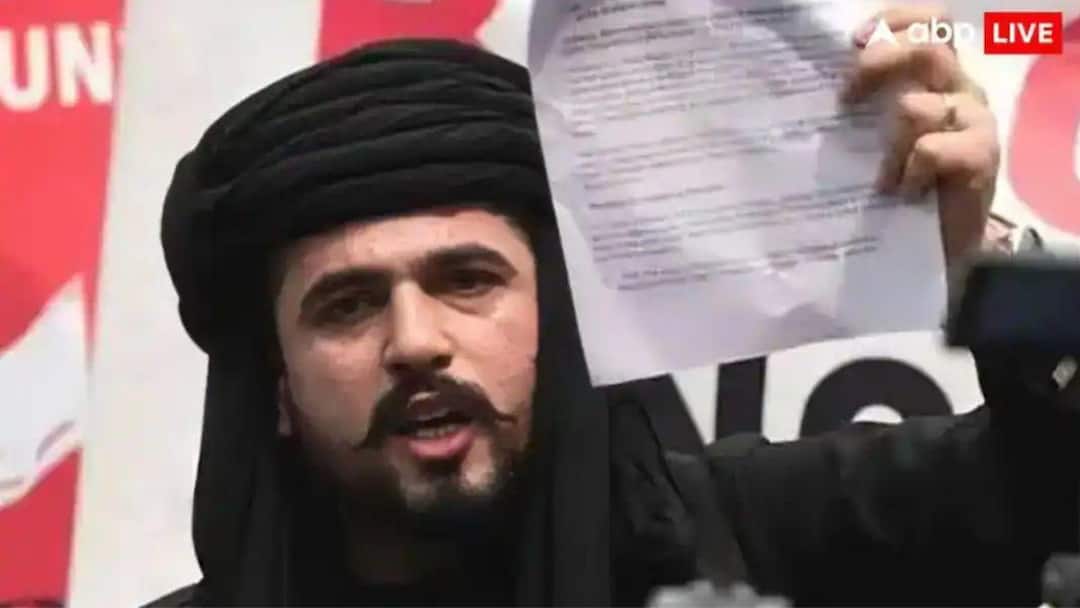

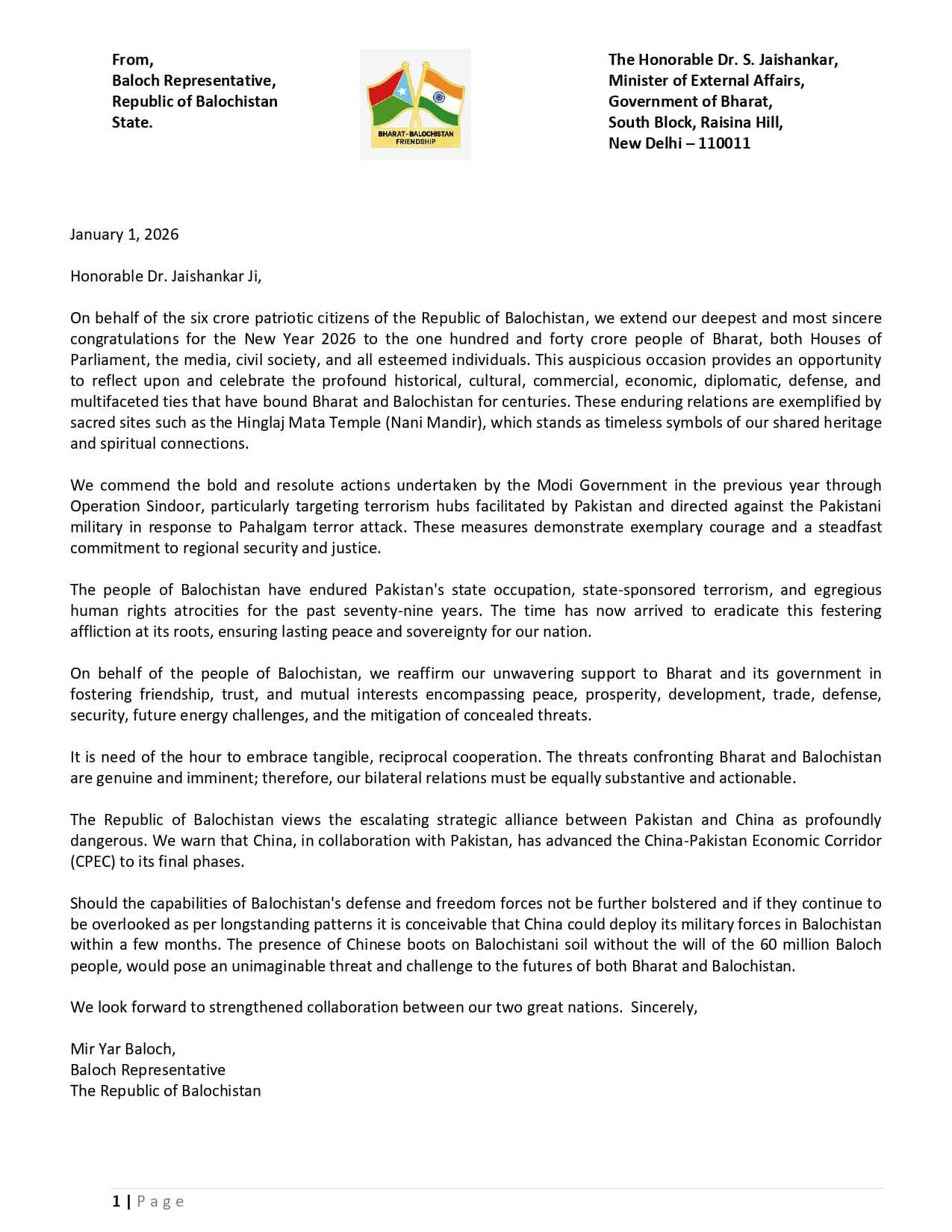
Mir Yar Baloch, a prominent Baloch leader and human rights activist, has issued a stark warning over a rapidly deepening Beijing–Islamabad alliance, claiming that China could deploy its military troops in Pakistan’s Balochistan region within the next few months. In an open letter addressed to India’s External Affairs Minister S Jaishankar, Baloch described the possibility as a serious threat not only to the Baloch people but also to regional stability.
Highlighting decades of unrest, Baloch said Balochistan has suffered prolonged repression under Pakistan’s control, alleging state-sponsored violence, enforced disappearances and widespread human rights abuses. He noted that Baloch nationalist leaders formally declared independence from Pakistan in May 2025, marking what he called a historic assertion of self-determination.
Baloch Praises India, Plans Diplomacy
Baloch also announced that the Republic of Balochistan will observe the “2026 Balochistan Global Diplomatic Week” in the first week of 2026. The initiative, he said, aims to enable Balochistan to engage directly with countries across the world, build diplomatic outreach and highlight the plight of the Baloch people on global platforms.
In his New Year message to Jaishankar, Mir Yar Baloch praised India’s actions under Prime Minister Narendra Modi, particularly Operation Sindoor carried out in 2025 following the April 22 Pahalgam terror attack. He said the operation dismantled Pakistan-backed terror infrastructure and demonstrated India’s resolve, courage and commitment to justice and regional security.
Balochistan Flags China Threat
Expressing deep concern over the China-Pakistan Economic Corridor (CPEC), Baloch warned that the project has entered its final phases and could soon be accompanied by a direct Chinese military presence. He claimed that unless Baloch defence and resistance forces are strengthened and taken seriously, “Chinese boots on Balochistani soil” could become a reality within months.
Such a deployment without the consent of the local population, he warned, would have “unimaginable consequences” for both Balochistan and India, given the strategic implications of Chinese military expansion in the region.
China and Pakistan have repeatedly denied allegations of any military expansion linked to CPEC, maintaining that the corridor is purely an economic initiative. India, however, has consistently opposed CPEC, arguing that it passes through Pakistan-occupied Jammu and Kashmir and raises serious sovereignty and security concerns