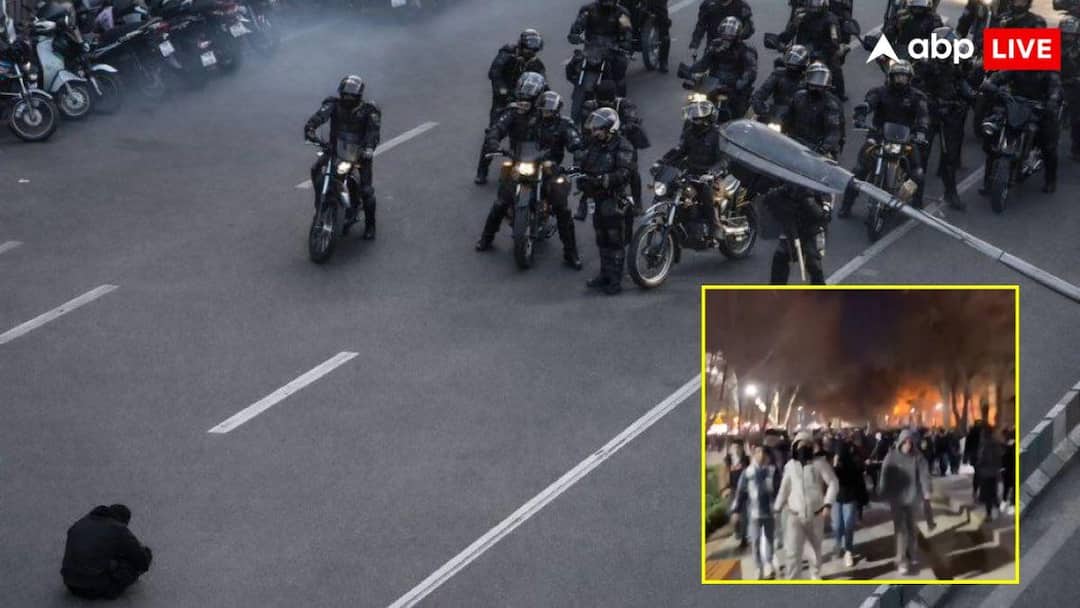

Widespread protests have been reported across Iran over the past few days, driven largely by economic distress and opposition to recent government decisions. According to reports, large sections of the country have seen daily life disrupted, with businesses shut and public activity curtailed in several provinces. The unrest follows a sharp fall in the Iranian rial, rising inflation and growing public frustration over livelihoods. Authorities have responded by declaring sudden public holidays in many regions as demonstrations continue to spread to major cities.
Businesses Shut As Protests Spread
According to AFP, members of Iran’s security forces have been killed during clashes linked to the protests. In response to the escalating situation, officials announced an unexpected public holiday, leading to the closure of businesses, universities and government offices in 21 of Iran’s 31 provinces.
Videos circulating on social media show confrontations in several cities, including Tehran, Shiraz, Isfahan, Kermanshah and Fasa. Protesters have been seen chanting slogans against the country’s leadership, reflecting deep anger over worsening economic and political conditions.
🚨 From the protests in Iran: right now demonstrators are marching in the city of Kermanshah pic.twitter.com/BwpfukKSNq
— Raylan Givens (@JewishWarrior13) January 1, 2026
Currency Crash & Rising Prices Fuel Anger
The protests reportedly began on Sunday at Tehran’s main market, where traders took to the streets following a steep decline in the value of the Iranian rial. The currency slump has led to higher import costs and a sharp rise in prices, directly affecting daily living expenses.
Inflation in Iran has crossed the 50 per cent mark, according to reports, intensifying pressure on households and small businesses. Traders have said they are willing to absorb financial losses to voice opposition to the deteriorating economic situation and to safeguard their future.
University students have also joined the protests, raising concerns over unemployment, water shortages and administrative failures.
Largest Unrest Since 2022
The current demonstrations are being described as the most widespread since 2022, when protests erupted following the death of Mahsa Amini in police custody. Amini had been detained by Iran’s morality police over allegations of improper hijab compliance, triggering nationwide outrage at the time.
Fresh clashes have been reported between protesters and security forces in the ongoing unrest. In Fasa, located in Fars province, a crowd reportedly broke through the gates of a government complex believed to house the governor’s office. Four people were arrested in connection with the incident, while three police personnel were injured.
Iranian President Masoud Pezeshkian has said the public anger is justified and assured that people’s demands would be heard. Meanwhile, Prosecutor General Mohammad Movahedi Azad warned against damage to public property, saying firm action would be taken if necessary. According to Al Jazeera, Iran’s currency has lost nearly half its value against the US dollar in 2025, further fuelling inflation and unrest.