
Last Updated:
With monthly fee caps, GPS tracking, CCTV, and mandatory safety checks, the new policy aims to offer a regulated alternative to costly school buses and unsafe rickshaws



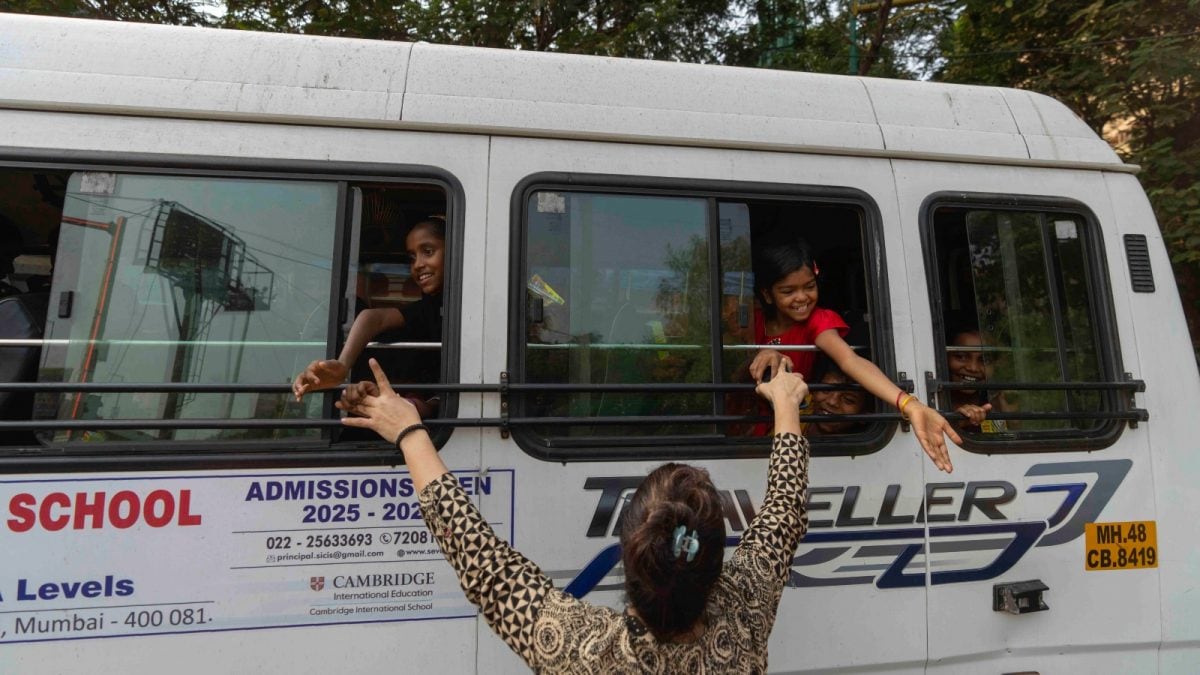
Maharashtra government is finalising a dedicated School Van Policy that promises affordability, modern safety features, and better regulation. (Representative photo/AP)
Parents struggling with the steep monthly fees of school buses and forced to rely on unauthorised rickshaws for their children’s commute may soon find relief. The Maharashtra government is finalising a dedicated School Van Policy that promises affordability, modern safety features, and better regulation. Transport Minister Pratap Sarnaik has directed officials to complete the framework and issue a notification at the earliest.
The decision was taken during a meeting at the office of the Transport Commissioner. The meeting was attended by Transport Commissioner Vivek Bhimanwar, Joint Secretary Rajendra Holkar, Additional Transport Commissioner Bharat Kalskar, Deputy Transport Commissioner Jayant Patil, and retired Additional Transport Commissioner Jitendra Patil, who presented the policy draft.
Recommended Stories
Speaking at the meeting, Minister Sarnaik emphasised the need for “safe, reliable, and affordable” transport for school-going children. “Many parents cannot afford the rising school bus fares. As a result, they turn to unauthorised rickshaws, which compromise student safety. School vans will provide a safe and regulated option, with additional features that rickshaws simply cannot offer,” he said.
Under the proposed framework, school vans will be recognised as vehicles designed specifically for student transport, based on Automotive Industry Standards (AIS-204). These vans will be four-wheelers with up to 12+1 seating capacity, compliant with BS-VI emission norms. Importantly, the vans will operate only on a monthly fee structure, capped at 10 months of the academic year, ensuring parents are not burdened with extra charges during school holidays.
The policy also empowers school-level transport committees, which will meet once a month to review safety and compliance. Each school will be required to appoint a nodal officer responsible for student transport safety, ensuring accountability.
Highlighting the safety measures, Sarnaik said school vans would include GPS tracking, CCTV cameras with dashboard screens, fire alarm systems, panic buttons, and emergency exits. To prevent accidents, vans will be fitted with speed governors restricting them to 40 kmph. An alarm will also be triggered if doors remain open while in motion. For younger children, vans will be equipped with low steps for easy access. Storage space for school bags, water bottles, and other essentials will also be mandatory.
“Compared to rickshaws, vans are much safer,” Sarnaik noted. “They have closed doors, better stability with four wheels, and ample space for children’s belongings. Parents should not have to compromise their children’s safety for affordability, and this policy is a step towards bridging that gap.”
By aligning state rules with national safety standards, the Maharashtra government hopes to set a benchmark in student transport safety. Once notified, the School Van Policy is expected to create not just peace of mind for parents but also employment opportunities for drivers and operators in the sector.
About the Author

Mayuresh Ganapatye, News Editor at News18.com, writes on politics and civic issues, as well as human interests stories. He has been covering Maharashtra and Goa for more than a decade. Follow him at @mayuganapa…Read More
Mayuresh Ganapatye, News Editor at News18.com, writes on politics and civic issues, as well as human interests stories. He has been covering Maharashtra and Goa for more than a decade. Follow him at @mayuganapa… Read More
Loading comments…
Read More