

An AI-generated image
Carl Sagan once said, “Exploration is in our nature. We began as wanderers, and we are wanderers still.” These words perfectly encapsulate humanity’s eternal urge to push boundaries, a spirit that continued in 2025 and was even exemplified in spectacular fashion across space. As we flip through the starry pages of the year, 2025 stands out as one packed with spatial wonder, astronomical insight and major space science moments that pierced the firmament, leaving millions of eyes turned skyward, watching in awe. The year unfolded at a relentless pace, in India and across the world, with little pause between breakthroughs, missions and discoveries that reignited fascination with the cosmos and expanded our understanding of it.In 2025, the sky was no longer the limit, and literally, it wasn’t. The theatre of space transformed into a dynamic arena of science, exploration, ambition and national pride. From breakthroughs in astrophysics and planetary science on distant worlds to landmark achievements in Earth orbit, the year saw humanity push the boundaries of knowledge and redefine its cosmic aspirations. For India, 2025 will be etched as a landmark year, one that saw the country stand shoulder-to-shoulder with the world’s most advanced spacefaring nations. Milestones such as the SpaDeX docking mission, Isro’s 100th launch, a historic Indian presence aboard the International Space Station, and the record-breaking heavy-lift ‘Bahubali’ mission all signalled a new chapter in India’s space journey and further solidified its standing on the global space stage. Globally, scientists traced the Sun’s searing winds, witnessed violent asteroid collisions around distant stars, and tracked interstellar visitors , cosmic travellers carrying secrets from light-years away. Newly discovered exoplanets, some orbiting binary stars and others surviving extreme conditions, underscored how strangely fascinating and diverse the universe can be.
India’s stellar year: Space milestones and momentum
For India, 2025 was nothing short of a cosmic crescendo. Our nation achieved multiple milestones that showcased scientific prowess, technological mastery, global collaboration, and showcased bold ambition. Isro Chairman V. Narayanan noted that India’s space sector achieved remarkable progress and recorded over 200 significant accomplishments throughout the year. These included large scientific data releases from the the ambitious and dedicated Aditya‑L1 mission, India’s first successful on‑orbit docking experiment with SpaDeX, enhanced satellite operations such as de‑docking and power transfer, and progress on collaborative missions like Nasa‑Isro’s NISAR. He also announced approval for a third launch pad in Sriharikota, Andhra Pradesh, aimed at expanding the country’s launch infrastructure and boosting our space capabilties. SpaDeX: Docking in Orbit On January 16, Isro achieved the Space Docking Experiment Mission (SpaDeX), sending satellites SDX-01 and SDX-02 to rendezvous and dock autonomously in Low Earth Orbit. India became the fourth nation , after Russia, the US, and China , to achieve orbital docking, a critical step for servicing satellites, assembling space stations, and crewed missions.
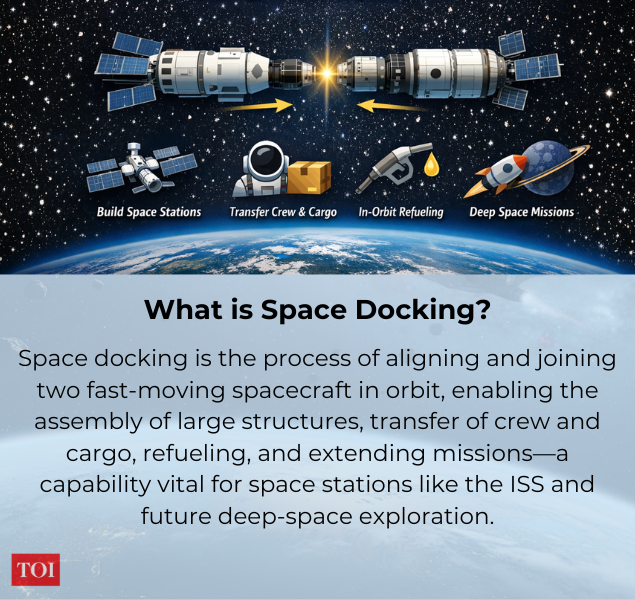
What is Space Docking?
Milestone 100: Isro’s 100th launch On January 29, 2025, Isro celebrated its historic 100th successful launch from Sriharikota, placing the NVS-02 navigation satellite into orbit. Since the first SLV-3 launch in 1980, India has steadily built a space program respected worldwide for its reliability, cost-effectiveness, and innovation. Group captain Shubhanshu Shukla: India’s Astronaut on ISS Group Captain Shubhanshu Shukla, a distinguished IAF pilot, became the first Indian to walk aboard the ISS. Piloting the Axiom-4 (Ax-4) mission, he returned safely on December 15, 2025, completing a historic flight that strengthens India’s human spaceflight program and lays the groundwork for Gaganyaan.
![Washington, DC [US], July 11 (ANI)_ Axiom-4 crew, including Group Captain Shubha... (1).](https://static.toiimg.com/photo/imgsize-23456,msid-126248093/washington-dc-us-july-11-ani-axiom-4-crew-including-group-captain-shubha-1.jpg "Axiom-4 crew, including Group Captain Shubhanshu Shukla (ANI)")
Axiom-4 crew, including Group Captain Shubhanshu Shukla (ANI)
Ax-4’s crew included Nasa veteran Peggy Whitson, Slawosz Uznanski-Wisniewski (Poland), and Tibor Kapu (Hungary). The mission reflects India’s growing footprint in international space cooperation and microgravity research.Nasa-Isro NISAR collaboration On July 30, India and Nasa launched the NISAR satellite, equipped with the world’s largest radar antenna for Earth observation. The mission provides high-resolution imaging of terrain, aiding climate monitoring, natural disaster management, land-deformation studies, and ice movement tracking , a true testament to global scientific partnership.LVM3-M6 “Bahubali”: India’s heaviest rocket launch On December 24, 2025, Isro’s LVM3-M6, nicknamed “Bahubali”, successfully launched the 6,100 kg BlueBird Block-2 satellite into orbit , the heaviest payload ever launched from Indian soil. Part of a global LEO constellation, the satellite provides direct-to-mobile 4G and 5G connectivity, enabling voice, video, and data services worldwide.
![Sriharikota [Andhra Pradesh], Dec 24 (ANI)_ (Combo Picture) Indian Space Researc....](https://static.toiimg.com/photo/imgsize-23456,msid-126247823/sriharikota-andhra-pradesh-dec-24-ani-combo-picture-indian-space-researc.jpg "Sriharikota, Andhra Pradesh (Photo credit: ANI)")
Sriharikota, Andhra Pradesh (Photo credit: ANI)
Lift-off occurred at 8:55 am from Sriharikota’s second pad, after a precise countdown. Fifteen minutes later, the payload achieved near-perfect orbit, highlighting both technological upgrades and operational excellence. “With nine consecutive successful LVM3 launches, our confidence in the Gaganyaan mission has significantly increased,” said Isro chief V Narayanan.

.
Adding to the excitement, Isro released rare onboard camera footage, giving a rocket-eye view of the mission from liftoff to satellite separation. The footage showed:
- Liftoff from the second launch pad at Satish Dhawan Space Centre, Sriharikota.
- Separation of the twin S200 solid strap-on boosters.
- Jettisoning of the L110 liquid core stage and payload fairing.
- Successful deployment of BlueBird Block-2 into Low Earth Orbit
Rapid growth
Between 2015 and 2025, Isro nearly doubled its mission count compared to 2005–2015. From January to December 2025 alone, India accomplished over 200 milestones, spanning launches, experiments, and satellite deployments. The pace reflects India’s rising capability, operational confidence, and growing global stature.
Global highlights: Humanity reaches for the stars
Mapping the Sun Nasa’s Parker Solar Probe, a robotic spacecraft launched in 2018 to study the Sun’s outer atmosphere (corona) up close, produced the first continuous, two-dimensional map of the Sun’s outer atmosphere in 2025.
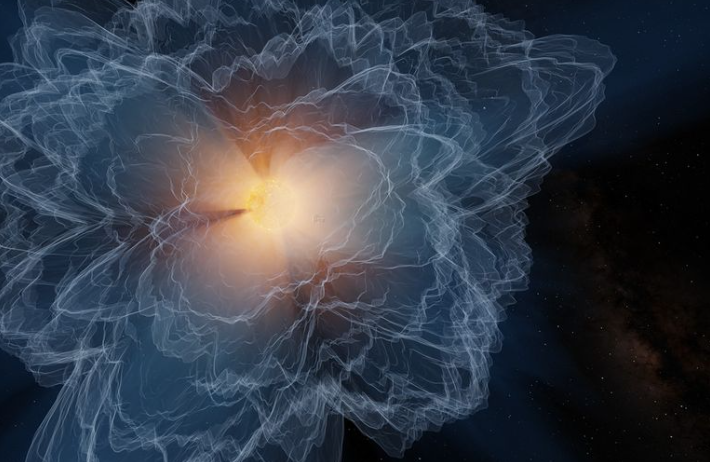
Artist’s concept (Source: Nasa)
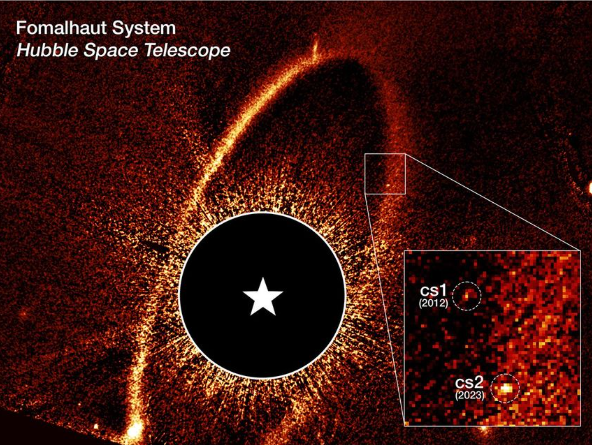
At the Alfvén surface, solar material escapes as solar wind, a million-mile-per-hour stream affecting planets, satellites, and space weather. The probe revealed that this boundary grows larger, rougher, and spikier during the Sun’s active 11-year cycle, reshaping our understanding of solar dynamics. Scientists hope these insights will help predict solar storms more accurately, which can impact satellites, communications, and power grids on Earth. According to Nasa, Parker Solar Probe has also taken the closest ever images to the Sun earlier this year, captured just 3.8 million miles from the solar surface.Nicky Fox, associate administrator of Nasa’s Science Mission Directorate, emphasized the mission’s significance saying, “Parker Solar Probe has once again transported us into the dynamic atmosphere of our closest star. We are witnessing where space weather threats to Earth begin, with our eyes, not just with models. This new data will help us vastly improve our space weather predictions to ensure the safety of our astronauts and the protection of our technology here on Earth and throughout the solar system.”Asteroids collideJust 25 light-years from Earth, Fomalhaut is one of the brightest stars in the night sky. Located in the constellation Piscis Austrinus, also known as the Southern Fish, it is more massive and luminous than the Sun and is encircled by several belts of dusty debris. In 2025, Nasa’s Hubble Space Telescope captured violent asteroid collisions around Fomalhaut, providing scientists with a rare glimpse into how planetary systems form and evolve.
Source: Nasa
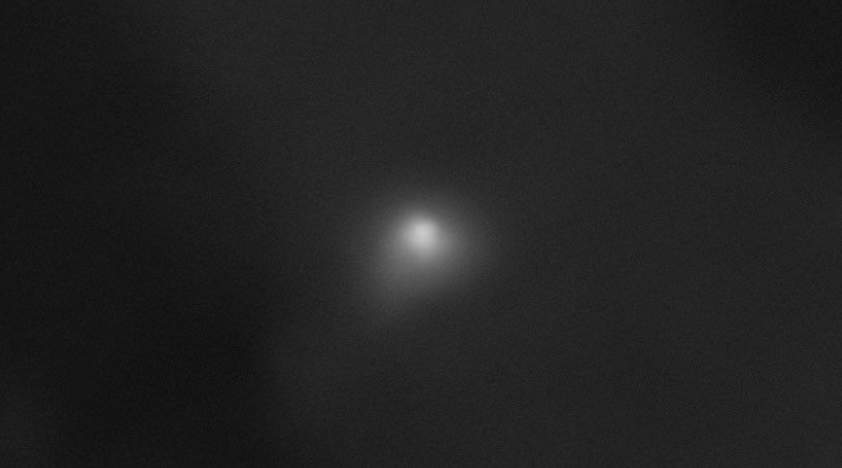
These observations help refine planetary formation models, showing how debris can either build or destroy emerging worlds. Observing this cosmic chaos in real time offers a mirror to the violent early history of our own solar system, linking distant events to our planetary past.“This is certainly the first time I’ve ever seen a point of light appear out of nowhere in an exoplanetary system,” said Paul Kalas, principal investigator at UC Berkeley. “It’s absent in all of our previous Hubble images, which means that we just witnessed a violent collision between two massive objects and a huge debris cloud unlike anything in our own solar system today. Amazing!”Interstellar Visitors: Comet 3I/ATLASAccording to an article published by Nasa titled “View Interstellar Comet 3I/ATLAS Through Nasa’s Multiple Lenses” by Erin Morton, the agency carried out a solar system-wide campaign to observe 3I/ATLAS, the third confirmed interstellar object to pass through our solar system. Discovered on July 1, 2025, by the ATLAS telescope in Chile, the comet was studied by multiple Nasa spacecraft and telescopes, offering a rare view of a visitor from another star system.
Source: Nasa
Close-up observations came from Mars assets — the Mars Reconnaissance Orbiter (MRO), MAVEN, and the Perseverance rover. Heliophysics missions, including STEREO, SOHO, and PUNCH, tracked the comet and its tail, while asteroid missions Psyche and Lucy provided additional imagery to refine its trajectory.These multi-mission observations allowed scientists to study the comet’s coma, tail, and movement, giving new insights into the composition and behavior of material formed around other stars.Exoplanets According to Nasa, Astronomers have confirmed over 6,000 exoplanets in 2025, with new discoveries expanding the search for life beyond our solar system. From Tatooine-like binary-star systems to planets with unexpectedly resilient atmospheres, each new world adds to humanity’s understanding of planetary diversity. Thousands more candidate planets await confirmation, and each one provides clues about where life could exist elsewhere in the galaxy. Technological advances, including direct imaging and spectral analysis, have allowed astronomers to study these planets in more detail than ever, examining their atmospheres, potential oceans, and even hints of geological activity.
Expanding the Space frontier
Private aerospace ventures made remarkable progress in 2025. SpaceX’s Starship completed multiple missions, testing heavy-lift capacity and crew transport, while Blue Origin’s New Glenn successfully made its maiden flight. Commercial lunar landers reached new benchmarks, hinting at a future when private and national players share space exploration.The growth of commercial spaceflight is transforming what was once a rarefied endeavor into a rapidly expanding industry, offering new opportunities for research, satellite deployment, and even tourism.
The International Space Station: 25 years of human presence
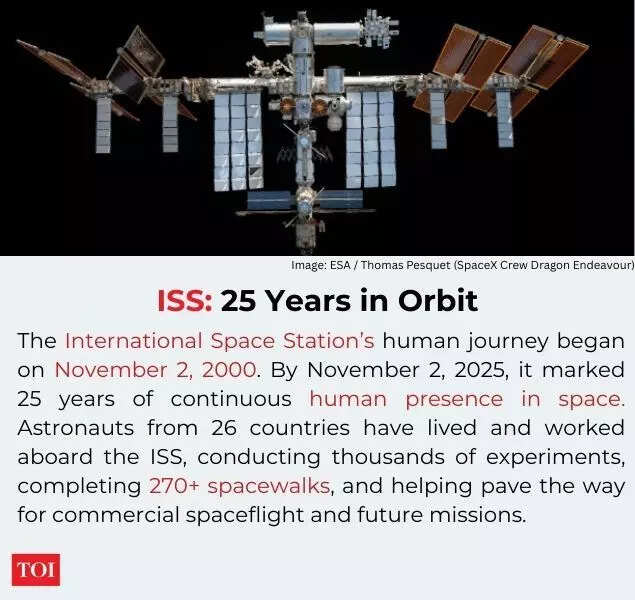
Laboratory in the Sky On November 2, the ISS celebrated 25 years of continuous human presence. Since Expedition 1 in 2000, the station has been a laboratory for microgravity research, materials science, Earth observation, and fundamental physics.
.
The anniversary highlighted the remarkable international cooperation that sustains the ISS: Nasa, Roscosmos, ESA, JAXA, and CSA continue to operate, maintain, and expand the station. From studying human physiology to testing new space technologies, the ISS remains humanity’s proving ground for long-duration spaceflight, paving the way for future Moon and Mars missions.
Rapid Commercial Expansion
Private space companies also made major strides in 2025. SpaceX continued Starship test flights and commercial lunar payload launches, while Firefly Aerospace’s Blue Ghost and ispace’s Resilience lunar landers advanced under Nasa’s CLPS programme.
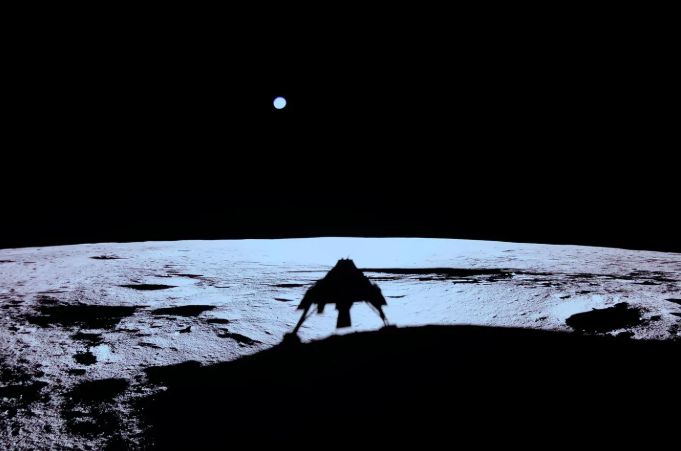
Firefly’s Blue Ghost is the first commercial lunar lander to successfully touch down on the Moon. (Courtesy: Firefly)
Blue Origin’s New Glenn heavy-lift rocket also completed successful missions, underscoring how commercial players are reshaping access to space.
Looking ahead
2026 promises to build on 2025’s momentum:
- Nasa’s Artemis II may return humans to the Moon.
- Next-generation Earth-observing satellites will tackle climate change and disasters.
- India prepares for its Gaganyaan mission and gears up for expanded international collaboration.
- Commercial deep-space missions and satellite mega-constellations will reshape global space access.
From global discoveries to India’s historic milestones, the year 2025 marked a shift from incremental progress to transformative achievement, blending science, technology, policy, and human aspiration into a story that stretches from Earth orbit to the far reaches of the cosmos. Go to Source

