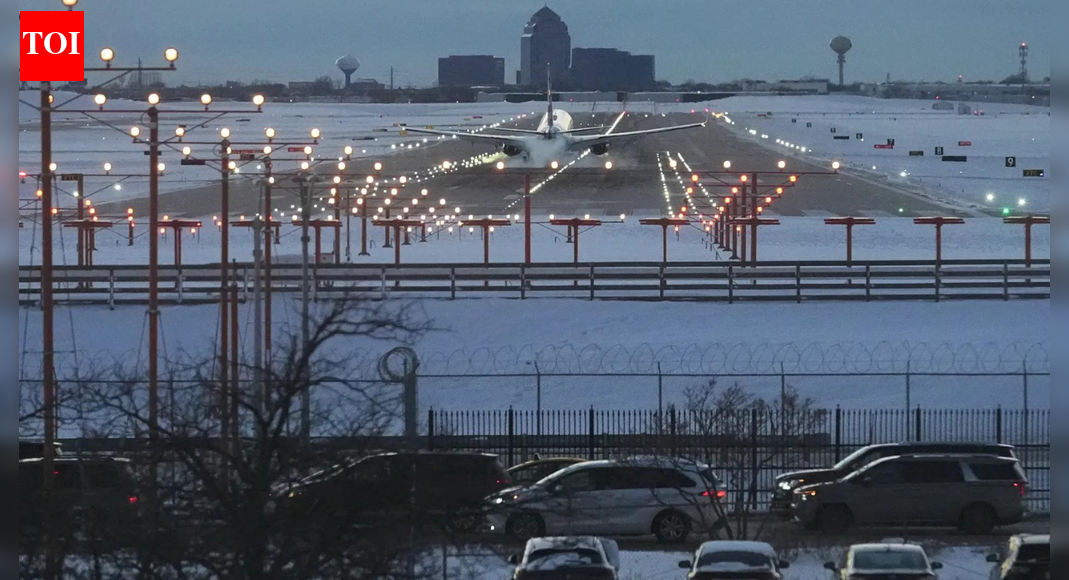

Winter storm in US (AP image)
A powerful winter storm rapidly intensified into a “bomb cyclone” across large parts of the United States on Monday, triggering widespread travel disruptions as the holiday season nears. The system grounded thousands of flights and brought blizzard conditions, strong winds and power outages from the Midwest to the East Coast.The storm, named Winter Storm Ezra, struck during one of the busiest travel periods of the year, leaving passengers stranded on Monday as airlines struggled to recover amid worsening weather conditions ahead of the New Year holiday. Visuals of the massive storm went viral across social media.
Travellers faced flight disruptions
Air travel faced severe disruption across the country. Nearly 6,000 flights were delayed and more than 750 cancelled by Monday afternoon, according to FlightAware. Since Friday, weather-related disruptions have led to over 3,600 cancellations and more than 30,000 delays nationwide, news agency AP reported. Major airports including Washington Dulles, Boston, Newark and Detroit imposed ground stops or delays due to high winds and poor visibility. Detroit Metropolitan Airport temporarily halted Delta Air Lines flights, adding to operational challenges. Airlines including American, United, Delta and JetBlue waived change fees for affected passengers.Road travel was also impacted as icy surfaces, blowing snow and near-zero visibility caused multi-vehicle pileups in several states. Authorities in parts of the Upper Midwest and Great Lakes urged residents to avoid non-essential travel, while the Federal Emergency Management Agency warned of dangerous driving conditions.
What is a bomb cyclone?
A bomb cyclone is a rapidly intensifying storm that forms when atmospheric pressure drops sharply within 24 hours. This rapid strengthening fuels hurricane-force winds, heavy snow, ice and flooding rain. Meteorologists said the storm intensified as frigid Arctic air clashed with lingering warmth across southern parts of the US. The sharp cold front caused dramatic temperature swings, with parts of the central US experiencing drops of nearly 50 degrees Fahrenheit overnight. In Philadelphia, temperatures fell from near 60°F on Monday to the low 20s at night.
Blizzard conditions and power outages
The storm brought blizzard conditions to parts of the Plains, Midwest and Great Lakes, with dangerous wind chills plunging to minus 30°F in North Dakota and Minnesota. Snowfall reached up to two feet in Michigan’s Upper Peninsula, while strong winds created whiteout conditions in several regions, Reuters reported. More than 350,000 customers were without power nationwide by Monday afternoon, with Michigan accounting for a significant share. In upstate New York, over 57,000 power outages were reported as freezing rain and high winds strained trees and power lines.Severe conditions extended to the Great Lakes, where waves on Lake Superior rose to nearly 20 feet, forcing most cargo ships to seek shelter. Along Lake Erie, strong winds caused water levels to surge on the eastern shoreline near Buffalo, raising concerns of lakeshore flooding.
Warnings remain as storm shifts east
Forecasters warned that hazardous conditions, including snow, ice, flooding rain and strong winds, could persist into early Tuesday as the storm moves eastward. Parts of the Northeast faced freezing rain, while additional lake-effect snow and possible whiteouts were forecast in New York. Authorities urged travellers to stay updated on weather alerts and flight advisories as the powerful storm continues to impact large parts of the country. Go to Source