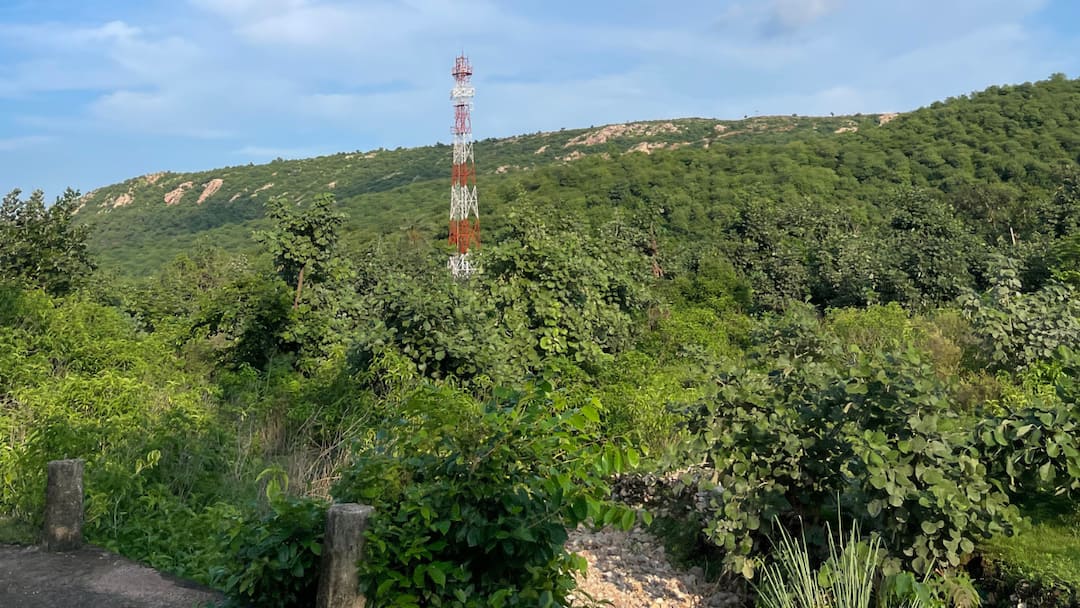

The Supreme Court on Monday, December 29, paused its earlier directions linked to the revised definition of the Aravalli Hills, citing concerns that both the expert committee’s report and the Court’s own observations were being misunderstood and misapplied.
Taking suo motu cognisance of the matter, the top court said the issue requires deeper scrutiny before any recommendations or directions are acted upon, especially given the region’s immense ecological significance.
Court Suspends Earlier Directions Pending Clarity
A Bench comprising Chief Justice of India Surya Kant, Justice JK Maheshwari and Justice AG Masih ruled that the committee’s recommendations and the Court’s earlier directions would remain in abeyance for now.
“We deem it necessary that the Committee recommendation and directions of this Court be kept in abeyance. Stay to remain in effect till constitution of the Committee,” the Bench observed.
The Court also issued notice in the suo motu proceedings, making the matter returnable on January 21.
Fears of Misuse and Environmental Harm
The suo motu case was triggered amid growing apprehension that changes to the definition of the Aravalli Hills could pave the way for unregulated mining and serious environmental degradation.
The Court stressed that before any implementation takes place, a fair, impartial and independent expert opinion must be obtained to offer clear and definitive guidance. It flagged the need to examine whether the revised definition had created a “structural paradox” — one that may have unintentionally expanded non-Aravalli areas, thereby enabling continued mining activity.
Key Questions the Court Wants Answered
The Bench outlined several critical issues that require careful examination:
- Whether regulated mining would be permitted in 500-metre gaps between hills, and if so, what strict structural parameters would be enforced to preserve ecological continuity.
- Whether claims that only 1,048 out of 12,081 hills meet the 100-metre elevation threshold are scientifically accurate.
- Whether a detailed geological inquiry is necessary to validate these figures and their implications.
These questions, the Court noted, go to the heart of protecting the fragile Aravalli ecosystem.
High-Powered Committee to Be Constituted
Chief Justice Surya Kant said the Court intends to set up a high-powered expert committee to conduct a holistic review of the report and address the concerns raised.
This exercise would include identifying areas that may fall outside the Aravalli classification and assessing whether such exclusions could lead to environmental degradation or undermine the ecological integrity of the mountain range.
To assist the Court, notices were issued to Attorney General for India R Venkataramani and Senior Advocate PS Parmeswar, including on the proposed composition of the expert committee.
Interim Halt on Mining Activity
During the hearing, the Solicitor General informed the Court that notices had already been sent to the States, directing that no further mining activity be undertaken in the meantime.
This interim measure aims to prevent irreversible damage while the Court re-examines the issue.
Why the Aravalli Hills Matter
The Supreme Court’s intervention follows widespread public protests and concerns voiced by environmental groups and civil society organisations. The Aravalli range is widely recognised for its ecological role, from checking desertification to sustaining groundwater levels across northern and western India.
Critics of the revised definition warned that diluting protections could legitimise mining and construction in areas previously treated as environmentally sensitive.
Background: Conflicting Definitions Across States
The controversy stems from differing definitions of the Aravalli Hills and Aravalli Ranges across Delhi, Haryana, Rajasthan and Gujarat. These inconsistencies have historically created regulatory loopholes, often exploited for illegal mining.
To address this, the Supreme Court had earlier constituted a high-level committee. In a judgment delivered in November, the Court accepted an operational definition recommended by a committee of the Ministry of Environment, Forest and Climate Change, specifically in the context of mining.
What the Accepted Definition Says
Under the accepted framework:
- “Aravalli Hills” refers to any landform in specified districts with a minimum elevation of 100 metres from the local relief, including connected slopes and supporting landforms.
- An “Aravalli Range” is defined as two or more such hills located within 500 metres of each other.
While approving this definition, the Court had also directed the Union Government to prepare a comprehensive Management Plan for Sustainable Mining before allowing any new mining activity in the ecologically sensitive region.