


NEW DELHI: The year 2025 is drawing to an end and most people are busy figuring out the New Year’s resolutions. Every new year promises change and every December claims a reset.This year, India moved fast, yet some headlines felt like deja vu.In some cases, the names, dates and locations changed, but the storylines did not – a dominant BJP, a drifting Congress, toxic Delhi air, Pakistan‑linked terror. Several themes remained the same, think: sexist soundbites by netas, language wars and renaming frenzies.Here are ten headlines from 2025 that stayed stubbornly the same.
1. BJP’s winning juggernaut rolls on
In 2025, BJP once again proved that the default setting of India remains “saffron”. The party registered emphatic wins in both Delhi and Bihar – two very different, politically crucial states.In February, BJP ended its Delhi drought and stormed back to power after 27 years. It won 48 of 70 assembly seats with around 46% vote share. The incumbent AAP government slumped to 22 seats and got around 44%. In Bihar, where the NDA was fighting an anti‑incumbency wave, the alliance swept the assembly with 202 of 243 seats. The BJP emerged as the single-largest party with 89 seats. The party got nearly 21% vote share.In Maharashtra, the BJP-led Mahayuti won 207 municipal councils and nagar panchayat seats of the 288, securing a single largest majority. The BJP won most of them, securing 117 seats, Shiv Sena 53 and NCP 37 seats. Congress won 28 seats.As the results were counted on various days for different elections, the headline still read – BJP starts favourite, BJP finishes first.
2. Congress fails to revive itself, yet again
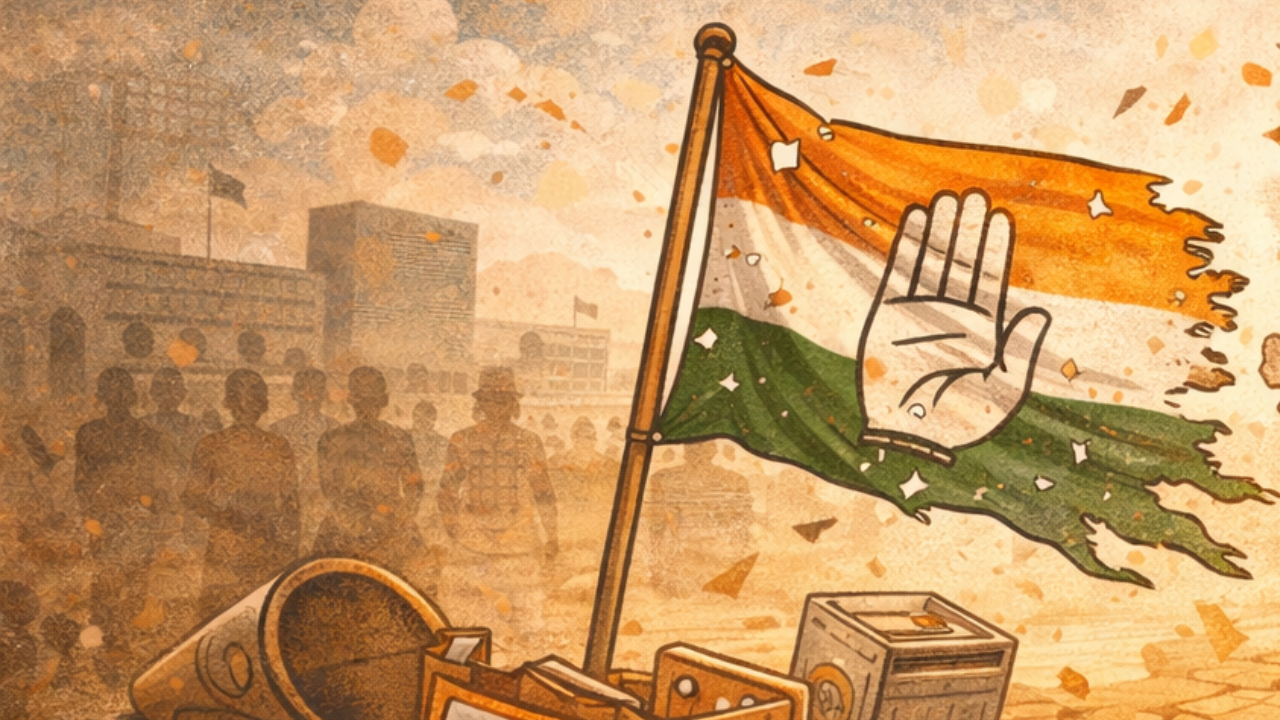
If BJP’s script stayed familiar, so did the Congress’s. The party’s national brand continued to underperform even where local anger against incumbents was visible.This year, after failing to even open the account in the Delhi elections, the party held the AICC meet in Ahmedabad in April. Same age-old issues were raised: call to rebuild the organisation from booth‑level, sharpen the party’s ideological pitch beyond anti‑BJP rhetoric and regain lost ground in the Hindi belt.But again in Bihar, Congress managed to win only 6 seats with 8.7% vote share.This year, the Congress story, yet again, remained about its potential and plans rather than outcomes.Election after election, the analysis throughout the year kept throwing up the same words: “fragmented”, “faction‑ridden”, “no ground-level connection”.
3. Is this your last game, Mr Rohit–Virat–Dhoni?
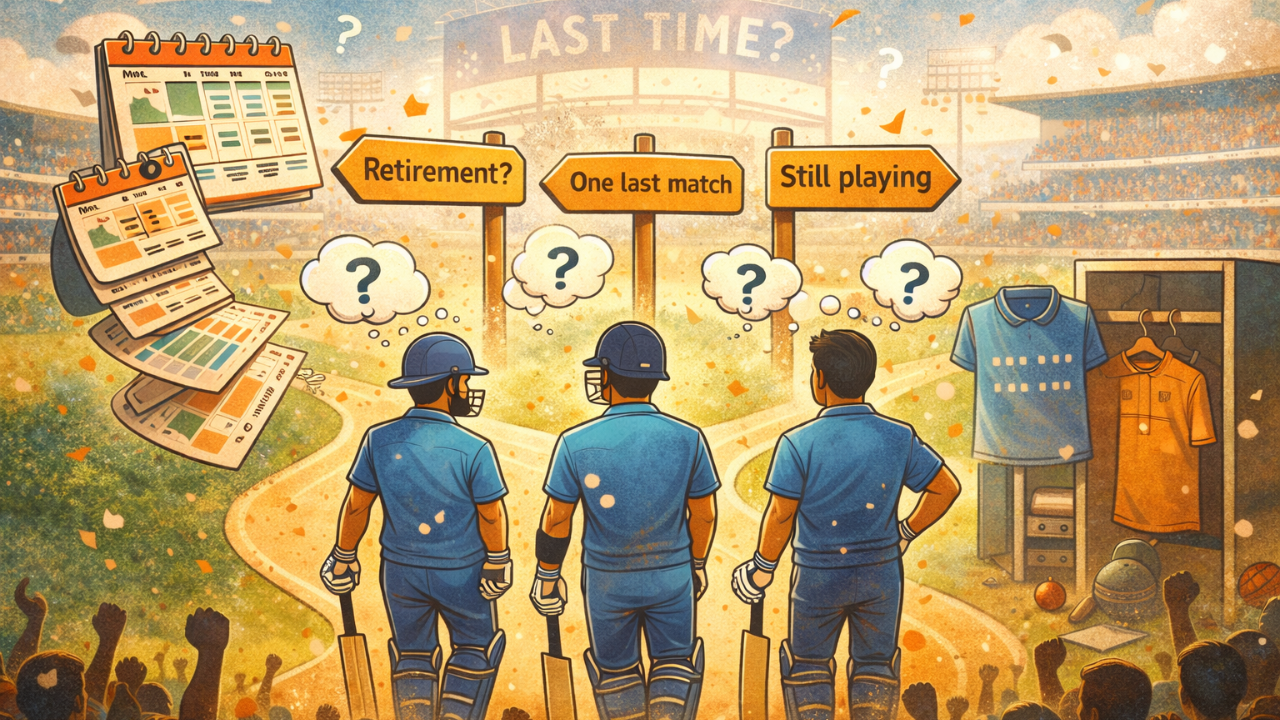
Cricket fandom in 2025 remained addicted to its favourite off‑field sport – guessing when India’s modern greats will walk away from the field.After announcing retirement from the T20 format last year, Rohit Sharma and Virat Kohli played reduced schedules. However, every match, series, or dip in form or rest sparked “is this his last?” debate.But RoKo ended the year as No. 1 and 2 batsmen in ICC ODI rankings. The duo were also back with a bang in the domestic Vijay Hazare Trophy after years.At home, MS Dhoni, long retired from international cricket but still a Chennai Super Kings totem, stayed in the retirement gossip each IPL match. Talking about reading too much into it, people went crazy this year over his t-shirt ahead of the IPL season that had “one last time” written in Morse code.He obviously went on to play in 2025 and also took over as CSK skipper mid-season after captain Ruturaj Gaikwad suffered an injury.
4. Delhi turns gas chamber
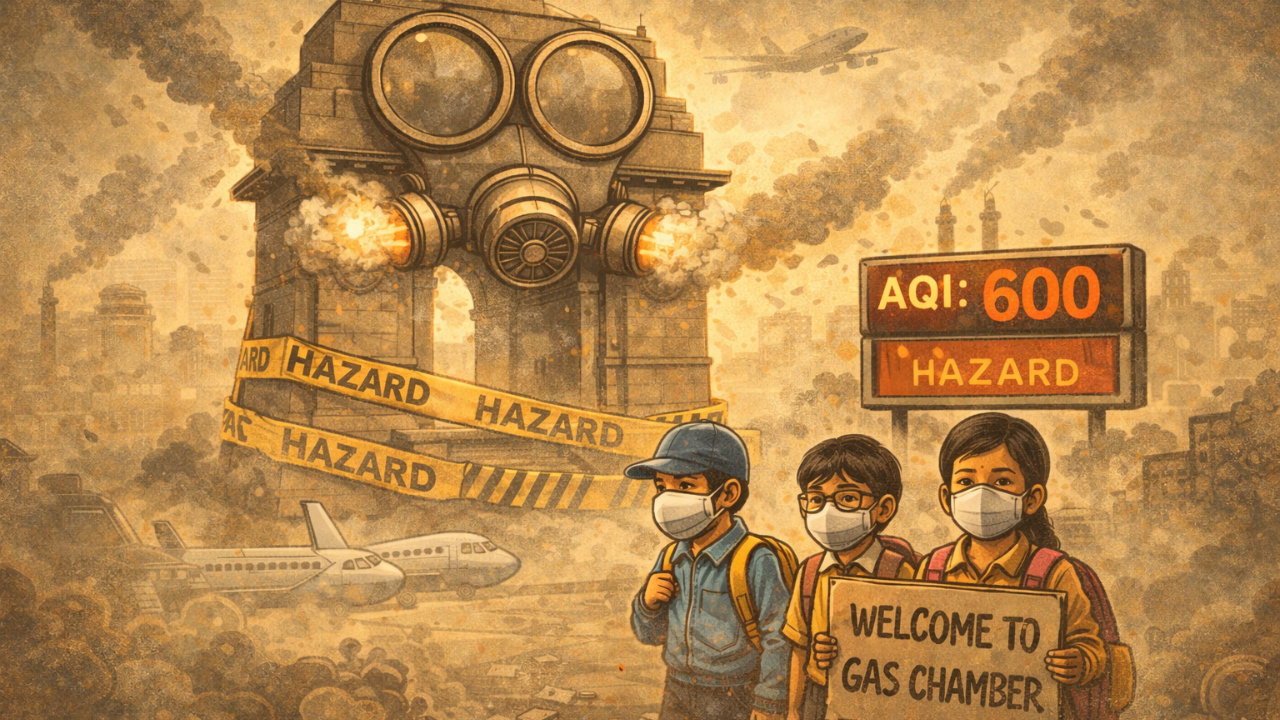
From Diwali to winter, it was the same story in Delhi once again. By December, the city’s AQI remained in the “severe” to “hazardous” range for days at a stretch. GRAP restrictions were imposed repeatedly, cycling through Stages 1, 2, 3 and 4. One analysis showed sustained AQI levels above 500 through mid‑December, with peaks over 600 and no meaningful dips into safer categories, underscoring that this was not a one‑day spike but a chronic toxic wall.Flights were delayed, schools moved online, construction bans returned, and familiar visuals of masked children, disappearing India Gate and grey skylines flooded the feeds.Experts once more cited the same cocktail: winter inversion, low wind, vehicle and industrial emissions, and stubble burning. Policy responses remained reactive and short‑term.With this, the headline seemed copy‑pasted from almost any winter in the past decade: “Delhi chokes”, “Delhi turns gas chamber”, “Delhi air turns red”.
5. The sliding rupee
In 2022, when Union finance minister Nirmala Sitharaman was asked about the sliding rupee, she had said: “I would not look at it as rupee sliding, I would look at it as dollar strengthening.”In 2025, the rupee quietly set fresh records for weakness against the US dollar. After relative stability, it fell to an all‑time low of Rs 91 in December. The rupee has slid by 5-6% so far this year, making it Asia’s worst-performing currency this year.Addressing the concerns, the finance minister stated earlier this month: “The rupee will find its own level.Meanwhile, analysts point to a wider trade deficit, foreign portfolio outflows, and Donald Trump’s 50% tariffs on Indian goods for the slide.
6. Pakistan and its love for terrorism
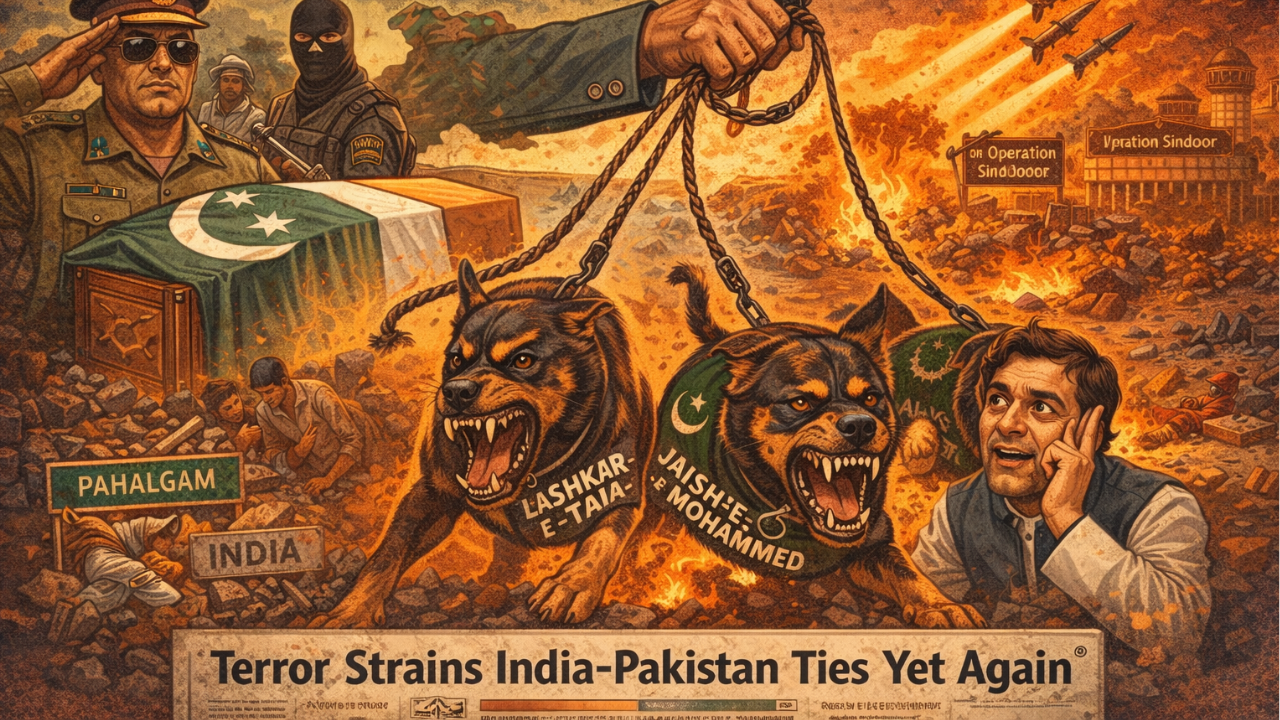
2025 did not break the pattern of Pakistan‑linked terrorism. On April 22, a terrorist attack near Pahalgam in Jammu and Kashmir killed 26 civilians, mostly Hindu tourists. The probe revealed that the mastermind of the attack was a Lashkar‑e‑Taiba offshoot, The Resistance Front.This was followed by India’s strong response with Operation Sindoor in which the missiles destroyed the terror infrastructure linked to Jaish‑e‑Mohammed and Lashkar‑e‑Taiba in Pakistan and the Pakistan‑occupied Kashmir region.Islamabad once again refused to own up while its Army majors were seen attending funerals of the terrorists.The headline “Terror strains India–Pakistan ties yet again” remained sadly accurate.
7. Netas’ misogyny on loop
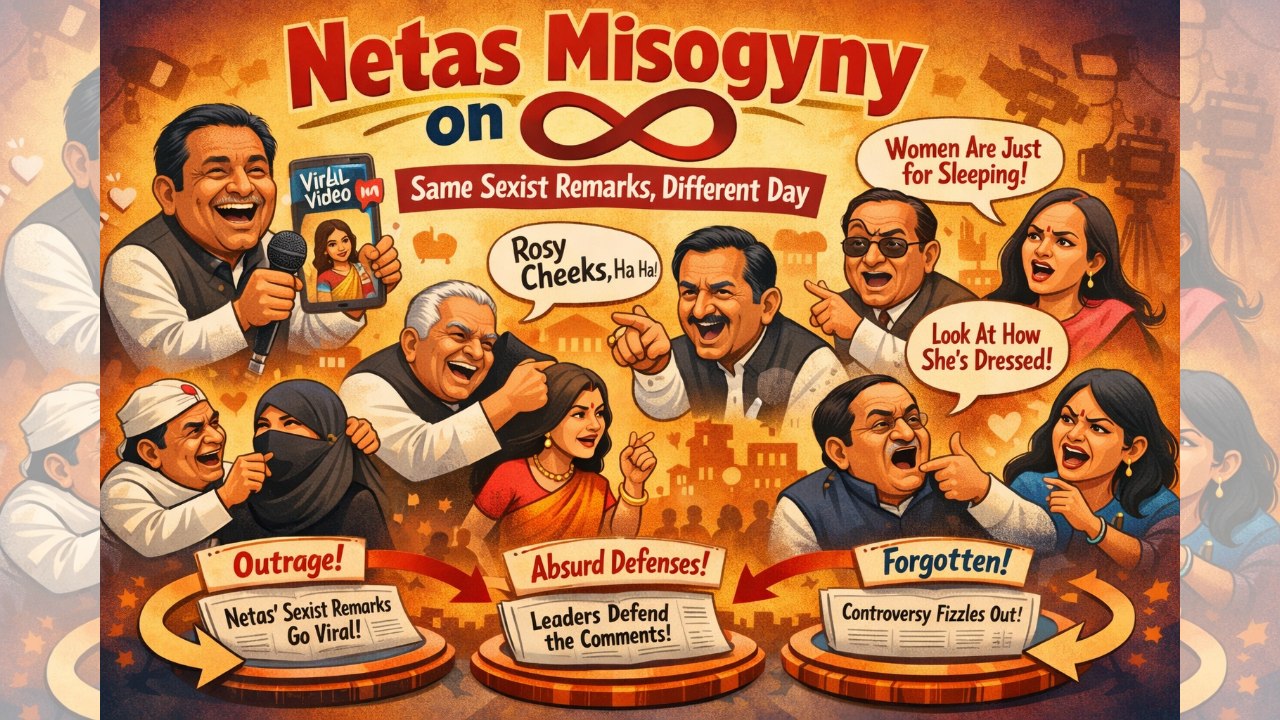
If there is one genre of political controversy that never goes out of fashion, it is misogynistic remarks by our leaders. This year gave us multiple examples, cutting across parties and states. In early January, BJP MP Ramesh Bidhuri drew outrage for a sexist comment about Priyanka Gandhi, prompting Congress and AAP leaders to call it proof of a “deeply anti-women” mindset.“Lalu said in Bihar that he would make roads like Hema Malini’s cheeks, but he lied, he could not do it. I assure you that just as we made the roads in Okhla and Sangam Vihar, we will make all the roads in Kalkaji like Priyanka Gandhi’s cheeks,” Bidhuri had said.In Kerala, a CPI(M) leader won a panchayat seat, took out a victory rally, and said that “women are only for sleeping with husbands”.Bihar chief minister Nitish Kumar stirred a row by pulling the naqab of a hijab-wearing woman at an event. What followed was even more disturbing. BJP leader Giriraj Singh defended the CM’s act, saying Kumar had behaved like a “guardian” and that the woman could take the job or “go to hell”. Bihar governor Arif Mohammad Khan also spoke along similar lines and added that Nitish “considers female students his daughters”.This year, Bihar also threw up other such moments. Nitish found himself in trouble after saying, “Girls have become so confident. They speak so well and dress up so well. Did we see them wearing such fine clothes earlier?”RJD patriarch Lalu Prasad Yadav, too, passed a lewd remark about Nitish, suggesting he was participating in a women’s rally to “ogle at women”. “Nayan sekne ja rahe hain,” he said when asked about Nitish’s Mahila Samvad Yatra.West Bengal chief minister Mamata Banerjee also invited criticism after resorting to victim-blaming while defending her government following a gangrape case. “Why was she out at midnight?” Mamata asked.The response cycle was identical each time: viral clip > outrage > absurd defence > forgotten. The headline “Neta’s sexist remarks trigger storm” could have been reused almost every month.
8. Language war: Hindi vs the rest, again
India’s language politics remained combustible. In 2025, much of the heat centred on school language policy and perceived “Hindi imposition” in non‑Hindi states. In Maharashtra, a BJP‑led government’s move to make Hindi compulsory from Class 1 to 5 triggered a backlash.Parallel debates raged in southern states over NEP’s three‑language formula and the balance between English, regional languages and Hindi with Tamil Nadu MK Stalin taking the charge. The core storyline of the “language war” – Centre‑pushed Hindi vs regional pride and access concerns – remained unchanged.
9. Name‑change – a never‑ending project
What’s in the name? Ahem, everything!Renaming towns, villages and roads stayed a favourite symbolic tool. In 2025, Uttarakhand grabbed headlines by renaming 11 places across four districts, replacing names like Aurangzebpur and Mohammadpur Jat with Shivaji Nagar, Mohanpur Jat, Shri Krishnapur, Ambedkar Nagar and Jyotiba Phule Nagar, among others.The finale came during the Winter session of Parliament when the Centre came up with the Viksit Bharat—Guarantee for Rozgar and Ajeevika Mission (Gramin) aka VB—G RAM G Bill that replaced the Mahatma Gandhi National Rural Employment Guarantee Act 2005 (MGNREGA).
10. Salman Khan and Rahul Gandhi — ‘Shaadi kab karoge?’
Even as India debated war, the rupee and air quality, one light but telling constant stayed in pop‑political culture: the obsession with the marital status of the eternal bachelors of India. Salman Khan, about to celebrate his 60th birthday, and Rahul Gandhi, still unmarried and still central to the Congress story, remained prime targets of perennial “shaadi kab karoge?” question.In fact, during the run-up to the Bihar Assembly elections, Rahul occasionally used the topic to lighten the mood at press conferences. While sharing a stage with Tejashwi Yadav, he revealed that Lalu Prasad Yadav had advised him to get married soon.Tejashwi, however, used the same platform to turn the spotlight on another eligible bachelor – his rival Chirag Paswan – publicly urging him to tie the knot. Go to Source