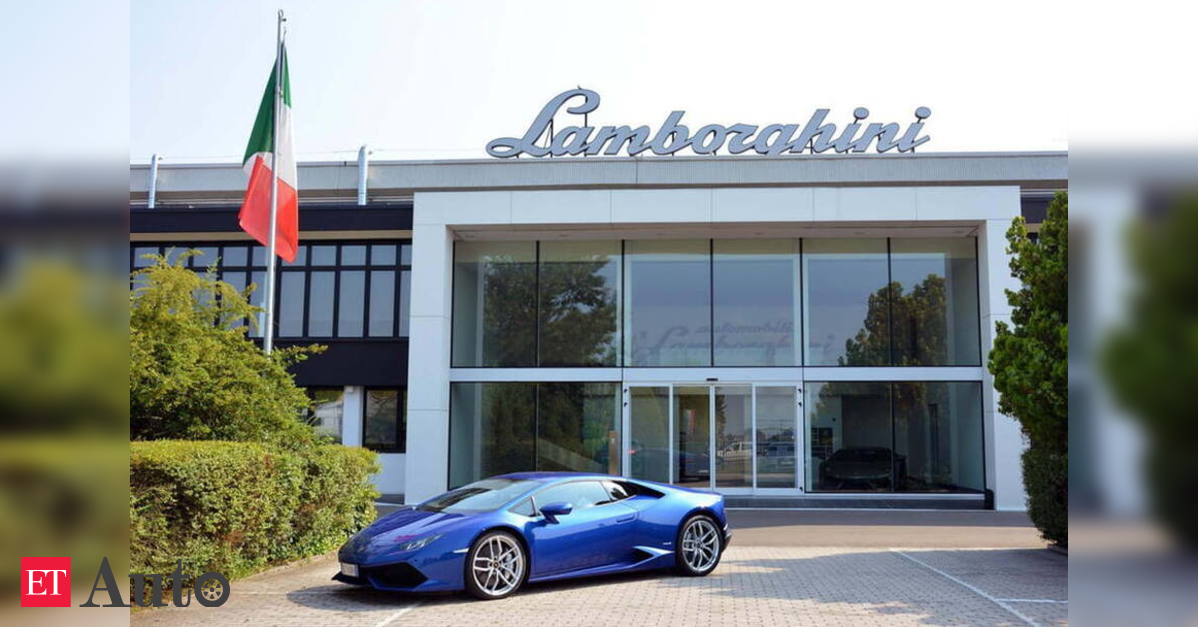

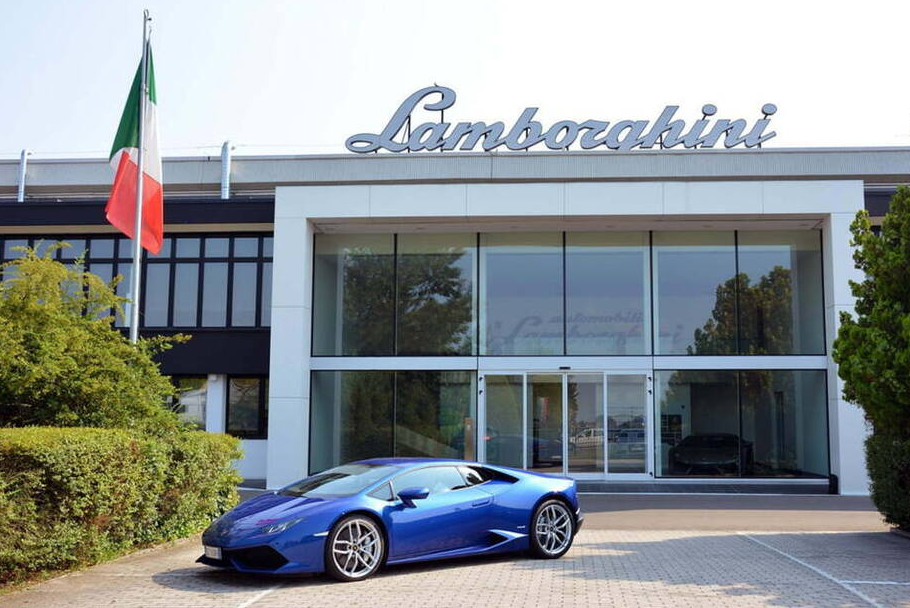
 Lamborghini’s Sant’Agata Bolognese headquarters (Picture credits- Granturismoevents)
With sustainability and carbon neutrality taking centre stage in auto manufacturers’ growth strategy, Automobili Lamborghini is powering itself to transition to hybrid powertrains, keeping sustainability at the forefront.
The company is reshaping its manufacturing strategy, allowing the supercar manufacturer to drive growth while maintaining carbon-neutral operations at its Sant’Agata Bolognese headquarters.
“Sustainability is a strategic pillar for us. We are not only offsetting carbon emissions but also monitoring and reducing them year by year,” Ranieri Niccoli, Lamborghini’s chief manufacturing officer, told ETAuto in a roundtable with selected media.
Marking a decade of carbon-neutral growth, the supercar maker said that the shift towards hybridisation has increased complexity in production processes, alongside accelerated investments in flexible assembly lines, resource efficiency and renewable energy.
Lamborghini has also curbed its carbon dioxide emissions by about 50 per cent in manufacturing since 2014, while diversifying its horizons in production volumes and infrastructure.
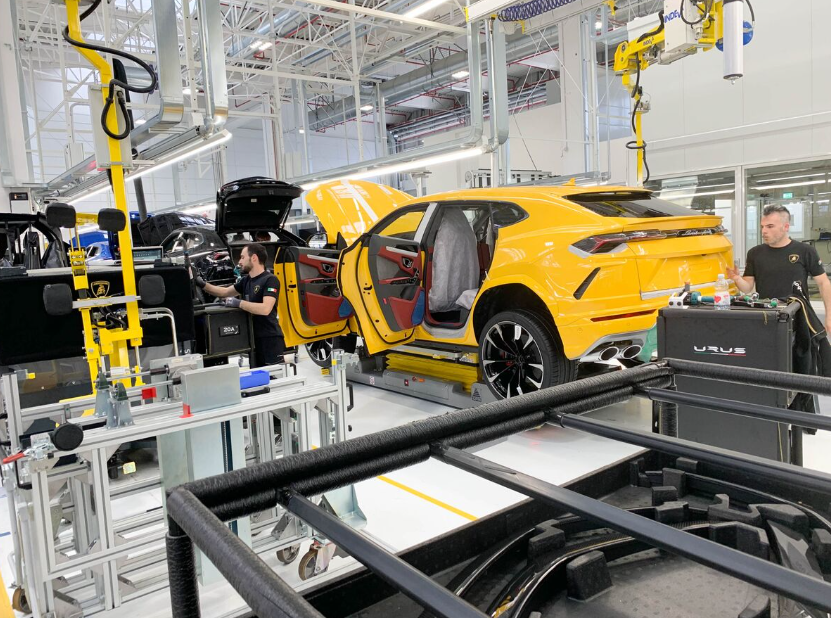 Lamborghini Urus Factory (Picture credits- Bloomberg)
Hybrid complexity reshapes factory operations
Aligning with global trends, the company has rolled out hybrid models such as Revuelto and Temerario in its electrification roadmap. These combine combustion engines with high-voltage battery systems, which requires shop floor amendments. These amendments include new safety protocols, upskilling workers, and additional quality checks to balance out the increased technical complexity.
Lamborghini’s motto of ‘Manufactura Lamborghini’ was designed for flexibility, enabling the production and assembly of ICE, hybrid and future electric vehicles on the same line without compromising on customisation or craftsmanship.
The company has expanded its factory footprint in the past decade, which includes adding an in-house paint shop that supports Lamborghini’s support for customisation following the launch of Urus.
According to the company, paint operations are among the most resource- and emission-intensive processes in automotive manufacturing. “The paint shop is one of the most complex processes in terms of sustainability, but we designed it to reduce emissions rather than increase them,” he added.
The new facilities were designed to reduce carbon emissions and incorporate energy-efficient technologies, digital process control and infrastructure upgrades that reduce emissions.
Balancing automation and craftsmanship
Digitalisation and the onset of artificial intelligence are rapidly shaping automotive manufacturing across the globe. Lamborghini stated it will continue to limit its full automation as manual craftsmanship remains a key pillar of its brand positioning. Technology uses selective deployment to support quality control and quick decision-making. “People are always at the centre. Automation and digitalisation are meant to help our workers, not replace them,” Niccoli noted.
Renewable energy, monitoring water consumption and circular economy initiatives play an integral role in the company’s sustainable journey, with Lamborghini nearly doubling its on-site solar photovoltaic capacity.
“We are trying not to scrap materials that still have value but to give them a second life,” he added.