
The Lok Sabha on Wednesday approved the Sustainable Harnessing and Advancement of Nuclear Energy for Transforming India (SHANTI) Bill, 2025, setting the stage for a major overhaul of India’s nuclear power framework. The legislation was passed through a voice vote despite persistent demands from Opposition parties that it be sent to a parliamentary committee for detailed examination. With the lower house’s approval secured, the Bill will now be taken up in the Rajya Sabha before it can become law.
The government has positioned the SHANTI Bill as a turning point in India’s energy transition, arguing that it will accelerate nuclear power generation at a time when electricity demand is rising rapidly across the country.
Opening The Nuclear Sector To Private Players
At the heart of the Bill is a proposal to dismantle long-standing barriers that have kept private companies out of nuclear power generation. Currently, India produces about 8 gigawatts of nuclear energy—roughly 1.6 per cent of its total power mix—from over 25 reactors located at seven sites nationwide, as per a report on The Print. The government believes this modest contribution reflects the limitations of a closed, state-dominated system.
By repealing the Atomic Energy Act of 1962, the Bill seeks to allow private entities and state governments to participate directly in the nuclear sector. Ministers have argued that this change will unlock investment, technology, and efficiency, enabling nuclear energy to play a larger role in meeting India’s future power needs.
Civil Liability Changes Draw Opposition Fire
One of the most contentious aspects of the SHANTI Bill is its move to scrap the Civil Liability for Nuclear Damage Act of 2010. Provisions in that law, particularly those related to supplier liability, have long been criticised by industry as discouraging investment. The new Bill proposes that any right of recourse against suppliers will be governed purely by contractual terms between operators and suppliers, effectively removing statutory supplier liability.
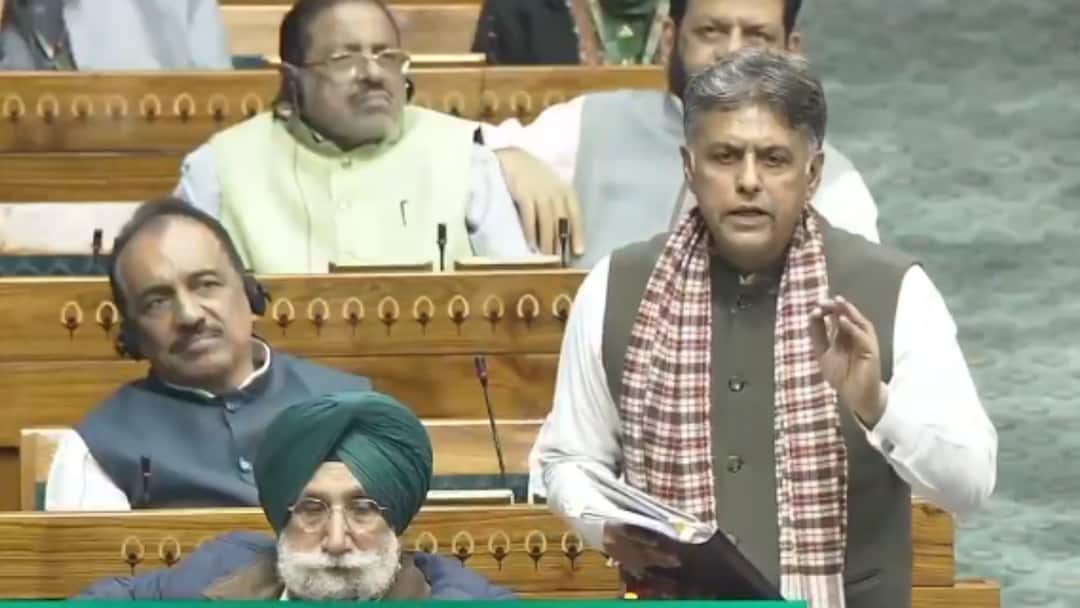
Opposition leaders warned that this shift could dilute accountability. Congress MP Manish Tewari questioned the wisdom of eliminating supplier liability, cautioning that it could weaken safety safeguards in a high-risk sector, as per reports.
Walkout, Voice Vote, Sharp Rhetoric
As tempers flared in the House, several Opposition MPs demanded that the Bill be referred to a select committee. When those demands were rejected, members staged a walkout, after which the government pushed the legislation through via a voice vote.
Concerns about safety and oversight dominated Opposition arguments. Trinamool Congress MP Saugata Ray flagged the risks of private participation without robust checks, while Congress MP Shashi Tharoor described the legislation as a “dangerous leap into privatised nuclear expansion,” highlighting the deep ideological divide over the future of nuclear energy in India.