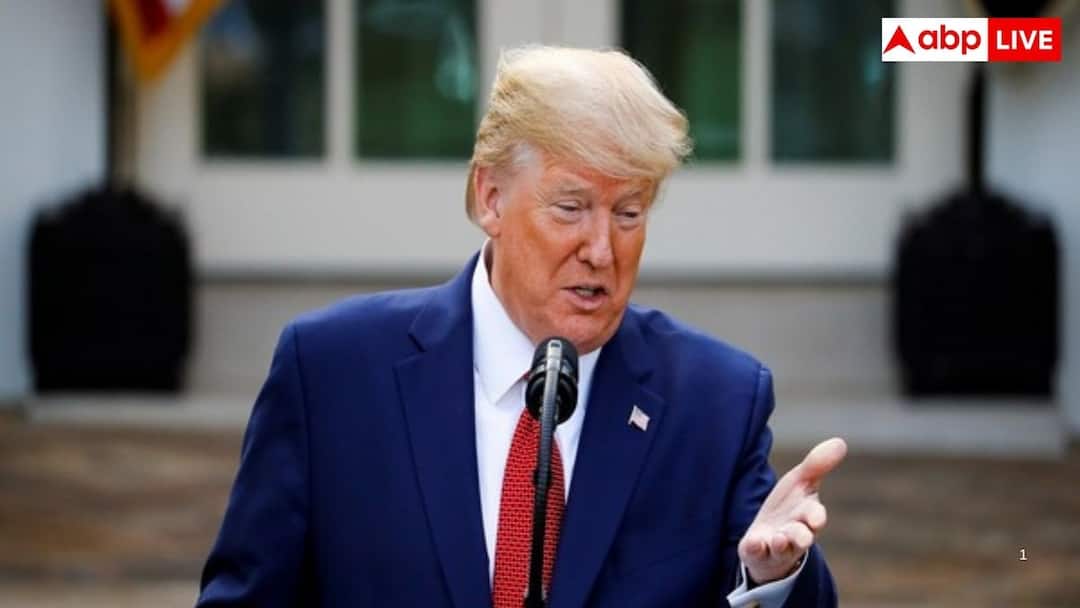

US President Donald Trump has claimed that birthright citizenship in the United States was originally intended only for the children of enslaved people, as he escalated his defence of the executive order he signed to end the policy. In an interview with Politico, Trump said the law has been misused by “rich” immigrants to secure citizenship for their families.
Referring to the legal challenge facing his order, Trump said it would be “devastating” for his administration if the Supreme Court rules against it. He reiterated that the principle of birthright citizenship has been taken far beyond what was originally intended.
Case Was Meant for the Babies of Slaves: Trump
“The case is very interesting because that case was meant for the babies of slaves,” Trump said, linking the origin of birthright citizenship to the Civil War period. “That case was not meant for some rich person coming from another country, dropping … putting a foot in our country, and all of a sudden their whole family becomes, you know, United States citizens.”
He added that people were now beginning to understand the historical context behind the law. “That case is all about slaves, the babies of slaves, and it was a good reason for doing it. And that’s all it was about,” Trump said. He further claimed that the Supreme Court now also understood this position, warning that a ruling against his administration would severely undermine his policy.
Trump also echoed his long-held stance on immigration, saying the decision to end birthright citizenship was driven by financial and demographic pressures. “Our country cannot afford to house tens of millions of people,” he said.
Executive Order, Court Challenges and Constitutional Debate
In January 2025, on his first day back in office as US president, Trump signed an executive order ending birthright citizenship in the United States. The move directly challenged the 14th Amendment of the US Constitution, which states: “All persons born or naturalised in the United States, and subject to the jurisdiction thereof, are citizens of the United States.”
The amendment was added in 1868, shortly after the Civil War, with the explicit aim of granting citizenship to formerly enslaved people and those born on US soil. Following Trump’s order, his administration announced that children born in the United States 30 days after January 20 would no longer automatically qualify for citizenship.
The executive order was swiftly blocked and challenged in multiple federal courts. In June 2025, the Supreme Court intervened, ruling that lower federal courts do not have the authority to issue sweeping nationwide injunctions against executive orders. The top court later took up the matter itself to examine the constitutionality of the move.