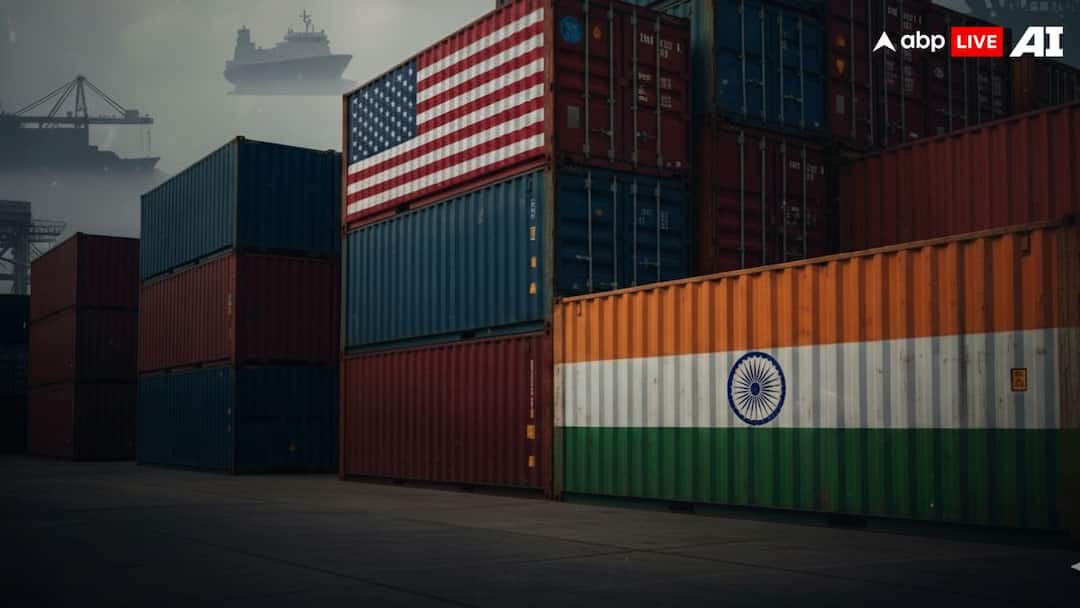

India and the United States appear to be edging closer to a breakthrough in long-running trade negotiations, with Washington offering rare public praise for New Delhi’s latest proposals.
The optimism, however, sits alongside renewed tariff threats and legal uncertainty in the US, underlining how complex and politically sensitive the talks remain.
US Trade Representative Jamieson Greer told American lawmakers this week that India has made “the best we’ve ever received as a country” in the ongoing negotiations, according to an IANS report.
His remarks come at a time when trade discussions are focusing heavily on agricultural access, even as US President Donald Trump has warned of fresh tariffs on Indian rice exports.
Why India’s Offer Has Caught Washington’s Attention
Speaking at a Senate Appropriations subcommittee hearing on Tuesday, Greer said a US trade delegation is currently in New Delhi to iron out key agricultural issues. While acknowledging that India remains cautious about opening its markets to certain crops, he said the tone and substance of recent proposals marked a notable shift, reported The Financial Express.
“They’ve been quite forward-leaning,” Greer told senators, signalling a level of flexibility that US negotiators have rarely encountered in past discussions with India. The talks are aimed at expanding access for American farmers, particularly for commodities such as grain sorghum and soy, which have struggled to find consistent overseas buyers.
For Washington, India’s scale makes it strategically important. Greer said India could emerge as “a viable alternative market” for US agricultural exports at a time when American farmers are dealing with large inventories and unpredictable demand from China. “We have to find a way to manage that trade,” he said.
Tariff Threats Cloud the Optimism
The upbeat comments from the US trade chief contrast sharply with rhetoric from the White House. On Tuesday, President Donald Trump threatened to impose new tariffs on Indian rice, accusing New Delhi of dumping rice in the US market. The warning comes even as the US has already imposed 50 per cent tariffs on India, the highest level applied to any trading partner.
These comments have added uncertainty to negotiations that are already moving more slowly than usual. Trump’s tariff stance has also drawn scrutiny in the US, with the Supreme Court currently examining whether he exceeded his authority under the International Emergency Economic Powers Act (IEEPA) while imposing broad trade restrictions.
What’s on the Table Beyond Farm Goods
While agriculture has dominated recent headlines, Greer made it clear that the talks extend well beyond crops. Discussions are also underway on tariffs and market access in other sectors, including civil aviation.
On zero-tariff commitments for civil aviation parts under the 1979 Aircraft Agreement, Greer said negotiations are “fairly far advanced”. He added that the US could offer similar treatment to India if New Delhi agrees to reciprocal access, suggesting movement on a long-pending issue for aerospace manufacturers.
Senate committee chair Jerry Moran also flagged India as a potential buyer of ethanol produced from US corn and soy. Greer did not provide specific commitments but noted that other regions, including the European Union, have already opened their markets to US ethanol and energy products, with purchase commitments totalling $750 billion over several years.
Despite India being one of the fastest-growing destinations for US exports, agriculture continues to face hurdles in the form of tariffs and sanitary restrictions, which both sides are now attempting to address.
India’s Rice Exports Under the Spotlight
In India, industry representatives have sought to play down the impact of Trump’s tariff threats. Speaking to the Indian Express, Prem Garg, President of the Indian Rice Exporters Federation (IREF), said India’s rice exports are fully compliant with World Trade Organization rules and bilateral agreements.
He pointed out that India exports only basmati rice and related varieties to the US. Even with the existing 50 per cent tariff, Indian farmers have not been affected, Garg said, because shipments are limited to niche ethnic basmati varieties rather than mass-market rice.
Greer framed the negotiations with India as part of a broader recalibration of US trade policy. He told lawmakers that Washington is opening market access in regions such as Southeast Asia and Europe, arguing that these new trade openings strengthen the US negotiating position with major partners like India.